Spalding Today website infested by trolls?

internet troll – Web definitions
In Internet slang, a troll is a person who sows discord on the Internet by starting arguments or upsetting people, by posting inflammatory, extraneous, or off-topic messages in an online community, either accidentally or with the deliberate intent of provoking readers into an emotional response …
http://en.wikipedia.org/wiki/Internet_troll

It seems the last place to go, if you want to get an insight into what people in South Holland think about a a local issue, is the website run by our local newspaper.
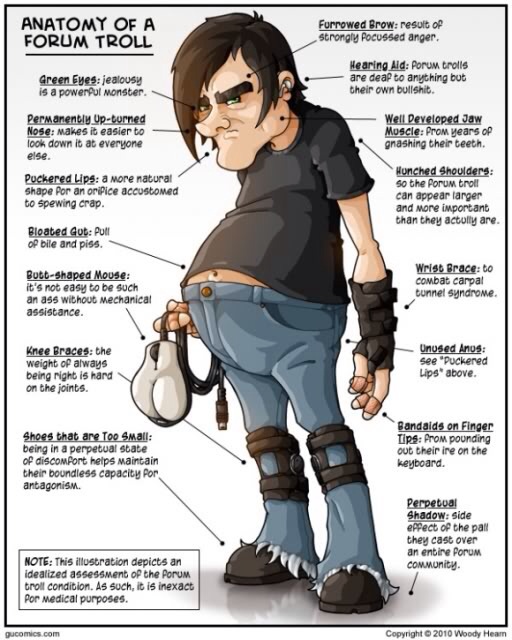
Oh don’t get me wrong, you’ll get plenty of opinion, but only from a very small element of the population – six at the last count. However, these opinions won’t be from what one could call right minded, or informed people, hence my inclusion of the above definition.
Although the screen names are different, the tone of their comments are not. To a man and possibly woman, they all display the same uninformed, spiteful, small mindedness.
Indeed, I’ve yet to read one that doesn’t sound like it’s come from somebody holed up in a darkened room and fermenting on the conspiracy theory that, all councillors are corrupt and the district council is out to destroy South Holland, one piece at a time.
Unfortunately, these trolls display little, or no grasp of even the basic facts behind the online stories they comment on – all they know is what they read on their screens – so it would be pointless to enter into any sort of constructive online debate with them. Indeed, I don’t think they even care about the content of story, they just see it as an opportunity to snipe and sneer at others.

IMG_0321.JPG

Birmingham Airport – where’s that then?

As somebody with no sense of direction, I rely completely on road signs and, when its working the satnav.   When it’s working is the operative word here as, last weekend, I had to use one route I haven’t used for nearly 4 years and then very infrequently and another I’ve never used before.

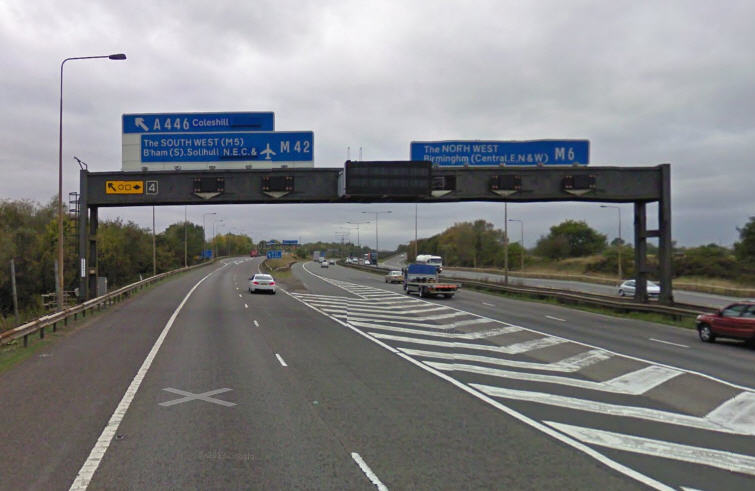
I’ve been moaning about the first route, Birmingham Airport for years now, not because it’s a really boring journey, once you’re on the A14 followed by the M6 and the M42, even though it is, but because of the hopeless road signs.  Unless you are very familiar with, or have a good memory for it, the bit where the M6 splits off into the M42, is the first time you’ll get any indication that Birmingham actually has an airport.

Actually, let me correct that, because if you take the time to look at the photos in the attached PDF, you’ll notice that all that is shown on the road signs is an aeroplane symbol and nothing else.  Clearly the Highways Agency didn’t like Birmingham Airport anymore than I do and swore to protect people from its outrageous parking charges, by making all road signs to it vague and unhelpful.  The alternative of course, is that once they’d made the signs, they couldn’t fit Birmingham on, next to the little aeroplane, so decided it would okay to let people work it out for themselves, as they charged along their high speed roads, darting from lane to lane, desperately wondering which one they should be in.

They also decided, whilst they were at it, to make those unfamiliar with these hostile roads, guess which direction they should be going in on the M42 north, or south.  To achieve this jolly jape, they first signpost M42(S) and then follow this up with a simple M42 on the next signage.  This wheeze means that just as the motorist is beginning to panic, thinking that they have somehow switched from the M42(S) to the M42 (neither) and therefore needs to throw their car, complete with passengers, in to the left hand lane, in order to exit the motorway as soon as possible, another sign appears referring to the M42(S) again.

Oh what fun they must have in CCTV control, watching unsuspecting drivers swerving from one side of the motorway to the other as signs confuse, lanes switch and the symbol for Airport appears one overhead gantry too late to avoid the need to swerve across the, ‘Don’t drive on here, on pain of death!’ road hatching.

Finally, in the best practice of contrast and compare – or is the other way around? I can never remember – I included two sample photos, for the route to Stansted Airport.  Not only is this well signposted all the way from the A14, M11 and the airport itself, it actually says ‘Stansted’ next to the cute little picture of an aeroplane.  Of course this could simply mean that this particular set of roadsign wizards haven’t been to Stansted Airport and therefore do not feel duty bound to protect the travelling public from its horrors!

just in case you can’t contain yourself and need to see what I’m on about, without opening the PDF, the photo below is of the first overhead gantry to acknowledge that Birmingham even has an airport. You can guess what many drivers do if they’re in the right hand lanes when they first spot it.

Incidentally, I’m not so completely sad that I felt the need to construct the attached photo montage for the sake of it, it’s been attached to an email I’ve sent to the Highways Agency this afternoon.  Do you think write back telling me to buy a map, or a satnav that works?

One junction too late!

One junction too late!


Motorway signs

Embarrassed? They should be bloody furious!

Copied from Local Government Chronicle online

Members ’embarrassed’ by minister’s Europe approach
13 June, 2014 | By David Paine

Ministers have been criticised for dismissing a critical European peer review of local democracy in the UK.

After two fact-finding visits last year, the Council of Europe’s Congress of Local and Regional Authorities expressed concern about the financial resources of English local authorities, as well as their limited tax-raising powers and their dependence on government grants.

Its review also highlighted concerns about the limitations placed on local authorities in managing local affairs, due to interventions from central government.

Local government minister Baroness Stowell (Con) forcefully rejected the review’s recommendations in a speech made to the congress in March.

“Our greatest disagreement with the report is the underlying theme that local government, particularly in England, has insufficient funding, with a suggestion that there should be more local revenues,” she said.

“That is saying, and let’s not be shy about this, there should be more local taxes.”

At a meeting of the LGA’s executive board yesterday, outgoing chair Sir Merrick Cockell (Con) expressed regret at the response and added he thought ministers should have “accepted there are some areas that need improvement and they are of a mind to move in that direction”.

He added: “I was bitterly disappointed by that approach.”

John Warmisham (Lab), lead member for children’s services at Salford City Council and head of the UK delegation to the congress, said: “Just to say outright ‘no’ was for me, as a UK delegate and a councillor, embarrassing.”

He added: “I find it appalling to be honest.”

Referring to Baroness Stowell’s speech, Sue Murphy (Lab), Manchester City Council’s deputy leader, said: “It was one of the worst ministerial performances I have seen in my entire career in politics. Really, I thought it was insulting.”

The executive was told that the UK was, in general, in compliance with the obligations taken under the Charter of Local Self-Government, to which the UK government is a signatory, and that compared with the last evaluation in 1998 the situation had improved, especially in relation to lifting audit and inspection burdens on councils.

However, Andreas Kiefer, secretary general of the congress, told councillors at the LGA executive meeting: “We consider the UK a model of democracy so to find the reluctance to give local democracy the status that it has in other countries was surprising.”

MPs and their Parties, don’t care about councillors

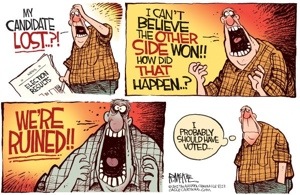
Another set of local elections out of the way and enough statistics to keep the pundits going until the General Election in May 2015. Who won, who lost and more importantly, who cares?

Obviously all those who actually gained, or lost a council seat, are very interested. Likewise, the remaining councillors, who may now find themselves in the controlling group, or now members of the opposition on their council.

However, beyond the councillors themselves and maybe to a lesser extent, the council officers who now have to deal with a new administration, neither the electorate and certainly not those in Westminster, will give a second thought to those affected.

Those fighting to either maintain control of Westminster, or wrestle control away from those in power, expend a lot of time talking about the results of local elections, when it suits them. Beyond the election period and it’s immediate aftermath, those of us in local government, are more likely to be viewed as an annoyance, rather than the backbone of public services and a conduit of how the public feels about government.

If you question this view, then why do all the main parties still insist on seeing the outcomes of local government elections, as no more than a protest vote and not a valid indication of what will happen at a general election?

UKIP may not only run riot in European elections

Holding the European Parliamentary elections on same day as the local council elections this coming May, is likely to see more than a few councillors loose their seats for all the wrong reasons.
We’ve already seen the UKIP effective have an impact on the local government elections that took place in 2013. This can surely only be seen as an indication of what is likely to happen this May, when UKIP have both European and council election candidates on offer.
Despite repeatedly telling people that a vote for UKIP is a wasted vote at the local level – your local council can’t stop immigration, it can’t take us out of Europe, it can’t even stop the EU from grabbing more and more power. So what exactly is the point of voting for the UKIP candidate, if all you want to do is send a message to Westminster,manner that candidate is only interested in national issues?
Overarching all of this, is the stark fact, that holding both the European and local council elections on the same day, knowing how strong the UKIP protest vote can be, shows how little regard the government has for its so called grass roots Conservative councillors.
The government will of course sight cost as the reason for holding them on the same day and were it not for the proven negative and distorting effect of UKIP on local government election outcomes, I might agree. However, in this case, consideration should have been given to the potential impact and an alternative arrangement sort.
Of course, given this government’s completely negative attitude to local government, I’ve no doubt that this issue was never even given a thought.

Local government – something we used to have in the UK?

I am sure we would all agree with Cllr Sir Merrick Cockell, LGA Chairman, when he said last week:

“While this Budget has not brought further cuts for local government, it has not changed the fact that the next two years will be the toughest yet for people who use and rely upon the services which councils provide. The black hole in funding for local bus services, a £10.5 billion backlog in road repairs and continuing uncertainty over funding for much-needed reforms of the adult social care system have yet to be properly addressed.”

By next year, central government funding for councils will have been cut by 40 per cent during this Parliament.
If we are to avoid an upturn in the economy coinciding with a decline in public services, we need nothing less than a fundamental reform of the way the public sector works and an honest reappraisal of how public services are provided and paid for in post-austerity Britain.
———————————————
Add to all of this, the recent announcement that the government is looking at centralising children services in England, combined with the push for academy schools, both services currently delivered by county councils, and you could be forgiven for thinking that there’s a hidden ‘European’ agenda in play here.
The last labour government made an abortive attempt to up the game of parish councils, encouraging them to takeover the delivery of services that were being carried by district councils. As well as leading to the demise of two tier government in shire areas, the idea seemed to be about refocusing local people on to the parochial (very local) and away from greater than local issues, thereby strengthening the position of the then emerging regional government bodies.
The current government seems to be hell bent on a similar goal of undermining, or even eliminating local government at the district level and possibly county level, but without anything being put in place between the very local (parish) and national levels.
One can only suggest that the way things are done in many European countries, with village and town councils run by some form of mayor and looking after the basics, a regional government body at the next level and everything else controlled by the national government, is what all our MPs want, no matter what party they represent.

Localism was always a con game

20140327-180522.jpg

Localism was nothing more than a sound bite, created for the benefit of the media. It was also designed to con an increasingly unhappy and non-voting public, in to thinking that things were going to change for the better, when it came to local decision making.

There can be little doubt that the public have now realised that they’ve been conned, but worryingly, they don’t actually seem to care that much. Using local elections, as a way of sending a message to the government of the day, is something of a tradition in this country and may well indicate the true feelings of the majority of people when it come to local government in general and their local councils in particular.

Perhaps it’s time for political parties to bow out of any further involvement in local government. Why not require all councils to run elections without any party political logos or emblems on the ballot papers, as in the case of parish councils?

Once elected, councillors would be required to form alliances in order to form an administration. Without party politics in the mix, the public would be required to focus on the performance of the people in charge and not the political party they belong to. This isn’t a plea for proportional representation by the way, as I don’t support that, given it’s continued linkage with Party based politics.

Those who chose to form alliances and work together,min order to get each other elected and subsequently form an administration, would still be elected on their own merit and the reputation they had gained with the local electorate, not just the fact that they belonged to a particular political party, that a particular element of the electorate supports come what may. It may be something of an exaggeration, but it is suggested that some dyed in the wool voters, would vote for a gate post as long as it had their Party’s emblem on it!

An added bonus from such a system, would be the dismantling of the political party associations. These tend to be made up of those who have to be in them by default, because they are standing for election under that particular party emblem. This requirement gives some prospective parliamentary candidates a standing workforce (in theory at least), that other, non-party political candidates, don’t enjoy. Breaking the link between MPs and local government, would probably be good for the democratic process in more way than we can imagine!

Now to the point of this post and an LGC comment that partially echoes a previous posting of mine.

Copied from Local Government Chronicle online

Why Labour should not support council tax referendums
Don’t sacrifice localism on the altar of spending restraint
20 March 2014 | By Nick Golding

So who doesn’t expect Ukip to be the big winner of the local government elections, which are being held on the same day as their European counterparts?

One of the main reasons that a party set up to oppose the European Union will win seats on numerous councils is that the electorate is indifferent to voting for candidates representing regular parties who may have local policies but lack the ability to implement them.

Central government imposes cuts on councils without regard to local need and councillors have seen their powers over issues such as planning and education whittled away to the point of impotence. With representative democracy looking this unhealthy, one can understand someone’s rationale for using the local elections to make a bold statement about an issue largely unrelated to local politics or indeed not voting at all.

So the question arises of how local democracy can be reinvigorated. It is clearly an issue shadow communities secretary Hilary Benn has given much contemplation.

In his LGC interview this week, Mr Benn proposes the extension of city deals to counties, ensuring power is devolved in more places, making it more worthwhile to vote in them. The same is true of his promise that councils will get a significant role in commissioning back-to-work schemes.

However, Mr Benn says Labour is likely to retain council tax referendums, forcing locally elected politicians to navigate a prohibitively expensive and risky hurdle if they seek to safeguard services by raising bills above an arbitrary limit imposed from afar by a minister. To date no council has successfully pursued this path.

Mr Benn says the impetus to keep bills low brought about by the referendum policy will help people suffering due to the “cost of living crisis”. While it is true that council tax bills cost people dear, so too do service cuts that have had their worst impact on society’s most vulnerable. And so do opportunities to drive growth that are missed because councils lack the resources to lead on projects to create jobs.

Eric Pickles regards the council tax referendum as a device to secure democracy. Well, if that is true, will the government commit to holding polls every time a decision is required on the expenditure it controls? More likely, ministers will argue their government is the democratic representative of the people, entrusted to make tough decisions on their behalf. The same argument applies to local government.

Councillors should take decisions on local public expenditure, facing grief at the ballot box if they prove unpopular. Referendums only muddy the waters of local democracy, introducing a semblance of people power which hinders representative democracy. The fact that they are only applicable to a minute portion of public expenditure – one of the few slithers of spending not centrally controlled – makes them a democratic illusion.

The council tax referendum is a bellwether issue when it comes to local democracy. In this case Labour has sacrificed localism on the altar of spending restraint.

Nick Golding, editor, LGC
Only complaining via the letters page, achieves very little

Its always a bit disappointing when the first time you find out that somebody has got a problem, is when it appears in the letters page of the local newspaper.  It’s doubly disappointing when the person making the complaint is known to you, because you have had dealings with them in the past and have actually been successful in resolving an issue for them.

Don’t get me wrong, I’m not seeking to be the best thing since sliced bread – never really understood what that means – and be the go to guy for everything and everyone, but I’m just a bit nonplussed as they say, that this gentleman didn’t at least given me a heads up on the issue, at the same time as writing to the newspaper.  All that said, I have actually been looking into the issue of drivers allegedly ignoring the pedestrian crossing on Wygate Park, over the last couple of months, following a comment made to me by a resident sometime ago.

OLYMPUS DIGITAL CAMERAThe comment was along the same lines as the letter in the press and although I have not witnessed any occurrences myself, it reminded me of my own concerns about this crossing.  Until the recent conversation, I thought it was just me and that I was somehow becoming less aware of such things and therefore needed to be on my guard when driving.  This is often a criticism of drivers of a certain age, so I had to consider it as a possible reason for my concerns, regarding this pedestrian crossing.  However, having heard these concerns from somebody of lesser years, I thought I’d do some further research.

For sometime now, I felt the crossing was somehow less obvious as you approach it in the car, than similar crossing in other locations – but only during the hours of daylight.  At night the opposite is true and I would defy anybody other than a blind person, somebody sleep driving, or somebody completely off their head on drink or drugs, not to see this crossing clearly.  Not only is it floodlit, it also has illuminated black and white posts, that work brilliantly in combo with the flashing yellow beacons that top them.

Unfortunately, during the hours of daylight, the beacons seem barely adequate and along with other surrounding issues, I wonder if this might be the cause of the alleged pedestrian near misses?  Does the background of nearby trees and branches make the beacons less visible than normal?  Is it the light units on top that leads a driver to see these as street lights, rather than the crossing illumination and warning beacons they actually are?  Could it the fact that the crossing actually sits on one of the traffic calming platforms, making the viewing angle from a driver’s perspective, shallower and the black and white crossing less obvious?

I’ve been in touch with the county highways department, asking all of these questions and they are of the opinion that there’s no problem with either the crossing, or its visibility.  As always, they are forced to look at getting the biggest bang for their ever decreasing buck, so they use the accident and incident figures for a given location, as a way of determining its priority.  In the case of this crossing, nobody has been run over yet and, thankfully, nobody has been killed, so it doesn’t even figure on the highways dept’s radar, when it comes to spending money on improvements.

I have made enquiries with a company that supplies beacons that have a ring of flashing LEDs around them, having seen how effective they are in other areas – Peterborough City seems to fit these as standard.  Unfortunately the cost, over £3000 per beacon (higher than standard, because of the integral flood light unit on top) makes funding any improvement from my ward budget almost impossible.  Just to make life a bit more difficult, county highways would still not sanction any changes, unless they received what’s called a commuted sum of £2,700, to cover the increased cost of future maintenance, or replacement due to accident damage.  Understandable, but nonetheless frustrating.

I really do hope that neither the letter writer nor myself, are proven right in our concerns and that the crossing continues to offer genuine safe passage to pedestrians crossing this increasingly busy road.

Affordable is clearly a dirty word when it comes to housing numbers

Given recent comments made by various government ministers, one could be forgiven for thinking that the housing needs this government is promoting, are not exactly in line with those of the general population and that some form of hidden agenda is in play.

The link a the bottom of this page, is to an item about yet another council falling foul of the NPPF, whilst attempting to produce a Local Plan for their area.   In particular, it details the difficulties involved in identifying the actual housing needs of an area, and the tensions that exist between the open market and the needs of those who can’t afford to buy, but are still in need of somewhere to live.  Before the introduction of the NPPF, this latter group were catered for, in part at least,  by a requirement to provide a percentage of affordable housing within all large scale housing developments.

The NPPF introduced a seemingly sensible requirement to consider the financial viability of any proposed development, when determining a planning application.  This measure being designed to reduce the numbers of stalled developments, where permission had been given, but the developer couldn’t start building because the numbers did add up financially.  However, far from being the common sense requirement we all assumed it to be, it has very quickly become a get out of gaol free card for the developers.  Many of the volume house builders sort to cash in on the past housing boom by buying land at inflated costs, spurred on by the widespread belief that the housing price bubble would never stop inflating, let alone burst.  This now misguided view, was further fuelled by the ease with which people could obtain a mortgage, even when it was obvious that they would not be able to maintain the payments if interest rates were to increase.

Despite the house price crash, David Cameron has fallen for the line fed to him by  George Osbourne and pinned virtually all of his hopes for financial recovery, on a return of a market driven boom in house building – will they never learn?  This means that any developer required to provide affordable housing is able to wriggle out of doing so, by playing the viability card, this despite a significant national decline in the provision of affordable housing as illustrated in the graph.  Affordable housingAny local authority that has the temerity to continue to insist on the provision of affordable housing, is likely to be put back in its box by Eric Pickles’s equivalent of the KGB, the Planning Inspectorate.  Graph taken from document:  https://www.gov.uk/government/publications/affordable-housing-supply-in-england-2012-to-2013

The ministerial comments referred to, hide a thinly veiled distaste for affordable housing in principle.  They also display a fundamentally flawed belief that everybody, no matter how modest their means,  should aspire to home ownership and that in doing so, they will become worthy members of society.  Is this the naive vision from the out of touch and privileged elite now entrusted to run our country?  Is it a more calculated strategy, designed to support their own financial interests and those of their associates?  Or, is it a demonstration of an ingrained distrust of anybody who doesn’t aspire to home ownership and a belief that they are somehow lesser people?

Having strangled off the financial support provided by the Homes and Communities Agency for social housing, regularly refused to relax the borrowing limits on local authorities thereby preventing them from accessing the funds required to build more council houses and now given developers carte blanche to reject the requirement to provide affordable housing, one can only assume that, once again, the market has won and it’s to hell with those who can’t make the cut.

http://andrewlainton.wordpress.com/2014/01/01/assessing-objective-need-after-the-west-dorset-decision-bombshell/

As forecast, first public comment was a negative

Spalding Common

Spalding Common

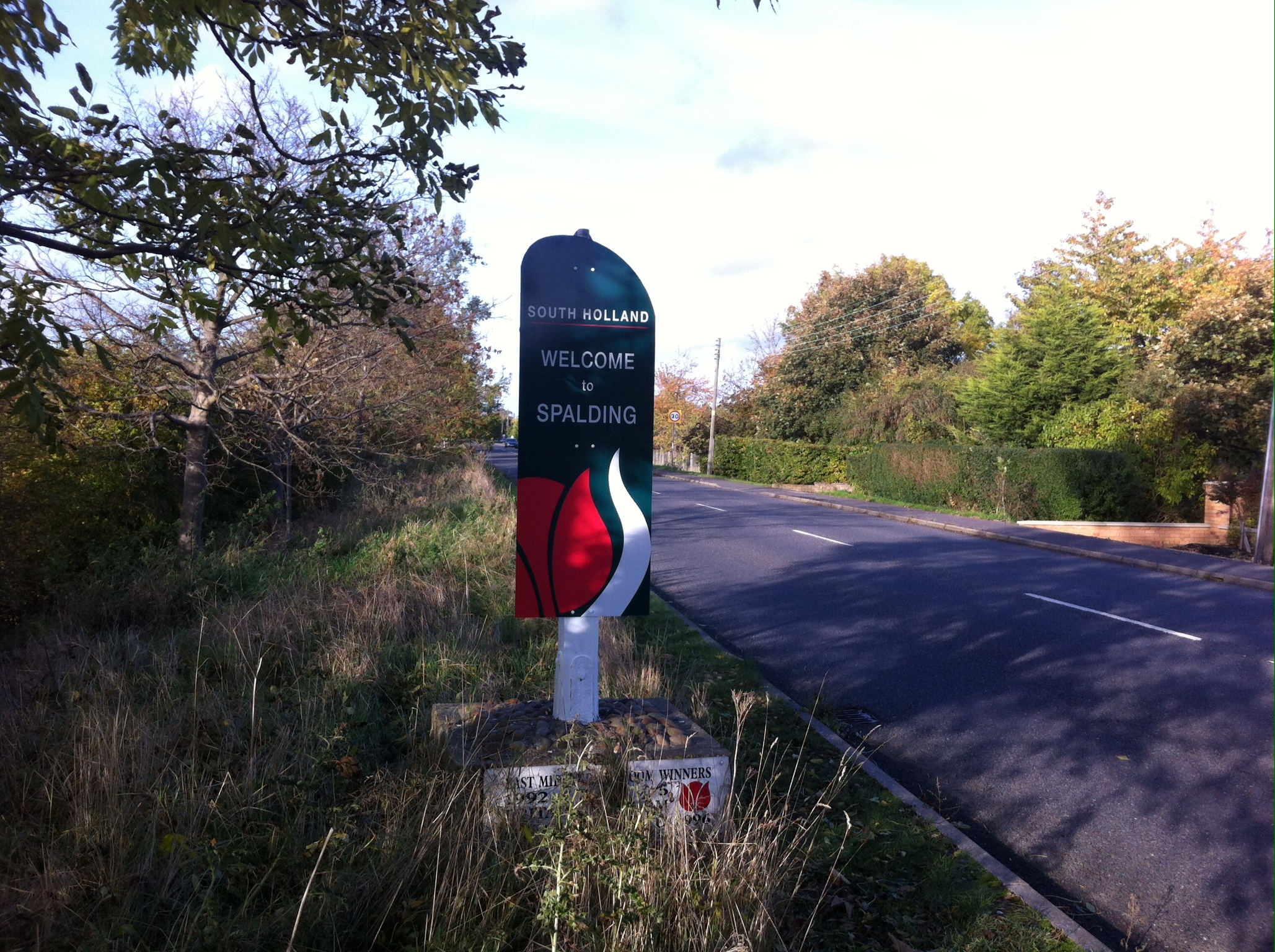
I had a bet with the blokes putting up the first one, about what the tone of the first public comment would be, regarding the new Welcome to Spalding signs. Being a fully paid up member of the cynical B’s club, I bet on it being critical, negative and tinged with an element of spite – and I was right! Pay up guys.
I suppose we should be thankful that at least somebody has not only noticed them, but has taken the time to put pen to paper, given the lack of interest displayed by many when it comes to local issues – apart from planning applications that is.
The writer of today’s letter in the Spalding Guardian, is a regular contributor to the page.  He obviously missed the postage stamp sized story on these signs, the first time around, or I would have expected to see his critical appraisal published back then.
No, the signs are not made of Perspex (a trade name for acrylic) Mr Sadd, they are aluminium, with the image printed on – durable vinyl material, designed for this use.
The signs are as temporary as you want them to be Rodney. If you can find the several thousands of pounds, probably as much as £10,000 would be my guess, to commission, design, manufacture and install something similar to the wooden signs that Spalding once had, I’m sure we would all be very pleased to see these signs replaced.
My guess is, that there isn’t anybody out there already writing the cheque for this work and that these signs will remain in place for at least as long as the embarrassing ‘lollipops’ that they replaced – come on prove me wrong for once, I dare you. That’s not an invitation to go and nick them by the way.