A department within the MOD was charged with disposing of surplus sites and working with Homes England to deliver thousands of desperately needed homes – it failed miserably.
This should come as no surprise given the record of the defence procurement system over many, many years. Hundreds of millions and in some cases billions of pounds have been squandered on failed, delayed and cancelled projects
In depth: ‘It’s not just about political will – there are economic headwinds’
Labour has an “incredibly steep mountain to climb”, says Robert, but it’s a challenge Reeves is sure she can meet, announcing plans to turn the government’s 1.5m houses pledge into reality. This includes the return of compulsory housebuilding targets for local councils, a policy that was scrapped under the previous government. But the main way that Labour is saying it will hit its target is through planning reform. “In other words, they will be loosening restrictions on building on parts of the green belt and speeding up planning decisions,” Robert says.
Building on the green belt, which covers about 13% of England, has met fierce opposition in the past – with nimbyism blocking previous attempts to loosen the rules. To allay fears, Keir Starmer said Labour would prioritise building on brownfield sites and “poor quality” and “ugly” parts of the green belt, dubbed “grey belt”. There is no official designation or proper demarcation of what the grey belt is, but some research has indicated that it is about 1% of the total green belt area and is mostly located in the south-east. Labour has also said that 50% of the homes built on the grey belt have to be affordable. “Because of the scale of its election victory, Labour seems to be feeling very confident that it can push through much more housing in areas where it previously might have been controversial,” Robert says.
The government also has big ambitions to build new towns and urban extensions in England. The party said previously that an independent taskforce would be set up to identify appropriate sites for new towns, which would give it the opportunity to build tens of thousands of homes in one location. Previous government attempts to create new towns in the past two decades have stalled, and there has not been a successful new town initiative since a host of sites in the late 1960s and 70s, including Milton Keynes.
For more detail on this, Robert has written a helpful guide of the four primary options available to Labour to deliver on its housing pledges. A big part of how the new towns and expansions will be received by the public will depend on their design, Robert adds: “If somehow Labour can create a vibrant, hopeful, new model for what a settlement could be like, with schools, cinemas, shops, community centres, it could have a real impact on public acceptance.”
Affordability
It has become an accepted truth in England that to solve the housing crisis, the government needs to build more homes. But the reality is that it’s not just the lack of homes that is fuelling the problem, it’s also affordability. In the UK, house prices remain unaffordable despite wages rising above inflation for the typical earner. And, according to the Resolution Foundation, housing stock in this country is the worst value for money when compared with other advanced economies.
Though the government has indicated a desire to create more affordable and social housing, the majority of the new houses will be going up for private sale.
Labour has said in the past that it will require higher levels of affordable housing to be delivered as part of planning deals with private developers, setting 40% targets, but the truth of the matter is that the private house builders still hold a lot of power, Robert says. “A lot of these sites are under their ownership, and if Labour tries to push them too hard it may reduce the amount of total housing delivered.”
The other way Labour could drive up the affordable and social housing stock is by investing in it directly. “The government has said that it is planning to somewhat increase the funding for affordable housing, but whether that will be enough to significantly change the balance between private housing and social housing remains to be seen,” Robert says.
The obstacles
Labour’s sizeable majority has made it “bullish” about its ability to “drive through housing reform against nimby opposition”, Robert says, though in the past nimbyism has been a very politically powerful force that has derailed housing proposals.
Another potential obstacle is cost. The price of construction materials has been soaring in recent years and there is a significant skills shortage, which means that housebuilders are not in a position to increase output quickly. “The planning experts in the local authorities have been stripped back to the bone over the past 14 years,” Robert says. “So it’s not just about political will and public acceptance of this, there are some quite severe economic headwinds as well.”
These plans, if they work, will alleviate some of the pressure that has built up in the housing sector and even allow some people who are stuck in private rented accommodation to buy their own homes for the first time. “But the rump of the private renters are still going to remain subject to rapidly rising rents and housing insecurity,” Robert says. In order to fix this, campaigners have said the government should also focus on regulating the rental sector and creating more social housing on top of increasing housing stock. “Unaffordable housing and the lack of council homes are the areas which affect the people who are most acutely suffering from the housing crisis.”
Good morning.
House prices in the UK have soared over the last 15 years. 1.3 million people are on local authority social housing waiting lists. In the last three months of 2023, there was a 16% increase in the number of people who were made homeless, and last year rough sleeping rose by 27%. Last summer, 109,000 households were living in temporary accommodation, up by 10% year on year. Projections show that if nothing changes, nearly five million households will live in unaffordable housing by 2030.
The scale of England’s housing crisis is staggering. Labour has promised to tackle it head on, with the new chancellor, Rachel Reeves, pledging to build 1.5m homes over the next five years. It is an ambitious target that would create levels of housebuilding not seen since the 1950s. Yet, despite this, yesterday Britain’s biggest housebuilder announced it expects to build fewer houses this year than last.
For today’s newsletter, I spoke with the Guardian’s social affairs correspondent, Robert Booth, about Labour’s new housing proposals and how likely it is that the party will be able to fulfil them. That’s right after the headlines.
Planning system reforms Permitted development rules have led to local authorities and residents being unable to oppose or alter proposals from developers, with no power to insist on adequate room sizes, daylight or influence the look of a building. Contributions from developers towards affordable housing or improving the pavements and landscaping around a property have also been lost under the rules, with the LGA estimating that 13,500 potential affordable homes have been lost in this way. Separately, LGA housing spokesman Cllr David Renard is due to take part in a debate on Times Radio at 1pm today about the ending of the eviction ban and protection to renters during the pandemic. Observer – Sunday 27 September 2020
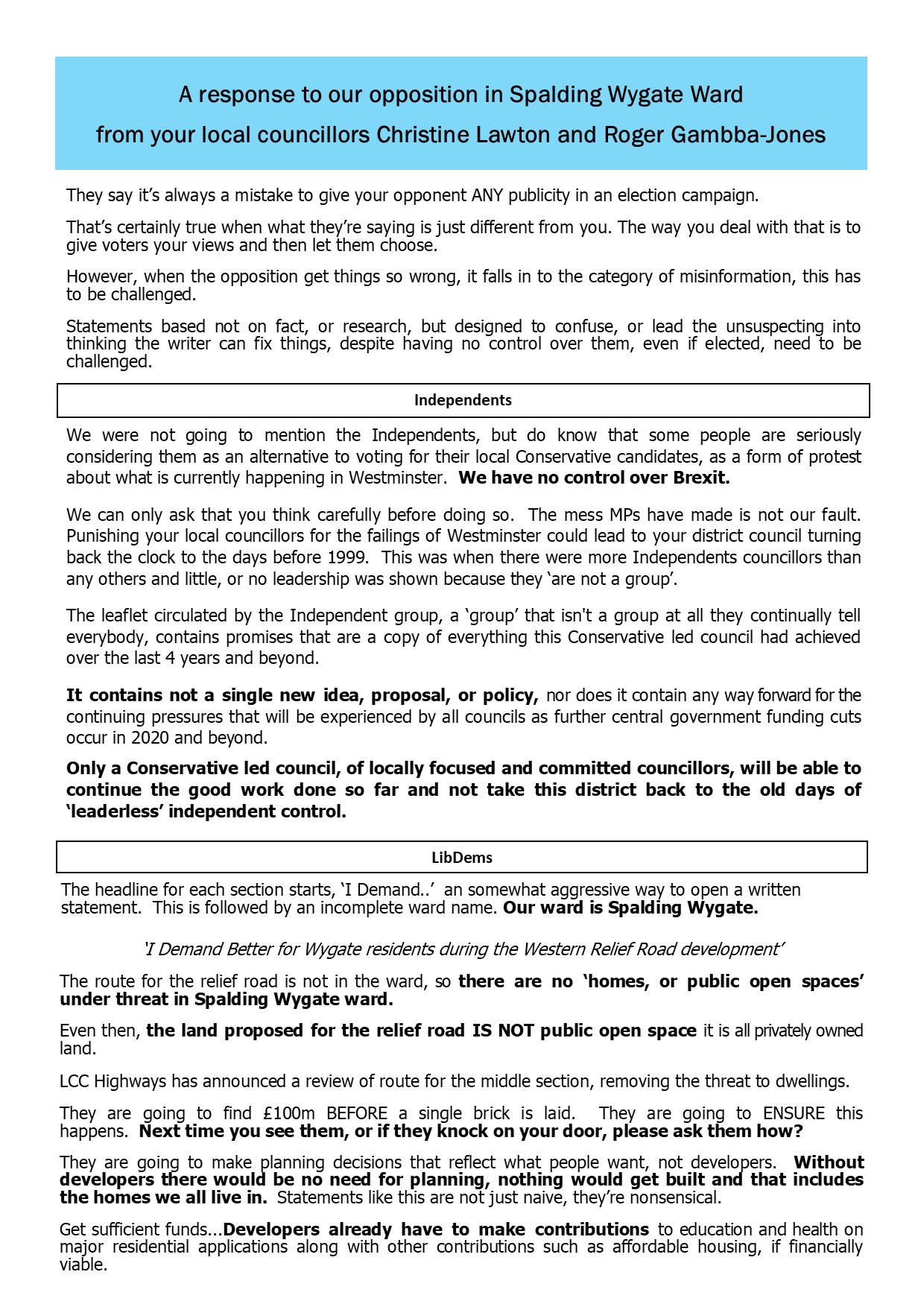
George Clarke: We don’t just need more council houses – we need the very best in space and ecological standards
We are building noddy box estates with hardly any green space and no public amenities. It isn’t good enough
I was brought up on a council estate, but it wasn’t just any old council estate. It was part of one of the most ambitious and innovative housing developments in the country. My estate was in Washington, a place between Sunderland and Newcastle that was given new town status in 1964. Some of the best architects, urban designers, planners, landscape architects and highway and infrastructure engineers came together to build an entire town that would completely transform my life. It was and still is a fantastic place to live.
My Mam’s council house, which she still lives in today, was designed to excellent space standards with a decent sized front and back garden. It sat around a pedestrianised square that was safe for us all to play in. I could walk to school without having to cross a road. The landscaping was amazing. Large green spaces became our fields of dreams where we played football for hours until the sun went down.
‘We had brand new shops, pubs, community centres, health centres, schools, sports facilities, a thriving shopping centre, youth clubs, industrial estates, factories, workshops, art centres, the lot’
There was an incredible mix of house types. Two-storey four-bedroom houses like ours for young families, three-storey six-bedroom houses for extended families, maisonettes and thousands of single-storey bungalows for those who wanted or needed to live on one level. My estate was a fantastic community that didn’t just happen by chance – it was designed from the outset to be a community.
It wasn’t just about great housing and wonderful green spaces. We had every public amenity a community needed. We had brand new shops, pubs, community centres, health centres, schools, sports facilities, a thriving shopping centre, youth clubs, industrial estates, factories, workshops, art centres, the lot. We hardly left our new town because we didn’t have to. We had absolutely everything we needed, designed in the most humane and caring way. Most importantly, our homes were truly affordable. Families worked and paid their affordable rent to the council. If you paid your rent you had a safe, secure and stable home for life and housing waiting lists were short.
Look where we are now. After two-thirds of all council housing had been sold off under Right to Buy or handed over to housing associations, only two million are now left under council control from a high of more than six million in 1980. More than one million people are on social housing waiting lists. More than 100,000 children are living in temporary accommodation. The huge demand and massive lack of supply means property prices are the highest they have ever been. Long gone are the days when most of the population could buy a home for 3.5 times an average income. We are in the biggest affordability and housing crisis the country has ever seen and every year it is getting worse.
What we are building often isn’t good enough; noddy box estates with hardly any green space and certainly no public amenities. The Government has completely failed in its responsibility to provide good quality, affordable housing for its people.
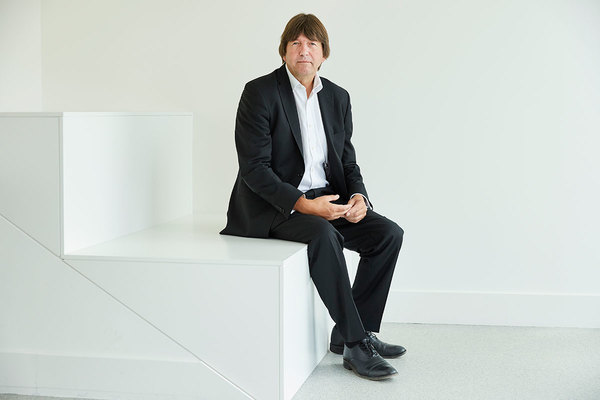
In 2017, Theresa May admitted the housing market is “broken”. This broken system is destroying the lives of so many people. Homelessness is rife. As an ambassador for the housing charity Shelter and being close to the housing industry since becoming an architectural apprentice at 16, I’ve seen far too many families being affected by stress, severe depression, anxiety, poor health and even suicide because they don’t have a stable home.
This has to change. Not everyone wants to ‘own’ their home. Millions will never afford to buy their own home anyway. The state needs to build homes for affordable rent for its people again. Homes should be for people and not profit.
The housing system can’t be just a numbers game. Surely it is about ‘what’ we build rather than ‘how many’ we build. That cultural change needs to happen from 31 July 2019, the 100th Anniversary of the Addison Act, when I launch my campaign to build 100,000 high-quality, low carbon council houses every year for the next 30 years to replace all of the state housing that has been lost.
Twenty first century homes require the very best in space and ecological standards. Why? Because without a stable roof over your head, everything else in life becomes so much harder, and everyone deserves a home.
George Clarke’s Council House Scandal starts on 31 July at 9pm on Channel 4
Government mouth pieces defending the indefensible – in my humble opinion. The most senior of them conveniently sidesteps a key question from MPs, ‘If you sell a house at a discount, how do you buy another one to replace it?’. Answer, ‘Spend what money you do get, fixing up the houses you’ve already got’. That’s helpful isn’t it.
A top Marsham Street official has defended the Government’s Right to Buy policy as ‘good value for money’ following demands for its abolition.
The scheme came under fire from MPs and the London Assembly this week, when it was accused of undermining councils’ efforts to build social housing and sapping funds.
At yesterday’s meeting of the Housing, Communities and Local Government Committee, Labour MP Liz Twist said: ‘How can you expect councils to invest in new social housing if they have to sell the house at a discount under Right to Buy?
‘It seems a bit strange we are wanting councils to build and yet they are having to sell these houses at a discount down the line.
‘It doesn’t seem to make financial sense.’
Permanent secretary at the Ministry of Housing, Communities and Local Government (MHCLG), Melanie Dawes, said: ‘What we get in terms of economic benefits is that housing associations have receipts they are able to build with so we get the usual benefits from new housing supply.
‘We also get distributional benefits because generally we are talking about lower-income families who are able to buy who otherwise wouldn’t be able to.’
Highlighting London Assembly research published that found 42% of Right to Buy homes sold in the capital are now in the private rented sector, committee chair Clive Betts said: ‘It’s unfortunate many of them end up as buy-to-let properties.’
The London Assembly research by member Tom Copley also found the capital’s boroughs spend £22m each year renting back right-to-buy properties.
Mr Copley said: ‘Something has gone very wrong when tens of thousands of homes built to be let at social rents for the public good are now being rented out at market rates for private profit, sometimes back to the very councils that were forced to sell them.
‘Right to Buy is failing London and should be abolished.’
Cllr Darren Rodwell, London Councils’ executive member for housing, said: ‘These figures reveal the immense costs and inefficiencies caused by misguided policy at a national level and, with boroughs enduring a 63% cut in core funding since 2010, it’s clear we can’t carry on like this.
‘The Government should end its restrictions on the use of Right to Buy receipts so that all money raised from council house sales in London goes back into building more homes.’
MHCLG director general, Jeremy Pocklington, told the select committee: ‘We think it is good value for money.
‘The case for Right to Buy is it helps people into home ownership that would not otherwise be able afford their own home, which is something this Government strongly supports.
‘It does release resources that councils can use to invest in their stock.
‘While homes are being sold – which is enabling people who would not otherwise be able to own their own home – a great many more homes are being built through all the interventions, looked at in the round.’
So it seems the Daily Telegraph was actually paraphrasing Theresa May’s speech and using the term council housing, to mean social housing.
The £2 billion headline will be money for the housing associations to put very nicely into the hands of private developers via the various deals and conjurings that go on once a section 106 affordable housing obligation is in play.
A wasteful and time consuming process at the best of times, £2 billion will soon disappear as each sides legal teams dance around the various council and housing association offices.
Why not take a holistic approach to our national disgrace of failing to provide decent housing for those in the most need?
The introduction of land value capture, would allow councils to aquire land at a sensible price, thereby making the most of any share of the £2billion on offer. This, combined with greater borrowing flexiblity, would offer a far greater return for the money available and more certainty of delivery. It would also ensure that this desperately needed housing, was being managed by those who best understand their communities.
LGA warns May’s focus on associations ‘misses the point’ about council-led building
The Conservative head of the Local Government Association (LGA) has hit back after Theresa May suggested councils are not able to build at the same scale as housing associations.
Lord Gary Porter, chair of the LGA (picture: Tom Campbell)
Sharelines
Councils hit back after May comments #ukhousing
In a landmark speech to the National Housing Summit today, the prime minister said she wants housing associations to lead on creating “large-scale, high-quality developments” because the sector can “achieve things neither private developers nor local authorities are capable of doing”.
She pointed to the Thamesmead Estate in south east London, which is currently being regenerated by Peabody after two councils had “problems dealing with the unique challenges and opportunities” of the project.
But Lord Gary Porter, chair of the LGA and leader of South Holland District Council, said Ms May’s comment “misses the point about why we are not able to build at scale”.
“Since RSLs [registered social landlords] took over building social housing they’ve built around 40,000 a year, we have never got to the numbers we need to have as a country,” he told Inside Housing.
“That’s not to blame the RSLs, it’s because we have not been part of that mix as councils.
“And what we need to do is get the Treasury to get off our backs. I don’t need more money, I just need freedom so I can spend my money.
“Let me deal with Right to Buy in the way that works for my area and then get Housing Revenue Account debt off the government balance sheet because there’s no need for it to be there – and then job’s a good’un and we can start fixing the housing crisis before the end of parliament.”
However, Mr Porter did also praise the prime minister for emphasising the value of social housing.
In her speech, Mrs May said the rise of social housing “brought about the end of the slums and tenements, a recognition that all of us, whoever we are and whatever our circumstances, deserve a decent place to call our own”.
In a statement, the LGA said: “Councils have always been proud of their housing and tenants and the positive recognition of social housing by the prime minister today must be shared by all.”
My only disappoitment with this comment piece, is that Tom Welsh talks more about cars, that most of us use no more than 5% of the time we own them. Even when he refers to roads, it’s about problems fitting the moving cars on to them.
He does however get on to the auwful boxes we are forcing our young people to put their hearts and souls into and maybe even raise a family in, if then priced out of the market for larger properties. Here’s where the roads come into play, with the narrowness of those now built in residential developments, turning pavement parking into the standard practice.
Comment piece from Sunday Telegraph 9th September 2018
Stop ramping up our daily stress by cramming us into smaller, tighter spaces
Tom Welsh
Much about modern life seems designed to provoke fury. Sinks in hotel bathrooms are too tiny to fill up even the miniature kettles they provide. Household goods are too complicated to fix without the services of an expensive expert. Now we have statistical confirmation of another failure by design that drives people mad: parking spaces are too small for today’s cars.
This is largely because cars have expanded in size. The most popular models have widened on average by 17 per cent since the late Nineties, to provide more room for passengers and to cram in all the technology that regulation and drivers demand. Roads and parking spaces haven’t widened to accommodate them, however.
Many streets have in fact become narrower to fit in bus and cycle lanes. Dents, scuffs and even bad backs from drivers angling themselves awkwardly from their vehicles are the sad consequences of too-small parking bays. Terrible drivers who feel the need to park across two do little for societal calm, either.
The broader problem is an obsession with rationing space. Britain feels overcrowded partly because the population has grown strongly, but also because the authorities are determined to squeeze as much as possible into as little room as they can, a perverse fixation on ever greater density. This leaves passengers on trains uncomfortable, new-build flats and houses barely inhabitable and much smaller than older properties, and a trip to the shops by car far more stressful than it need be. Ironically, cars are one of the few things that have changed to meet a natural demand for more comfort. Meanwhile, council car parking spaces rigorously stick to the minimum size permitted by law in order to cram more vehicles in.
Policy changes could fix all of this, of course, and release some of the fury that is built into our daily lives. Land is expensive, and should ideally become cheaper. Travel costs on rail are already high, so operators attempt to pack more into commuter trains. But they could avoid proposed measures like the outrageous scrapping of first class carriages, which enable people to escape the packed-in discomfort we are expected to put up with.
But would any of this get a fair hearing today? Politicians and regulators are wedded to three principles that conspire together against public comfort. First is an unhealthy belief in targets, which sees 200,000 homes built a year as a triumph, even if they’re just inner-city box flats and not the family houses people actually want; and which trumpets unusable bays as meeting demand for parking.
Second is a blind faith in regulations, wherein things are designed to meet regulatory criteria, rather than to satisfy consumer demand. Third is a skewed mania for equality – exacerbated by snobbery – in which those who choose to take up more room, whether by buying a family car or wanting a family home, are deemed to be offending against efficient use of space. It isn’t the owners of large cars we should be fuming against






 Roger Gambba-Jones