Should Spalding have a council?

As the Civic Society, in their latest newsletter, is seeking to resurrect the debate around the creation of a town council for Spalding, I thought it might be worth republishing a previous entry on the subject, from nearly 2 years ago, that was itself a repeat of an even earlier one.  As they say, there’s nothing new in this world.  

Although the financials are somewhat out of date, page 127, of the agenda supplement that will be put before full council of 26th Feb 2014, gives the up to date numbers and hopefully can be viewed here as a PDF document:   http://democracy.sholland.gov.uk/ieListDocuments.aspx?CId=119&MId=1351&Ver=4

In order to help with the conversation that is currently taking place via Twitter, I’ve been asked to offer more detailed comment via my blog page.  Never being one to turn down the opportunity to offer words of (dubious some would say) wisdom, I am starting off by republishing an entry I made in January 2008.

Spalding Special Expenses – Here we go again!

We had a special meeting of the cabinet today, mainly to approve various financial papers.  One of these was a consultation document on the Draft General Fund Revenue (GF) account.  Just like all things financial in local government, including the names they call things (GF!) the information (sorry data, information suggests useful data that makes sense!) is pretty impenetrable, unless you happen to be an accountant.  In my case, having the numeracy skills of a flip flop doesn’t help, so I’m normally the one asking the stupid questions.  Anyway, one of the items in the document was the Spalding Special Expenses and this is the prompt for my latest ramblings.

Spalding doesn’t have a parish or town council, but it does have the equivalent of a parish precept called Spalding Special Expenses (SSE).  This amount makes up a very small part of a Spalding resident’s council tax bill, but actually generates a great deal of debate at this time of year.  The proposed increase this year is about 4.17% or 1.6p a week, making the average total SSE this year £21.49.  Chicken feed most people would say, but even a small amount collected from a lot of people adds up to quite a bit of money (approx £183,000).   However, the underlying issue is how this figure is arrived at, who decides it and what it should be spent on.

The final decision rests with the district council, because Spalding doesn’t have a parish or town council and this is where the debate really gets going.  We have a Spalding Town Forum made up of elected members and some local organisation representatives.  However, it has no executive powers and can only make recommendations to the district council, which can of course choose to ignore them.

Should Spalding have a parish/town council?  I joined the district council in May 99 believing that Spalding should indeed have its own council, after all, how could so many people, 22,000+ then, be so under-represented compared to all of out smaller towns and villages?  However, now that I’ve doing this for a while, I’m less sure of the merits of this, especially when it comes to unravelling the finances, setting it up and paying the admin costs.  A major cost would be employing a clerk in the same way parishes do.  How much? £10k, £15k, £20k, who knows until it actually happens?  Finding a place to call home (an office) could cost anything from £2k to £10k.

What will the people of Spalding get for their money if they had a town council?  Apart from direct control over some very limited areas of council business, maintenance of Spalding Cemetery, Monks house Lane, Hailey Stewart and the provision of Christmas decorations to name a few, not a great deal as it stands!  However, once you have a parish or town council, theoretically the sky’s the limit (that’s a scary thought in itself).  

So, as far as I’m concerned the jury is still very much out on this issue and given the lack of feedback from the public of Spalding, I think it’s going to remain out for some time to come! 

If you want to know more about the issue of creating a parish/town council see: http://www.nalc.gov.uk/About_NALC/What_is_a_parish_or_town_council/What_is_a_council.aspx

Spalding Special Expenses Account –  Published for consultation purposes


Original 2007/08


Draft 2008/09


Budget


Budget


Variance


£


£


£

SpaldingCemetery  (see note 1)


45,280


47,170


1,890

Spalding Allotments


9,720


11,600


1,880

   Ayscoughfee (excluding gardens)


6,470


7,240


770

   Halley Stewart (see note 1)


31,150


41,330


10,180

  Thames Road(see note 2)


11,990


8,430


(3,560)

  Fulney Road


9,120


9,550


430

  Monkshouse Lane(see note 3)


21,260


26,010


4,760

Contribution to Voluntary Car Scheme


7,700


8,000


300

Christmas Decorations


16,260


17,400


1,140

Contrib. StMary & StNicolasParishChurch


650


680


30

Contribution to footway lighting (note 4)


2,030


0


(2,030)

Administrative Support


3,630


3,740


110

Bus Shelter maintenance


410


410


0

Spalding Town Centre Promotion (see note 5)


4,000


2,000


(2,000)

Crime prevention (see note 6)


2,000


0


(2,000)

Total Expenditure


171,660


183,560


11,900

Funding

To be funded from Council Tax


171,660


183,560


Tax Base


8,320


8,540


Band D equivalent


20.63


21.49


Council Tax Increase                                                 


3.06%


4.17%


Balance Brought Forward


2007/08


2008/09


(36,000)


(36,000)

Earmarked for crime prevention


12,880

Agreed minimum balance 5% expenditure for contingency


8,580


9,180

Available Balance


(27,420)


 (13,940)

Notes

1. Tree works for Halley Stewart and the Cemetery have been estimated at £3,000 and £8,000 respectively.

2.  A spiking machine for the grounds (£6,000) has been added to Halley Stewart Playing Field.

3.  Maintenance of the Pavilion at Monks House and Legionella testing (£3,900) has been added  to the playing field budget.

4. The budget provision for footway lighting has been removed, since no new lights are currently being planned.

5. The Town Centre promotion budget has been reduced to £2,000, so that the spiking machine can be funded this year and council tax increases maintained.

6. The Crime Prevention budget has been reduced to nil for 2008/09 and balances will be used, should the Herring Lane Car park income not be sufficient to pay for the maintenance of CCTV.  In prior years this budget has not been called upon.

Labour making a grab for power from the bottom?

A letter in today’s edition of the Local Government First magazine, by a Cllr Cookson (Labour), advises all readers to prepare for Labour’s plans to impose proportional representation on to local government, once they are in power.
I believe that all non-Labour councillors should take this advice, but not for the reasons promoted in the Labour Party document.
An online search reveals that the Electoral Reform Society (not to be confused with the Electoral Commission) has decided to promote Labour’s viewpoint, by publicising the document on its website, suggesting that it might almost be viewed as more about the democratic process than actual politics.  Despite being in existence for over 100 years, the ERS has made little headway in their ambitions for proportional representation.  As such, it should come as no surprise to see them promote a political document supporting its introduction, all be it at the local government level initially.
It’s not actually my goal to argue for, or against the issue as such, but rather to advise all non-Labour councillors to take a look at this document, so that they can be on their guard should councillor Cookson’s Party ever return to power. Far from being a springboard to greater and more even local democratic representation for the electorate, it would appear that the main purpose for seeking any change, is to increase the numbers of Labour Party foot soldiers embedded in local government.
The document unashamedly states, ‘…..the effects of introducing a more proportional system for local elections are more likely to unite the party…….’. Admittedly, in its forward, the document does suggest that all parties (hence the lowercase reference to ‘the party’ I assume) could benefit in some way from such a change, but it is difficult not to see a far less magnanimous reasoning behind this proposal.
On the face of it, this looks like it could be a win, win situation for us all, especially the electorate.  However, my question is a simple one, if it’s that good and the document works hard to suggest that it is, why use local government as your guinea pigs?  Put another way, why not do unto yourselves first, as you would do to others? I also have a concern about the norm for local government becoming ‘no overall control’, if this were to happen.  So be warned fellow non-Labour councillors; they appear to have a cunning plan.

Does anybody really believe in local government anymore?

Below is my email response to a candidate in the forthcoming Conservative Councillors’ Association (CCA) elections.   In a recent campaign email they suggested that these elections were important because ministers for the Department for Communities and Local Government (DCLG), took notice of the results and in particular the numbers that vote.
‘Thank you for your email.  I was most intrigued by your comment that (D)CLG ministers take notice of these elections.  Could you please expand on what exactly you mean by take notice?
My experience of DCLG ministers to date and I won’t even name the most obvious one, as I see them all in the same light, is that they are wholly negative, spiteful and completely divisive, when it come to local government.
Even with Conservatives in the lead at the Local Government Association(LGA),  DCLG continues it’s onslaught on local government, at every opportunity.  This universal condemnation is dressed up as an attempt to ‘out’ bad Councils, with the majority supposedly non-Conservative.  However, as far as the public is concerned, all councils are now lazy, over staffed, over paid and to be condemned in the local and national press at every opportunity.  Finally, their politicians, should be voted out of office as soon as the opportunity presents itself.
As such, one could suggest that having a seat at the table, when your own party is in government, all be it in coalition, achieves little and may even fetter those in positions at  organistations such as the CCA, ability to defend local government as robustly as many of us minions would want, or like.  Good luck with your bid for election.’
I suppose what I would really have liked to tell this particular candidate, is that I would vote for them if they promised to give Eric Pickles a bloody good kicking (verbally at least) at every opportunity they got, once they were to be elected!  Of course this is always a vain hope, given that most of those standing for such positions are likely to have the sort of aspirations that mean they will be seeking further advancement within the establishment, something that is unlikely to happen if you upset that establishment.  Oh well, come the revolution…..

Second midlands county looks to unitary route

Copied from Local Government Online
Second midlands county looks to unitary route
18 February, 2014 | By Mark Smulian

Proposals by Warwickshire CC to start a public debate on county unitary status come only a week after Leicestershire CC said a county unitary there could save £30m a year.

Conversion to county unitary status is also being considered in West Sussex despite lack of government enthusiasm for the model.

Seven counties converted under the previous government, but similar plans for Devon, Norfolk and Suffolk were halted by Eric Pickles in 2010 in one of his first acts as communities and local government secretary.

Warwickshire chief executive Jim Graham’s (pictured) report said the county needed to save £92m over four years and “unitary local government merits further exploration”.

If Warwickshire’s six councils were cut to one or two unitaries, fewer than 100 councillors would be needed, against 276 at present, and service delivery could be better integrated with less spent on administration.

Savings could reach £17m a year with a single unitary council, or £12m a year with two.

Mr Graham cited savings from councils that converted five years ago of an average of £15.6m a year.

The two-unitary option is designed to deal with different economic conditions in the county’s urban north and rural south.

Mr Graham said a change to unitary status needed government consent and while the coalition was “not actively inviting submissions within this term of Parliament, this could change beyond May 2015, and this does not preclude proposals generated locally from being put forward to government”.

The idea had a hostile reception from two district leaders. Nuneaton & Bedworth BC’s Dennis Harvey (Lab) said: “The borough council recently voted to oppose any idea of a unitary Warwickshire, which we believe is an unnecessary diversion from the savage cuts being made by the county to essential services.”

Rugby BC leader Craig Humphreys (Con) said: “I’m not sure why the county is spending time on something that can’t come to fruition, as some districts oppose it. We should not create remote monoliths.”

He said the position was complicated by Stratford-upon-Avon DC having set up shared services with Cherwell and South Northamptonshire DCs, neither of which is in Warwickshire.

West Sussex last week decided to canvass views on the unitary idea. Leader Louise Goldsmith (Con) said: “While one of the arguments for this approach is the money any such move would save – and that is potentially correct – there would be a considerable cost to making it happen in the first place. This is not a decision for the county council to arrogantly make without any reference or dialogue with our partners and residents.”

Local government minister Brandon Lewis poured cold water on the move towards unitaries.

“One of the first acts of the coalition government was to legislate to scrap the last administration’s plans for top-down unitary local government restructuring,” he said.

“Such top-down upheavals would have been expensive and disruptive, distracting from the need to promote growth and to tackle the deficit left by the last administration. This stance is, and remains, government policy. There is great potential for more locally led joint working and sharing of services in local government.”

Gloucestershire last autumn established a working group to explore the county unitary idea, but Brian Oostuysen (Lab), overview and scrutiny chair, said: “We met with all six district councils and there wasn’t unanimous support to move towards a unitary authority.”

READERS’ COMMENTS (1)

Roger | 19-Feb-2014 6:17 pm
As an administrative model, there’s probably little doubt that unitary is more cost effective than 2 tier can ever be.
Eric Pickles’s constant undermining of local government (with an occasional pause to equally and spitefully undermine the EA) is likely to see any reduction in democratic representation, go virtually un-noticed by the public until it’s too late.
Such undermining must surely come from expecting ‘volunteer scoutmasters’ to represent several thousands of taxpayers across the whole spectrum of local government.
Before any unitary councillors start sounding off, I’d like them to pause and think carefully if they really do believe that they can deal with issues in exactly the same way as district councillors do. If they can, is it because their unitary authority offers them a far greater level of admin support, than any small district council could dream of?
I actually agree that single tier authorities are better value and far less confusing and frustrating for the taxpayer. However, I don’t agree that you can simply cull every district councillor and pass on this work to the current county councillors. Nor do I believe that you can simply vacate every district council office and draw everything into county hall.
Finally, have all those councils that have gone down the unitary route, passed on their projected savings to their taxpayers, via substantial reductions in their council tax? Or, have they come up with token reductions, whilst the remained has been spent on so called service improvements?

Affordable is clearly a dirty word when it comes to housing numbers

Given recent comments made by various government ministers, one could be forgiven for thinking that the housing needs this government is promoting, are not exactly in line with those of the general population and that some form of hidden agenda is in play.

The link a the bottom of this page, is to an item about yet another council falling foul of the NPPF, whilst attempting to produce a Local Plan for their area.   In particular, it details the difficulties involved in identifying the actual housing needs of an area, and the tensions that exist between the open market and the needs of those who can’t afford to buy, but are still in need of somewhere to live.  Before the introduction of the NPPF, this latter group were catered for, in part at least,  by a requirement to provide a percentage of affordable housing within all large scale housing developments.

The NPPF introduced a seemingly sensible requirement to consider the financial viability of any proposed development, when determining a planning application.  This measure being designed to reduce the numbers of stalled developments, where permission had been given, but the developer couldn’t start building because the numbers did add up financially.  However, far from being the common sense requirement we all assumed it to be, it has very quickly become a get out of gaol free card for the developers.  Many of the volume house builders sort to cash in on the past housing boom by buying land at inflated costs, spurred on by the widespread belief that the housing price bubble would never stop inflating, let alone burst.  This now misguided view, was further fuelled by the ease with which people could obtain a mortgage, even when it was obvious that they would not be able to maintain the payments if interest rates were to increase.

Despite the house price crash, David Cameron has fallen for the line fed to him by  George Osbourne and pinned virtually all of his hopes for financial recovery, on a return of a market driven boom in house building – will they never learn?  This means that any developer required to provide affordable housing is able to wriggle out of doing so, by playing the viability card, this despite a significant national decline in the provision of affordable housing as illustrated in the graph.  Affordable housingAny local authority that has the temerity to continue to insist on the provision of affordable housing, is likely to be put back in its box by Eric Pickles’s equivalent of the KGB, the Planning Inspectorate.  Graph taken from document:  https://www.gov.uk/government/publications/affordable-housing-supply-in-england-2012-to-2013

The ministerial comments referred to, hide a thinly veiled distaste for affordable housing in principle.  They also display a fundamentally flawed belief that everybody, no matter how modest their means,  should aspire to home ownership and that in doing so, they will become worthy members of society.  Is this the naive vision from the out of touch and privileged elite now entrusted to run our country?  Is it a more calculated strategy, designed to support their own financial interests and those of their associates?  Or, is it a demonstration of an ingrained distrust of anybody who doesn’t aspire to home ownership and a belief that they are somehow lesser people?

Having strangled off the financial support provided by the Homes and Communities Agency for social housing, regularly refused to relax the borrowing limits on local authorities thereby preventing them from accessing the funds required to build more council houses and now given developers carte blanche to reject the requirement to provide affordable housing, one can only assume that, once again, the market has won and it’s to hell with those who can’t make the cut.

http://andrewlainton.wordpress.com/2014/01/01/assessing-objective-need-after-the-west-dorset-decision-bombshell/

As forecast, first public comment was a negative

Spalding Common

Spalding Common

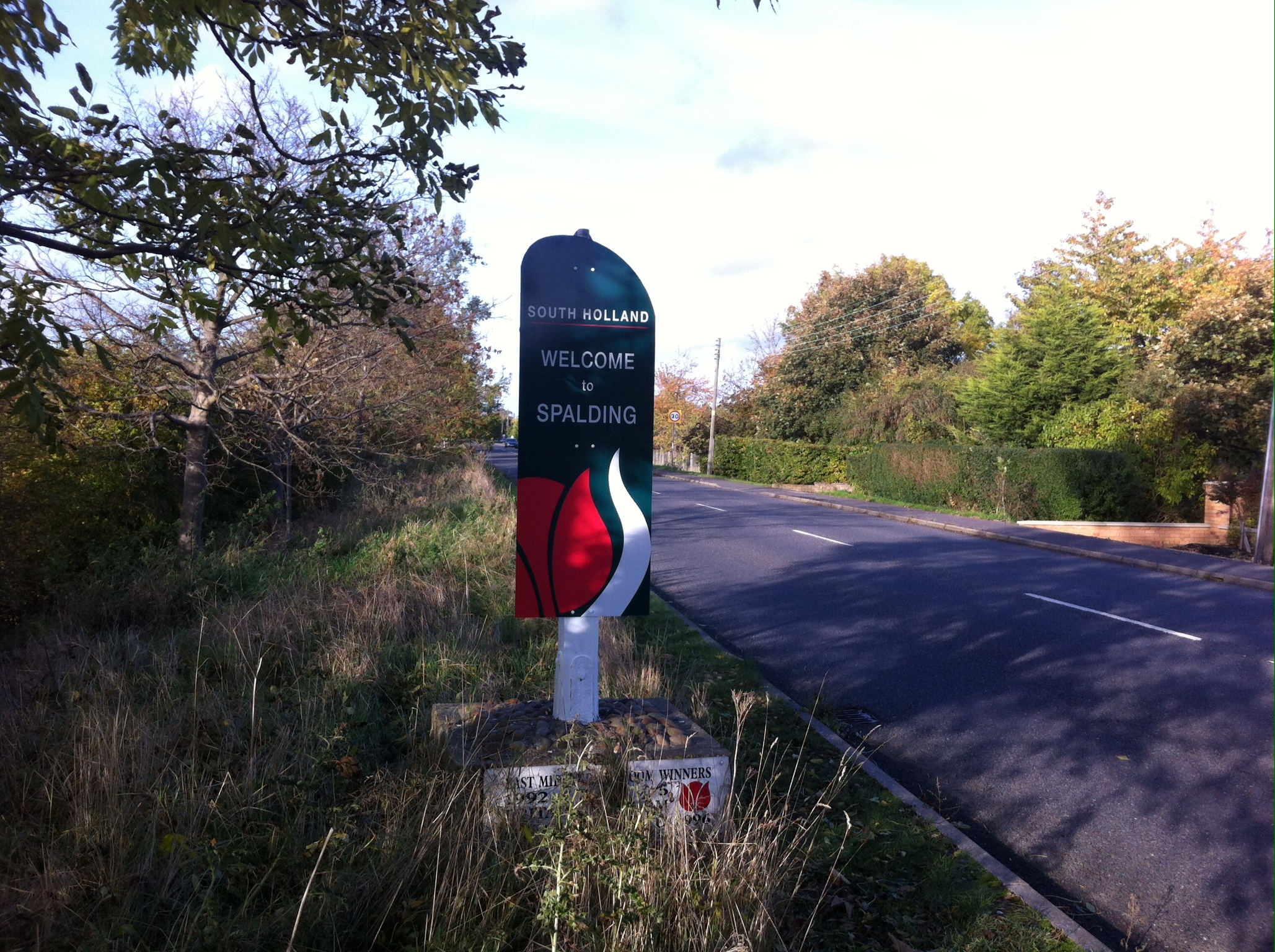
I had a bet with the blokes putting up the first one, about what the tone of the first public comment would be, regarding the new Welcome to Spalding signs. Being a fully paid up member of the cynical B’s club, I bet on it being critical, negative and tinged with an element of spite – and I was right! Pay up guys.
I suppose we should be thankful that at least somebody has not only noticed them, but has taken the time to put pen to paper, given the lack of interest displayed by many when it comes to local issues – apart from planning applications that is.
The writer of today’s letter in the Spalding Guardian, is a regular contributor to the page.  He obviously missed the postage stamp sized story on these signs, the first time around, or I would have expected to see his critical appraisal published back then.
No, the signs are not made of Perspex (a trade name for acrylic) Mr Sadd, they are aluminium, with the image printed on – durable vinyl material, designed for this use.
The signs are as temporary as you want them to be Rodney. If you can find the several thousands of pounds, probably as much as £10,000 would be my guess, to commission, design, manufacture and install something similar to the wooden signs that Spalding once had, I’m sure we would all be very pleased to see these signs replaced.
My guess is, that there isn’t anybody out there already writing the cheque for this work and that these signs will remain in place for at least as long as the embarrassing ‘lollipops’ that they replaced – come on prove me wrong for once, I dare you. That’s not an invitation to go and nick them by the way.

Why 20mph speed limits, in residential streets, are a must

Driving on a local road this afternoon, on my way to deliver public meeting flyers. Suddenly, from behind a parked car appears a football, followed by a young lad, who luckily saw me and stopped chasing his ball.

If I was doing the legal speed limit and hit him, would it make me feel any better at all, that I was ‘in the right’ and he was silly enough to run out in the road without looking? Absolutely not!

The problem these days, is that far too many drivers see 30mph as a target to be aimed for, as opposed to the absolute maximum if, all road conditions are absolutely ideal – and that’s a very big if.   Parked cars, junctions, narrow roads and the strong likelihood of children out playing in a residential street at the weekend, especially if it’s not raining or very cold, all this means that 30mph on most residential roads, is unacceptable, legal or not.

Too many of us become selfish and blinkered when they get behind the wheel of the car, determined to get where we’re going, as fast as we can and with the least amount of slowing down, let alone stopping. You only have to witness the way so many drivers launch themselves at the traffic calming build outs, to see just how reluctant drivers are to have slow down if they can possibly avoid doing so.

I’m not claiming that my, ‘old-man in a flat cap’ driving technique, saved this child from serious injury or death, given that he put his breaks on when he saw the car. However, if the boy had continued to charge on, with only ball recovery on his mind and I had been doing 30 mph, the injuries sustained would have been far greater and far more likely to cause death, than if I had been doing only 20 mph or less and that is something I defy anybody to argue with.

Wygate Park traffic calming build out – a response from LRSP

Below, is the email I sent to Lincolnshire Road Safety Partnership based on residents’ concerns about the traffic calming build out on Wygate Park, between Mariette Way and the Hayfields.   Below this, is the response I have just received back from one of their highways engineersImage.   

From: Roger Gambba-Jones
Sent: 06 October 2013 16:33
To: Stayingalive
Subject: Wygate Park, Spalding – Traffic calming build out

Dear sir,

Sometime ago you were kind enough to review the safety of a traffic calming build out located on Wygate Park.  On that occasion the build out, at the Monks House Lane end of the link road known as Wygate Park, was considered to be safe – a decision I agree with.

Unfortunately, local drivers have recently raised concerns with me regarding the build out located at the other end of Wygate Park, between Mariette Way and The Hayfields.  My position on this build out and indeed all of the build outs, has always been the same; it’s not the build outs that are at fault, it’s the attitude of the drivers using the road.

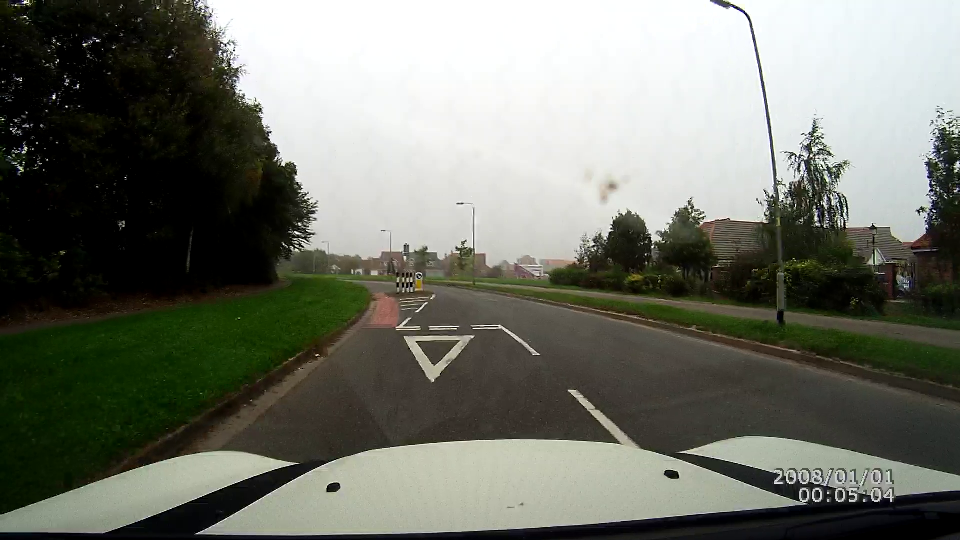
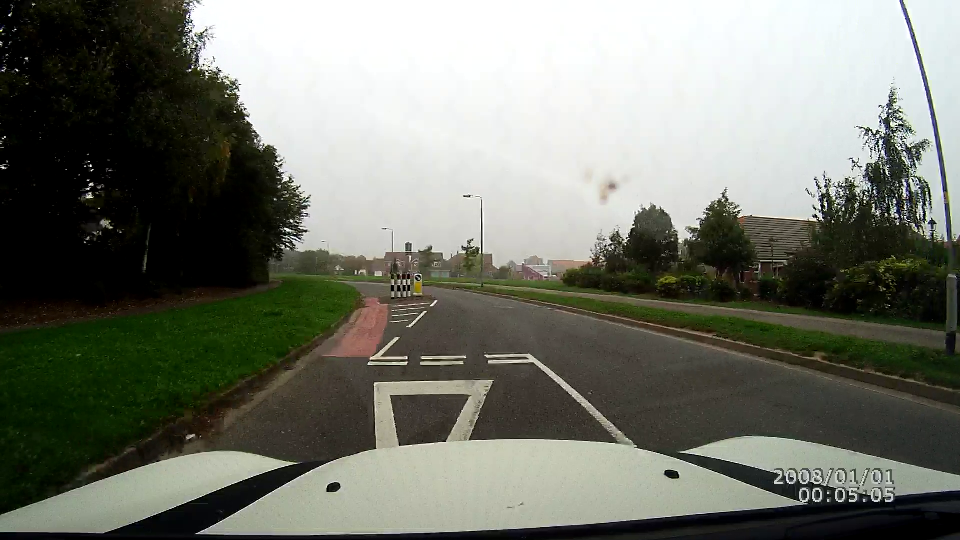
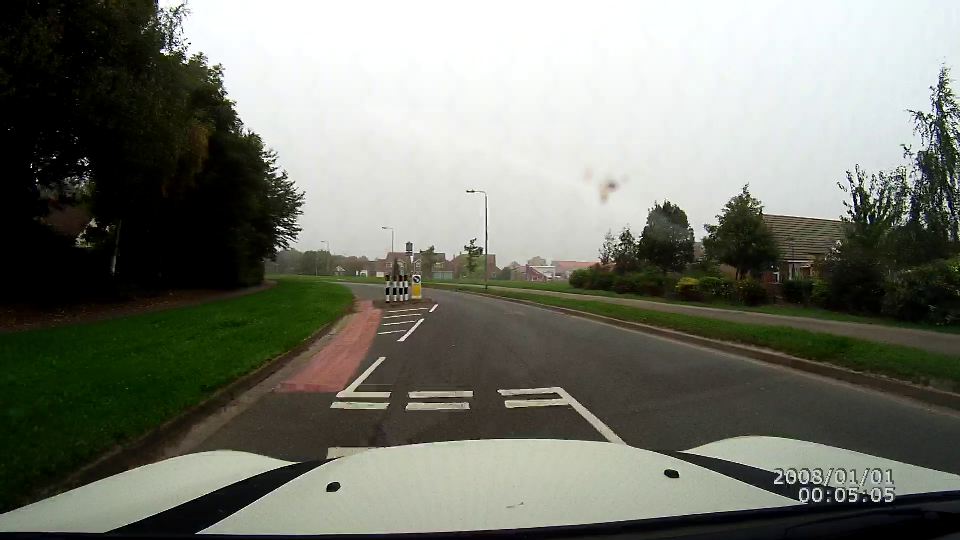
Having done some research myself, using an in car safety camera, the build out referred to appears to be at the optimum position, as it requires drivers to be travelling at a slow speed that would allow them to stop safely at the give way line, should they see a vehicle approaching from the other direction.

Despite posting a number of images on my blog, these residents still see this build out as dangerous and claim that it is only a matter of time before there’s a head on collision.  To the best of my knowledge, there have been no RTCs, or injuries associated with this section of road, but their view remains the same.

Obviously, as the local district councillor, I feel duty bound to do my best to address the concerns of residents, even when I don’t agree with them.  Therefore, can you please advise me on the design philosophy behind this particular build out and its specific location on Wygate Park.

Assuming it has not been done recently, would it be possible for one of your officers to take a look at this build out, in action so to speak, to see if there is something needed in addition to the existing signage, in order to get drivers to negotiate it in a safer manner than many do currently.  Thank you for your assistance.

My best regards,

Councillor Roger Gambba-Jones, SHDC, Spalding Wygate ward 

————————————————————————————————————————————————–

Dear Cllr Gambba-Jones

Thank you for your correspondence regarding the resident’s safety concerns at the build-out on Wygate Park.

I have spoken to a colleague within Highways Division South who oversees this area and, although I have not actually managed to visit the site as yet, I have taken a look at the location on Google Maps Streetview (images from 2009). We are both of a similar opinion to yourself. The build-out seems to be more than adequately visible, with the appropriate signing and road markings. There is good forward visibility through the feature as well, so that oncoming traffic has more than enough time to adjust their speed accordingly.

I have queried our accident database which has records of personal injury accidents dated back to 1985 and is correct to 31/07/2013. Within the proximity of this feature there has not been any injury accidents recorded; with the nearest injury occurring at The Hayfields junction.

From our stance, I would suggest that there is nothing wrong with the road design at this point and in light of recent directives from the Department of Transport to reduce sign “clutter” that any additional signing or markings would not be advised. If the problem persists and is down to driver behaviour where they may not be adhering to the give way control then I would suggest that there could be a possible enforcement issue for the local Police.

I am sorry I cannot help you further, but unfortunately you have assessed the situation very similarly to myself and without drastic measures to force drivers to comply there is not a great deal we could proposed without “over engineering” which would be less desirable for all.

Please do not hesitate to contact me should you need to discuss this further.

Regards, Lincolnshire Road Safety Partnership


Look at all the stuff you can do online with SHDC

Just go to: http://www.sholland.gov.uk/doitonline/

Abandoned Vehicles Report an abandoned vehicle.
More information: Abandoned Vehicles – Information
 
Animal Fouling Report dog fouling.
More information: Dog Fouling | Dog Warden Service
 
Dead Animal Notification Notify us of a dead animal on the highway or publicly owned land.
More information:: Dead Animal Notification – Information
 
Flytipping Report flytipping.
More information: Flytipping – Information
 
Footway Lighting Report a fault with a footway light. Street lighting faults should be reported to Lincolnshire County Council.
More information: Street Lighting
 
Graffiti Report an instance of graffiti.
More information: Graffiti – Information
 
Street Cleaning Report a road that is in need of sweeping due to accumulation of leaves, litter, etc.
More information: Street Cleaning – Information
 
Litter Bin – Report Report an issue regarding a street litter bin (e.g. if a bin has been damaged or needs emptying).
More information: Street Litter Bins
 
Litter Bin – Request Request a litter bin for your street.
More information: Street Litter Bins
 
Benefits and Couuncil Tax Support
Housing Benefits Calculator and Claim form Fill out this form to see whether you may be entitled to Housing Benefit and to submit a claim if you wish. You can also use this on-line calculator and application form to apply for Council Tax Support (if applicable)
More information: Claiming Housing Benefit
 
Local Housing Allowance Calculator Calculate the possible amount of Housing Benefit available.
More information: Housing Benefit – Local Housing Allowance
 
Council Tax Support Calculator Use this calculator to see what your new entitlement might be under the Council Tax Support Scheme. Please note this Calculation should be used as a guide only.  
Refuse & Recycling
My Collections Find out your recycling and refuse collections days.
More information: Refuse and Recycling Collections
 
Missed Recycling Collection Report a missed recycling collection.
More information: Missed Recycling Information
 
Missed Refuse Collection Report a missed refuse collection.
More information: Missed Refuse Information
 
Business
Business Inspection Request Request a business inspection.
More information: Food business – food safety inspection |Health and Safety at work
 
Industrial Unit Enquiry Express an interest in one of our industrial units.
More information: Commercial Property Lettings Advice and Allocation
 
Tenancy
Communal Repairs Report a problem on your estate or in your block.
More information: Services and communal areas
 
Leisure Event Bookings
Exhibition Booking at Ayscoughfee Book an exhibition at the Geest Gallery, Ayscoughfee Hall Museum.
More information: Ayscoughfee Hall Museum – Geest Gallery
 
Football Pitch Bookings Make a provisional football pitch booking.
Sir Halley Stewart Playing Field
Castle Playing Field
Monks House Lane
Fishpond Lane
 
Open Space Event Bookings Check availability and provide details of your proposed event.
Spalding Town Centre
Sir Halley Stewart Playing Field
Ayscoughfee Gardens
Castle Playing Field
 
Wedding at Ayscoughfee Check availability and provide details of your proposed event.
More information: Ayscoughfee Hall and Gardens – Wedding
 
Environmental
Dangerous Structures Notification Notify us of what appear to be potentially dangerous buildings, structures, or parts of a building.
More information: Dangerous Structures Notification – Information | Open and Derelict Properties
 
Markets – Cleaning Report an issue regarding market cleaning.
More information: Markets – Cleaning – Information
 
Noise Pollution Report an issue with Noise Pollution.
More information: Noise Pollution Information
 
Public Conveniences Report an issue regarding a public toilet.
More information: Public Conveniences – Information
 
Stray Dogs Report a stray dog.
More information: Stray Dogs – Information | Dog Warden Service
 
Parking
Parking Fine Appeal Appeal against a parking fine.
More information: Excess Charge Dispute
 
Parking Season Ticket Apply to go on the waiting list for a quarterly parking season ticket.
More information: Car Park Season Tickets
 
Miscellaneous
Consultation Sign Up We welcome all feedback so if you would be interested in receiving surveys or taking part in any form of consultation on Council matters, then please complete the form opposite.  
eAlerts Sign up for email alerts about job vacancies.  
E-billing Interest Register your interest in the forthcoming council tax/business rates e-billing service.  
My Lincolnshire What is My Lincolnshire?  


Wygate Park intentional(?) blind spot identified

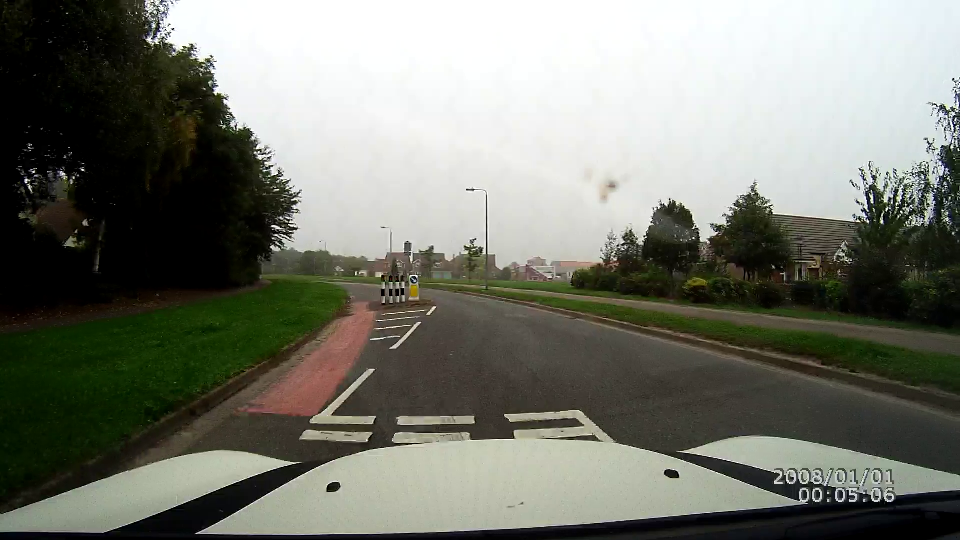
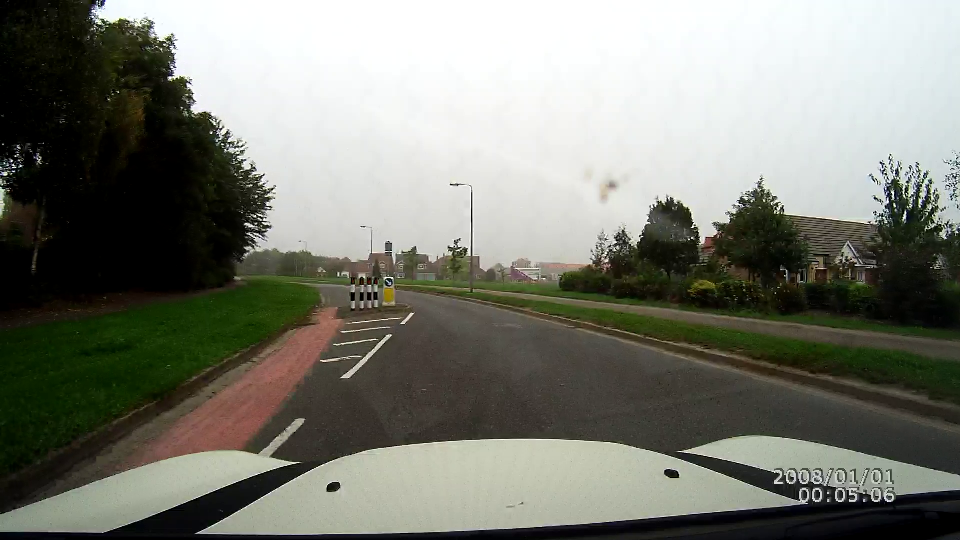
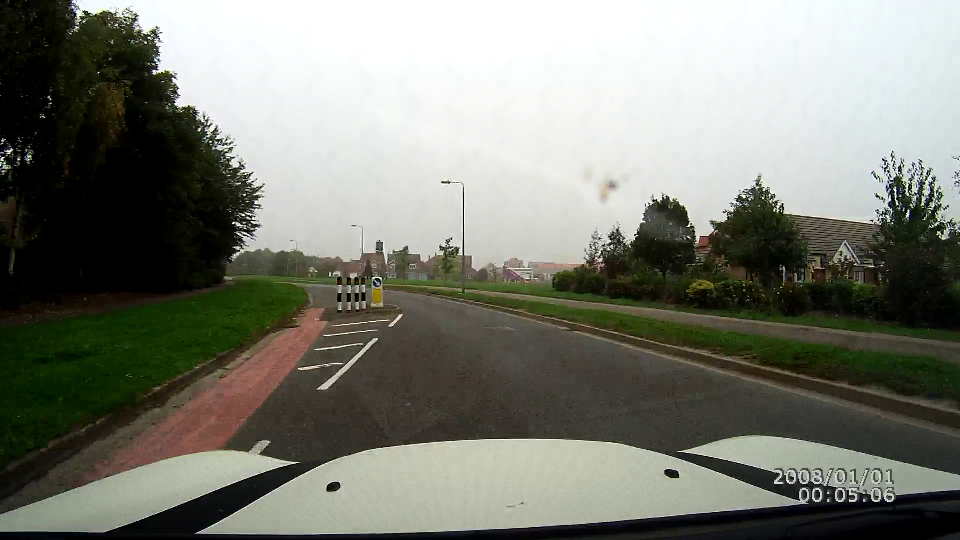
1. Approaching the build out obviously sweeps left, out of sight, requiring drivers to slow down because they are unable to see if it’s clear to drive around the build out.ImageImageImageImageImageImageImage

In these two final shots, you can see the road beginning to open up more, as I arrive at the exact location of the give way line on the road.  Clearly, if the driver is to proceed safely, they will need to be going slow enough at this point to make a decision as to whether or not to stop on the line.
Image