Mr Brown uses old grievance to miss the point

At first, Mr Brown’s letter, in the recent edition of the Spalding Guardian, appeared to be in support of Chris Brewis and his ‘Crowland playhouse’ comments and my rebuttal letter regarding his totally artificial outrage.

However, upon further reading, Mr Brown is actually using his letter to revisit his dis-satisfaction with a complaint he made in May. At that time and in another letter, he complained about the response he received from a council officer, when he complained about a neighbour operating a hairdressing salon from home. Allegedly, the officer told him, ‘we don’t have the resources to investigate’. He also finished his complaint by referring to civil servants, an error he claims was him being flippant. I’m afraid I missed his flippancy in a Twitter response and assumed it to be his lack of understand that local government staff were not civil servants.

On the matter of the home based hairdressing salon, I’m pretty certain that what he claims to have been told, would not have been the whole story – our planning compliance officers are far more professional than that.

What the officer would have said was, that in principle, small businesses, operating from residential addresses, but not causing any issues for other residents, are viewed as acceptable. He would also have been told that it would require a certain level of evidence of actual disturbance to neighbours, before any investigation was carried out and that we did not have the resources to spend time collecting that evidence.

Finally, his letter in the Guardian was entitled, ‘This is why so many people are disillusioned’. I think it would have been far more accurate to say, ‘This is why Mr Brown is so disillusioned’, as his letter is clearly about him not getting his way, rather than anything to do with democratic representation.

Something every planning committee already knows

Copied from Local Government Chronicle online

Homeowners prevent housebuilding, report finds
24 October, 2014 | By David Paine

House-building rates are lower in local authority areas with higher proportions of homeowners, according to analysis by the Institute for Government (IfG).

The report,‘Housing that Works for All – The Political Economy of Housing in England’, covered the period from 2001 to 2011.

It follows the publication of the Lyons housing review, which outlined how up to 200,000 new homes a year could be built by the year 2020.

The IfG said there was a risk of planning decisions being biased in favour of current homeowners.

This was in part because of a lack of city or region-wide planning co-ordination, which meant planning policy operated “exclusively at the local level and is responding to the interests of local residents”.

It said new developments often created new infrastructure costs for councils, and extra demand for public services, yet the increase in revenues from developments was “limited”.

The report also warned that the requirement for planning permission to be granted for any change of land use made decisions “slower and more uncertain”. Homeowners were among the most likely groups to oppose new homes, it said.

Miguel Coelho, IfG fellow and co-author of the paper, said: “A common accusation is that planning decisions tend to cater for the interests of current homeowners, rather than allow for a wider, more balanced set of interests. New empirical presented in this paper lend support to this hypothesis.

“Our analysis shows in particular that in the decade to 2011, housing stock grew significantly less in local authorities where there were higher proportions of owner-occupiers amongst local households.

“Credible proposals to reform the planning system should address this problem and ensure that planning decisions allow for the full breadth of interests affected by development.”

However, the paper acknowledged reforming the planning system would be difficult.

It claimed there had, so far, been a lack of public support to do so, and that the wealth of households and health of the UK financial sector had “become inextricably intertwined with the macro-economy, thus undermining the case for fast, radical reform”.

It also claimed that “successive governments have struggled to find a sensible balance between regional/national planning co-ordination and local democratic legitimacy”.

HAVE YOUR SAY

Developers are the only ones being heard by DCLG

It doesn’t matter who the minister is at the time, when it comes to DCLG and planning policy, they apparently all have the same priority – developers and their wellbeing.
Although all of us with an interest in planning, have been shouting long and loud, about the shortcomings of the NPPF. However, what we didn’t really cotton on to initially, or at least not as far as I noticed, was a hand grenade with the pin already out, called viability.
It would be nice to think that the government’s rationale for introducing the viability trap, was to overcome developer sins of the past – greed.
You might recall that, in the lead up to the 2007 financial bubble burst, house prices were increasing at a ridiculous pace. Developers were keen to cash in on this lunacy and seemed ready to pay just about any price to get their hands on land. Of course, landowners, were equally keen to cash in, so pushed for the highest price they could get.
Now if you or I overpaid for something we bought and then expected somebody else to pick up the bill, because we couldn’t afford to use it, we’d be told tough luck mate, them’s the breaks. Developers overpaid for land that they then banked, confident that the only way was up when it came to house and therefore land prices.
However, in the case of the developers, they’ve found something else to cash in on – the government’s panic about the economy and their belief that house building will somehow save it. So instead of having to bite the bullet and take the hit in their pockets, the developers have convinced the government that nothing will get built, unless they can wriggle out of all of the requirement

PRESS RELEASE

Minister urged to protect future of rural affordable homes

Housing minister Brandon Lewis has been urged to protect small rural communities from Government proposals which could drastically cut the development of new affordable homes.

Community Lincs is backing the plea by its national body ACRE (Action with Communities in Rural England), which has written to the Minister to outline its objections.

The charity says the planned changes to policy will threaten the future of communities in the countryside, where house prices have risen by 82pc in the past 10 years.

The Department for Communities and Local Government (DCLG) is consulting on its proposals to remove section 106 planning obligations, which deliver affordable housing, from sites of fewer than 10 homes.

ACRE, the national voice for England’s 38 rural community councils, says small-scale developers may simply stop building affordable homes if the changes go ahead.

The charity is calling on the Minister to exempt all sites in communities with a population under 3,000.

Community Lincs Chief Executive, Fiona White said: “Figures from DCLG show that in 2012/13, 66pc (1,905) of homes in settlements under 3,000 were delivered through Section 106 agreements.

“Clearly, the proposed changes would prevent a significant number of affordable homes being developed each year. This would have a profoundly damaging effect on small, rural communities – threatening their long-term sustainability.

“Affordable housing enables local people to remain in a community where they have families, schools and jobs. It allows people to return to communities where they grew up and it helps sustain local services, including schools, businesses and shops.

“If these changes go ahead, we expect to see developers only building housing at market prices to obtain the greatest profits. There is a major shortage of affordable homes across the UK and Government policies should ensure that more are built, not fewer.”

ACRE chief executive Janice Banks said: “We are calling on DCLG to make an exception for communities with a population under 3,000. This would give the Minister the opportunity to deliver a policy that works for the right reasons in the right communities whilst avoiding serious damage to affordable housing delivery in small, rural communities.”

Ms Banks said a cross-party bill, which would give local authorities the decision on the most appropriate threshold, was not the answer.

She said: “While we agree that DCLG’s proposals don’t take any local conditions into account, leaving the decision with local authorities will simply result in a postcode lottery. An exemption for small communities is the fairest solution.”

Issued: 22/09/2014

Media contact: Stuart Duckworth: 01529 301967

Notes to editors:

· Section 106 agreements – known as planning obligations – require developers to provide contributions – such as affordable homes or playgrounds, for example – to offset negative impacts caused by construction and development.

· Rural house prices have risen 82% in 10 years, faster than urban areas. (Simple Average House Price Sales, The Land Registry)

· In 2011, the average lower quartile house price was 8.3 times the average lower quartile earnings in predominantly rural areas. This compares with 7.1 in predominantly urban areas and 7.3 in England as a whole.

There’ll be no enlightenment from this Dark(ness)

litter chase not text

‘An officer of the district council, should follow somebody they see carrying a drinks can and when they drop it, they should give them an on the spot fine’. Cllr Graham Dark at a full council meeting.

According to this weeks edition of  Spalding Voice Graham Dark wishes to enlighten people on the subject of litter.

Using the letters page, this independent councillor and dedicated navel gazer,  has decided to get an early start to his 2015 re-election campaign.  He does this with a very brief offering of praise for the litter picking efforts of a young Conservatives group, all with Sandra and Tony White, dedicated and tenacious Spalding residents.

However, the real purpose of his politically motivated letter, is to attack the council’s Conservative group and in particular myself, as the cabinet member for waste and recycling.

Councillor Dark appears to be obsessed with use of tickets and fines, obviously a left over from his days as a police officer.  Unfortunately, his time as a cop hasn’t given him any understanding of the difference between having a robust policy and actually having sufficient resources to apply it regularly – certainly not to the extent he desires.  In fact, this desire is so compelling, he seems willing to see other council services suffer, in order to satisfy it.

Cllr Dark, having seen his previous obsession, a bandstand in Ayscoughfee Gardens gain financial support via Springfield’s s106 monies, has now turned his myopic gaze towards litter and the catching of those who drop it.  His repeated references to one thing in particular, enforcement, is becoming a little tedious.

I accept that, some years ago, an undertaking was made to empower certain council officers, to serve fixed penalty notices on littering offenders.  In practice, this was never a realistic option, given that few, if any, of our officers were ever in a position to witness, let alone act, when such offences occurred.  I am of course assuming that cllr Dark wasn’t expecting these officers to do this enforcement in their lunch breaks, but one can never be sure, when it comes to a member of the Independent group, as they seldom allow reality to get in the way of a bright idea.

I may of course be wrong on this last point because, if memory serves, at a recent full council meeting, he made the quite extraordinary suggestion, that potential litter droppers should be ‘stalked’ by suitably empowered council officers.

Graham Dark considers it acceptable for a professional Housing, Planning, or Environmental Health officers, to wander the streets of Spalding, looking out for anybody with a drinks can in hand.  The officer would then follow that person, keeping a careful watch on them and this potentially source of litter.  Should that person discard their can improperly, the officer would pounce on them, book of fixed penalty notices in hand, no doubt crying, ‘your nicked’, or something similar.  How far and for how long this stalking had to take place is unclear.  Suffice it to say, this procedure will not be written in to the council’s robust littering policy, anytime soon.

Incidentally, Graham Dark and his partner in crime Roger Perkins, are both members of a committee that has the role of scrutinising the council’s performance.  Despite this, at no time in their ‘years’ of allegedly banging on about it, have they bothered to get the issue of litter enforcement placed on the agenda of that committee, so that the council’s so called, ‘abysmal performance’ can be properly scrutinised.  I wonder if Graham Dark would care to enlighten me on the reason for this?

Littering is a serious problem and  a blight on our towns and villages. With its larger population and busier streets, Spalding suffers the most problems and presents the greatest challenges.

Finally, can I enlighten you as to what the future might hold.   There has been a major reduction in local government funding, due to the previous Labour government’s mismanagement of the economy.  As such, I cannot promise to commit any more resources to this problem, than those currently available.  We are however, doing our best to encourage and support the sort of community involvement and pride displayed by Jack McLean, young Conservatives, and Sandra and Tony White.  If you would like to offer your help, please do get in touch.

Exorbitant spending on Overseas Aid hasn’t made us any safer

One of the reasons given by David Cameron for his year on year increases in the Overseas Development budget since 2010 – well beyond that of any other European country – is that it will make our country a safer place, by helping those in foreign countries, improve their lot and become less radicalized by political extremists.  It has in fact, done nothing of the sort and will never do so, as long as we give the extremists reason, in their eyes, to see our country as their enemy and oppressor.

Some might suggest that our history as a colonial power, exploring and exploiting the world over many centuries,  had already done the damage, but I don’t believe that, given that many of our previous colonial conquests, remain members of the Commonwealth.  What has done the real damage and made us especially vulnerable, is our much cherished special relationship with the USA and our willingness to march shoulder to shoulder with them, into recent middle eastern conflicts.

Whilst successive Westminster leaders of all political persuasions, have viewed this relationship as the Holy Grail of international politics, giving the UK much great influence and kudos than it might otherwise have, I see it more as putting a target on the backs of every British citizen living and working in some of the most volatile areas of Africa and the Middle East.

Multiculturalism, a legacy of the Blair years, but again eagerly pursued by virtually all administrations, has opened our doors and left us vulnerable within our own boarders, something the Americans have bent over backwards to eliminate, post September 2001.  Live and let live, when those you are letting live in their own extremist ways – Sharia law is a very good example of this, along with female genital mutilation, is an irresponsible and ultimately dangerous political doctrine to pursue.

The upshot of this government’s single minder pursuit of international glory, often described as, ‘punching above our weight’ – a rather unfortunate term to use when you are supposedly trying to be everybody’s friend – is that an increase in spending in one area, has to be matched by a decrease elsewhere.  This applies even more so, when you are in the middle of a global financial crisis, but still determined to spend, spend, spend!  Which brings me to my point and the reason I have borrowed the article below.

Before anybody starts telling me that, despite all the cuts in local government funding, taxpayers haven’t noticed any reduction in services, I’d like to put that in some context.

Yes, most, if not all the essential services have been maintained to a good standard and residents won’t have seen their bins left un-emptied, streets knee deep in litter, or grass too long see over, let alone walk through.  Council houses are still being allocated and maintained and benefits are still being paid out on time.

However, what is suffering and will be cut even further in years to come, are those things we call discretionary – the things councils do because they believe their residents would like that service to be provided, even though the law doesn’t require it.  Leisure centres, youth clubs, play equipment, sports pitches, libraries, public toilets and maybe even usable, or at least affordable, burial grounds, could all disappear from localities, as cuts in local government funding continue for years to come.  Remember, all this is being done under the banner of deficit reduction, whilst the overseas aid budget continues to grow and grow, year on year.

Copied from Local Government Chronicle – 23 August 2014

Author – Tony Travers, director. Greater London Group, London School of Economics

The government will soon be spending twice as much on international development as councils can on highways

Under cover of mid-summer, the government has published two sets of figures about public expenditure.

The Department for Communities and Local Government revealed local authority revenue spending and income totals for 2014-15, while at the start of this month the Treasury belatedly released the annual Public Expenditure Statistical Analyses volume. Together these publications show how the years of austerity have affected individual services.

Although some parts of central government, notably the Home Office, defence and transport, have seen reductions of 100/o or more in their cash budgets, all the biggest programmes have been protected.  Council spending, by contrast, has been forced down at a remarkable pace.  The UK government will soon be spending twice as much on international development as English councils can afford to spend on highways and transport. Housing, roads, environment and planning have seen their cash expenditure fall by almost 30% in four years. In real terms, the cut is over 40%.

Council productivity increases must be among the greatest ever achieved by the public sector.  Planners appear to be processing as many applications in 2014 as in 2010 with barely half the resources. [What the planners are probably doing, is giving up the fight to maintain standards, given that the NPPF was written by developers, for developers and just passing applications to meet the targets set by Whitehall]. 

The government and opposition have no choice but to find additional money for the NHS: fear of public opinion will open the Treasury’s vaults. Pensions, as the biggest part of social security, are triple-locked into inflationary increases. Schools cannot be denied cash.

By 2020, many council spending programmes will have been halved within a decade.


CENTRAL AND LOCAL GOVERNMENT SPENDING CHANGES

  2010-11  £millions 2014-15  £millions Change %
Local government
Housing

2,733

1,945

-28.8

Highways & transport

6,661

4,814

-27.8

Environment, planning, culture

10,959

9,029

-17.6

Social care

20,851

22,090

+5.9

Central government
International development

5,930

7,870

+32.7

Social security

164,512

184,380

+12.8

NHS

97,469 109,650

+12.5

Education

50,387 54,500

+8.2

Gobshite Alert Minister Says Unemployment Caused by Moaning About Unemployment

andrew lainton's avatarDecisions, Decisions, Decisions

Daily Mail

Unemployed young people are being put off even trying to find work because of the ‘morally reprehensible’ doom and gloom spread about the jobs market by Labour, the employment minister has said.

Esther McVey said there are ‘more than enough’ businesses willing to give young people a chance.

But she said jobless youths are giving up before they even start to look for work because of the ‘relentless negativity’ about their prospects.

Miss McVey, 46, who previously said young people should be prepared to take lowly jobs in coffee shops if they want to get on in life, said jobseekers should be more optimistic about their chances.

She told the Mail: ‘For too long now, young people have been subjected to relentless negativity about the state of the workplace that is waiting for them when they finish their study, training or apprenticeship.

‘I meet with thousands of young…

View original post 55 more words

Leonora Rozee Slams Complications of Reformed Planning System

Spot on comments from somebody with a wealth of knowledge in the field. Time to learn some lessons from other European systems, including the use of zones. Even more crucial to the long term wellbeing of England, is a National Plan for England. Without a national plan, how are we ever going to understand where the best location for significant development should go, in order to rebalance the resource black hole that is London.

andrew lainton's avatarDecisions, Decisions, Decisions

A damning indictment from Leonora Rozee on how complicated the reforms of the planning system has become on Linked-In

We are rapidly reaching the stage where no-one will actually have any idea of what our English planning system is any more. (Have we already reached it?). The only sensible solution is a wholesale review from top to bottom of why we need a planning system and what it needs to comprise, with the result set out in a single Act supported by such regulations, policy and guidance as are necessary to enable all to understand it. We now have a complete mess as successive governments have fiddled and changed what is there without thinking through exactly what it is they are trying to achieve – other than the much expressed desire for a simpler system with increased community involvement! If this Government want to get rid of it completely, then be…

View original post 16 more words

Districts face loss as county waste deal ends

Copied from Local Government Chronicle online
13 August, 2014 | By Corin Williams

Districts in Lancashire are challenging the county council’s plans to change the funding system for waste collection in a way they say could cost them hundreds of thousands of pounds.

Lancashire CC has said it will no longer fund district councils for each household they supply with a kerbside recycling collection after the present agreement, which began in 2004, runs out in 2018.

Districts will instead be paid by recycling credits issued for the tonnages of recyclable materials they collect.

Wyre BC leader Peter Gibson (Con) has warned his council would face a revenue reduction of more than £980,000, equivalent to a 15% increase in council tax, as a result of this change.

He said in a report to a council meeting that recycling credits were an unreliable payment method as “districts couldn’t predict what their recycling levels would be and this made financial planning more difficult”.

Eleven districts are involved in the existing deal with Lancashire, the exception being Ribble Valley BC.

A Lancashire spokesman told LGC’s sister title Materials Recycling World: “The county council has made the waste collection authorities aware that it is considered highly unlikely that these agreements will be further extended once they expire in 2018 in order to ensure that they have sufficient time to plan their financial strategies beyond this date.”

This story could just as easily be about Lincolnshire County Council and its treatment of Lincolnshire district councils – but worse!

Each Lincolnshire district council already pays for its recycling collection service and only get recycling credits from LCC. The county are now stopping the payment of recycling credits AND taking over the disposal contract, so that they collect the revenue that is currently paid by the contractors.
Revenue from recycling is never a certainty and depends on a global market so, to be fair, the county council is at least taking on that risk. However, as the world recovers from the financial crisis, the risk becomes significantly lower.
This move by LCC, is a financial double whammy for South Holland and two other Lincolnshire district councils. Out taxpayers will still have to pay to collect recycling, but now the cost will not be offset, in part at least, by the payment of recycling credits, or revenue from the contract.

On Being a Councillor

Tessa Coombes's avatarTessaCoombes

I seem to have had quite a few comments and discussions recently about politicians and planners, and several people have asked me why I became a politician, what it was like on planning committee and what I think of politicians now. So I thought I’d have a go at writing a blog about it!

I was a Bristol City Councillor between 1994 and 2002, representing first Southville Ward and then Knowle Ward, at a time when Labour controlled the council (with a pretty big majority when I first got elected). It was also a time of constant change, as after my first year we transitioned to being a Unitary Council, with the abolition of Avon County Council, operating with the same tight city boundaries as before, but taking on massive new functions including Education and Social Services, with massive new budgets. We also took a decision to remove the post…

View original post 1,164 more words

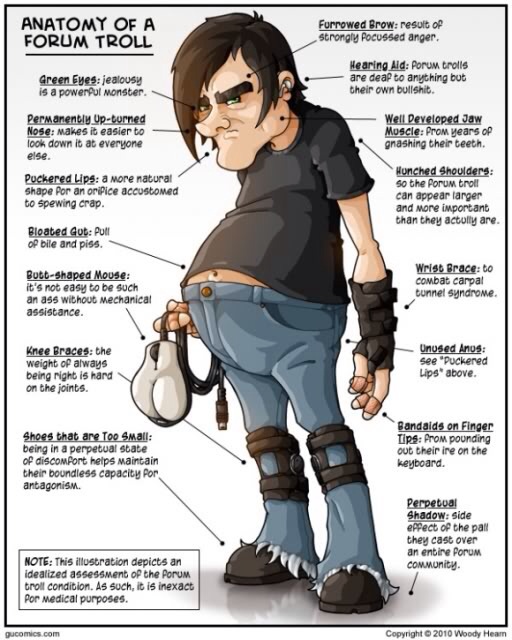
Spalding Today website infested by trolls?

internet troll – Web definitions
In Internet slang, a troll is a person who sows discord on the Internet by starting arguments or upsetting people, by posting inflammatory, extraneous, or off-topic messages in an online community, either accidentally or with the deliberate intent of provoking readers into an emotional response …
http://en.wikipedia.org/wiki/Internet_troll

It seems the last place to go, if you want to get an insight into what people in South Holland think about a a local issue, is the website run by our local newspaper.
Oh don’t get me wrong, you’ll get plenty of opinion, but only from a very small element of the population – six at the last count. However, these opinions won’t be from what one could call right minded, or informed people, hence my inclusion of the above definition.
Although the screen names are different, the tone of their comments are not. To a man and possibly woman, they all display the same uninformed, spiteful, small mindedness.
Indeed, I’ve yet to read one that doesn’t sound like it’s come from somebody holed up in a darkened room and fermenting on the conspiracy theory that, all councillors are corrupt and the district council is out to destroy South Holland, one piece at a time.
Unfortunately, these trolls display little, or no grasp of even the basic facts behind the online stories they comment on – all they know is what they read on their screens – so it would be pointless to enter into any sort of constructive online debate with them. Indeed, I don’t think they even care about the content of story, they just see it as an opportunity to snipe and sneer at others.

IMG_0321.JPG