As forecast, first public comment was a negative

Spalding Common

Spalding Common

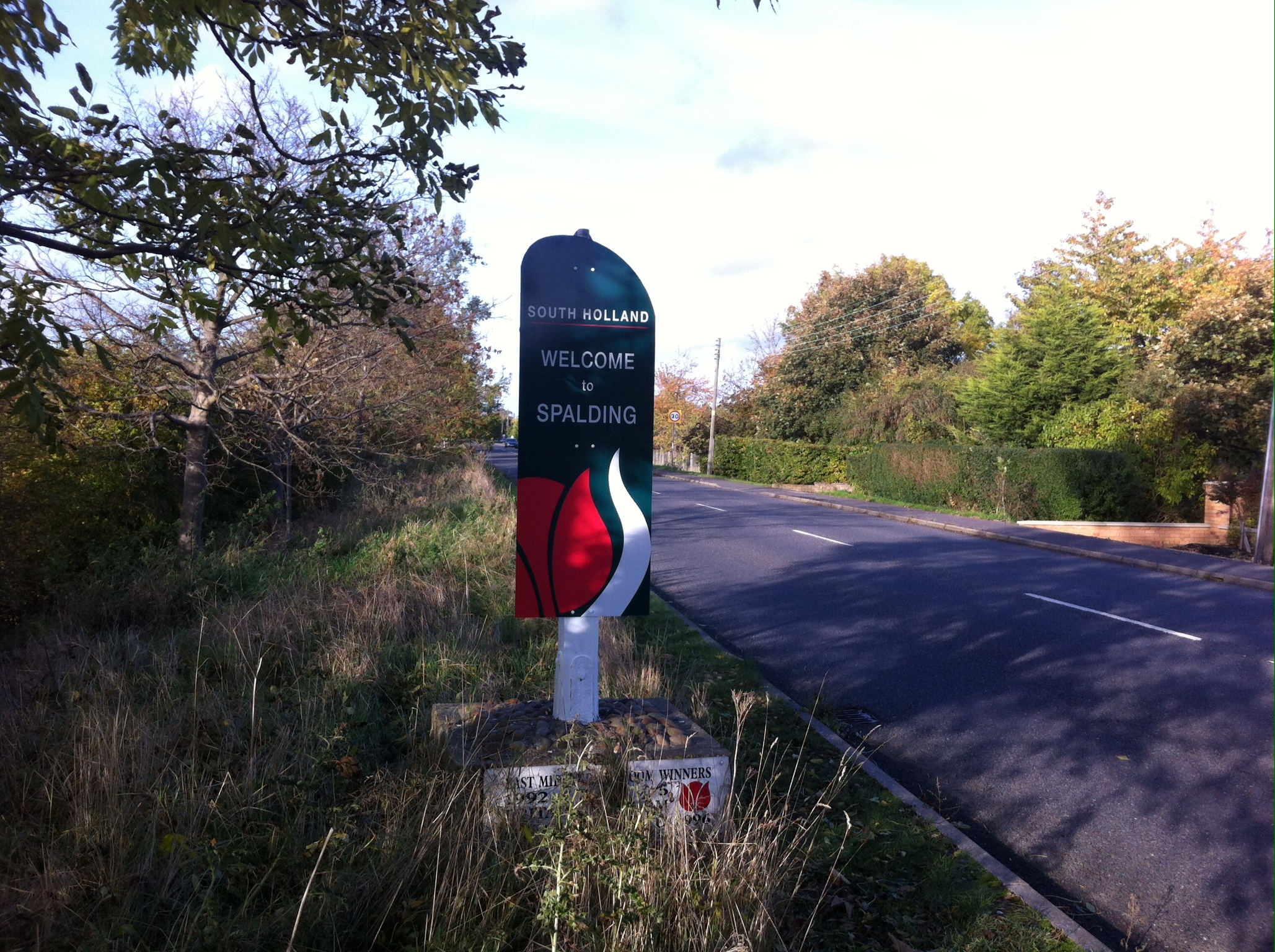
I had a bet with the blokes putting up the first one, about what the tone of the first public comment would be, regarding the new Welcome to Spalding signs. Being a fully paid up member of the cynical B’s club, I bet on it being critical, negative and tinged with an element of spite – and I was right! Pay up guys.
I suppose we should be thankful that at least somebody has not only noticed them, but has taken the time to put pen to paper, given the lack of interest displayed by many when it comes to local issues – apart from planning applications that is.
The writer of today’s letter in the Spalding Guardian, is a regular contributor to the page.  He obviously missed the postage stamp sized story on these signs, the first time around, or I would have expected to see his critical appraisal published back then.
No, the signs are not made of Perspex (a trade name for acrylic) Mr Sadd, they are aluminium, with the image printed on – durable vinyl material, designed for this use.
The signs are as temporary as you want them to be Rodney. If you can find the several thousands of pounds, probably as much as £10,000 would be my guess, to commission, design, manufacture and install something similar to the wooden signs that Spalding once had, I’m sure we would all be very pleased to see these signs replaced.
My guess is, that there isn’t anybody out there already writing the cheque for this work and that these signs will remain in place for at least as long as the embarrassing ‘lollipops’ that they replaced – come on prove me wrong for once, I dare you. That’s not an invitation to go and nick them by the way.

Wygate Park intentional(?) blind spot identified

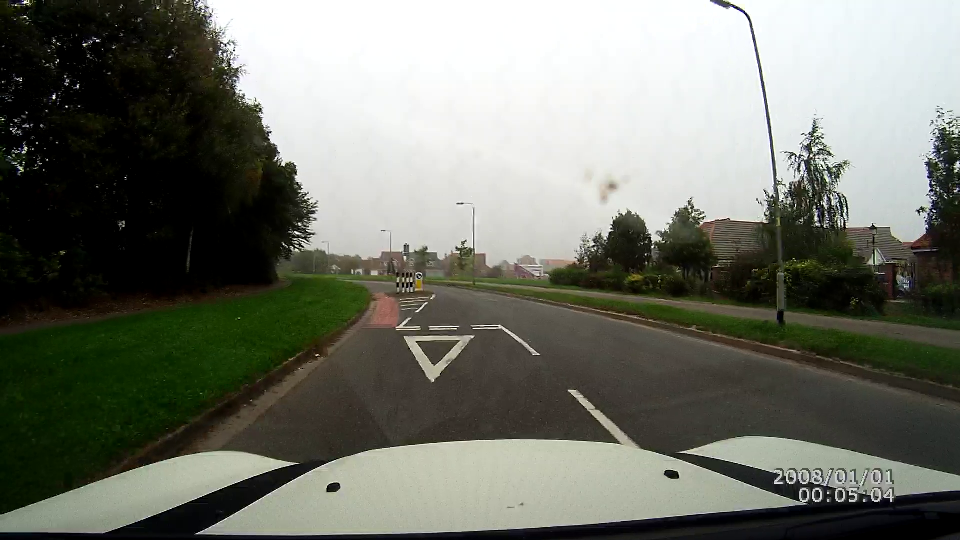
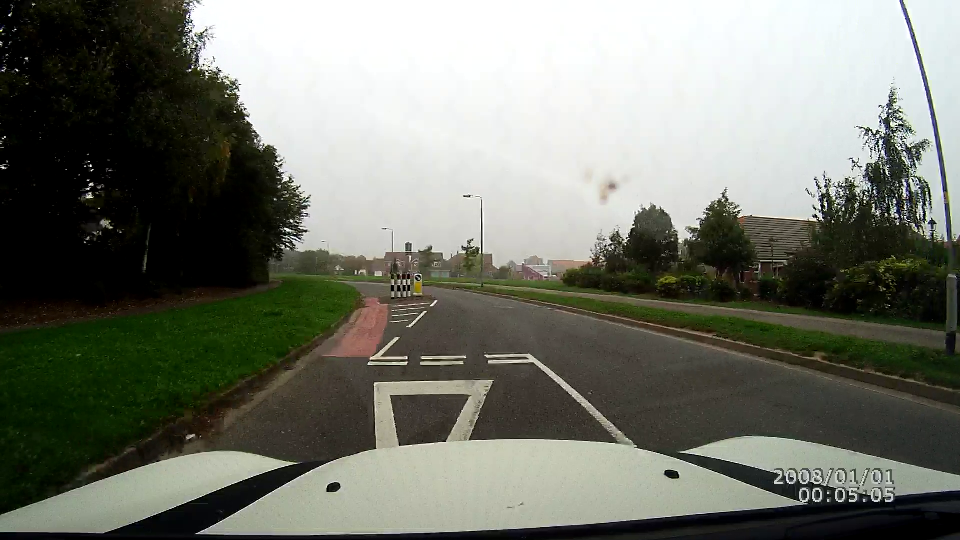
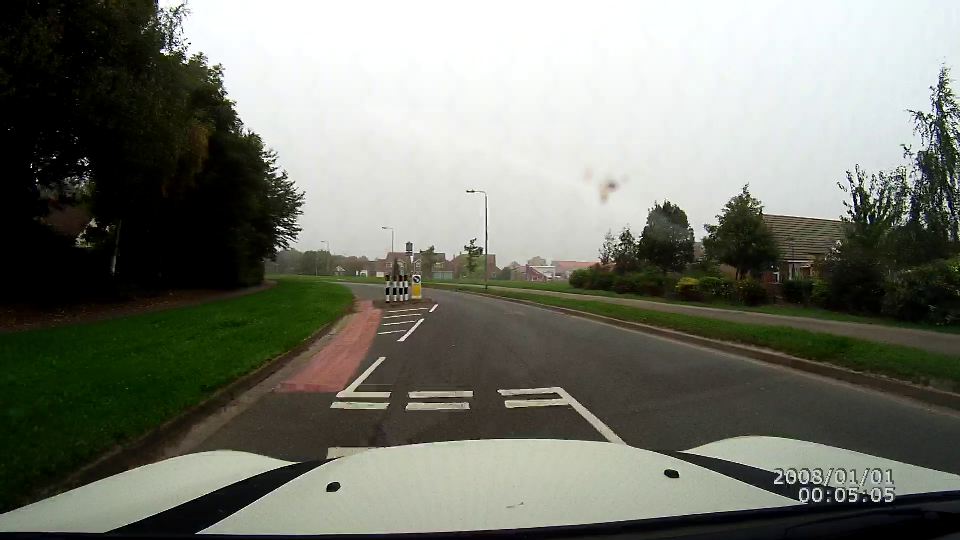
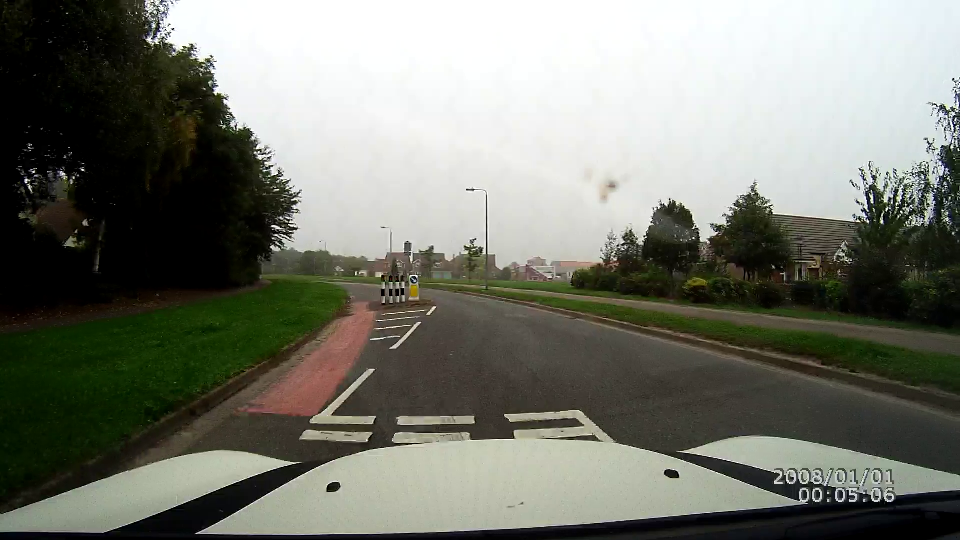
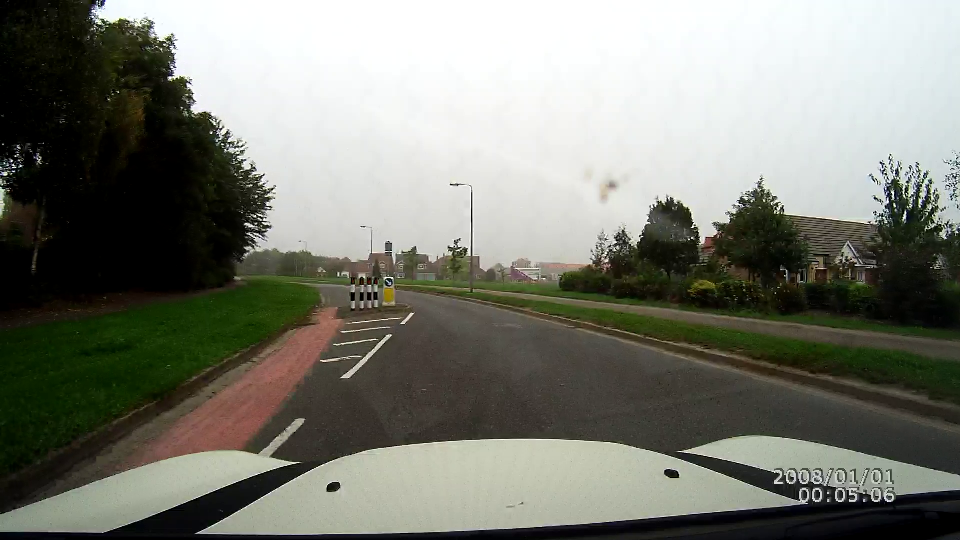
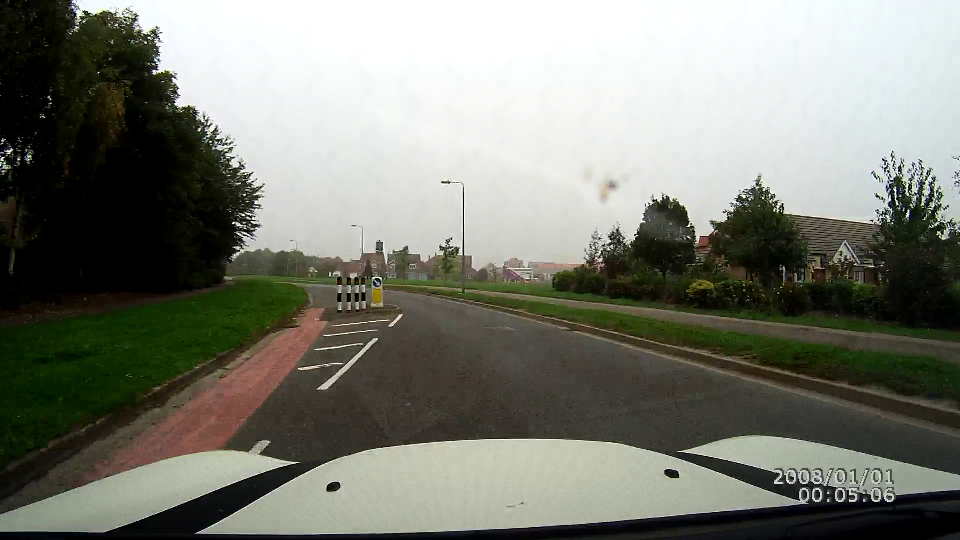
1. Approaching the build out obviously sweeps left, out of sight, requiring drivers to slow down because they are unable to see if it’s clear to drive around the build out.ImageImageImageImageImageImageImage

In these two final shots, you can see the road beginning to open up more, as I arrive at the exact location of the give way line on the road.  Clearly, if the driver is to proceed safely, they will need to be going slow enough at this point to make a decision as to whether or not to stop on the line.
Image

Wygate Park build-out – showing that it’s not actually blind at all

Image


The build-out near the Co-op shop area is visible in the distance.  Even though oncoming drivers are on the other side of the road, my approaching car will still be visible to them IF they are looking ahead and IF they have approached at the appropriate speed.  A give way sign / line means, ‘be prepared to stop!’


Image


It could be argued that, if the trees and bushes on the right are not pruned fully, the view for drivers approaching the build-out, is obscured and they will not be able to see my car for a brief period.  However, this only becomes a problem if they have approached the build-out at such a speed, as to need to brake hard and pull back on to their side of the road, as my car comes in to view.  This issue would of course be made worse, if a car in my position was also exceeding the 30 mph speed limit, as some do.

The fact of the matter is, that the build-out is designed to work in both directions.  Not only should it cause the on coming car to slow, so that the driver has time to see if it is safe to drive on, it should also cause a car in my position to slow, having seen a car driving around the build-out. 


Image

Image

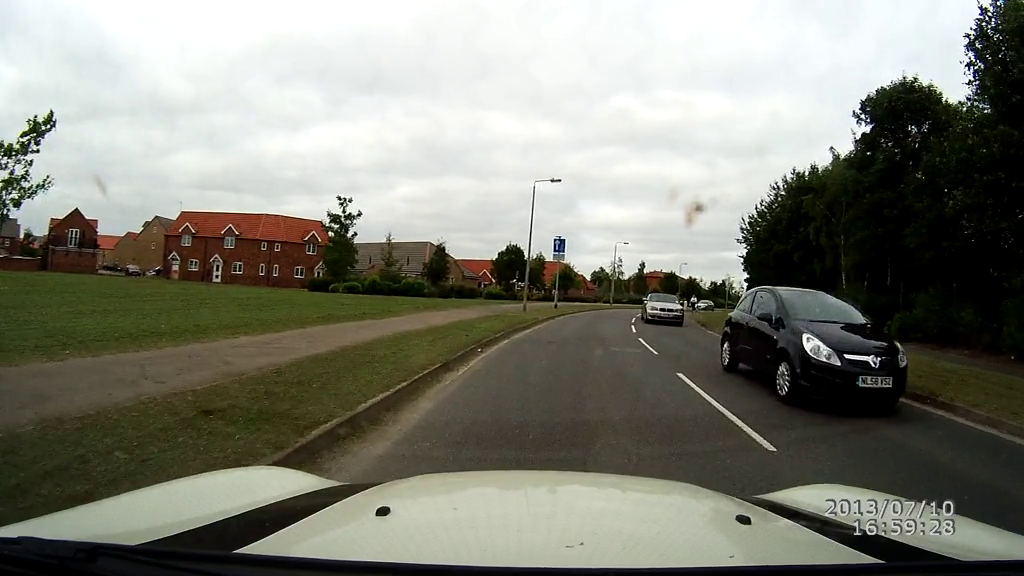
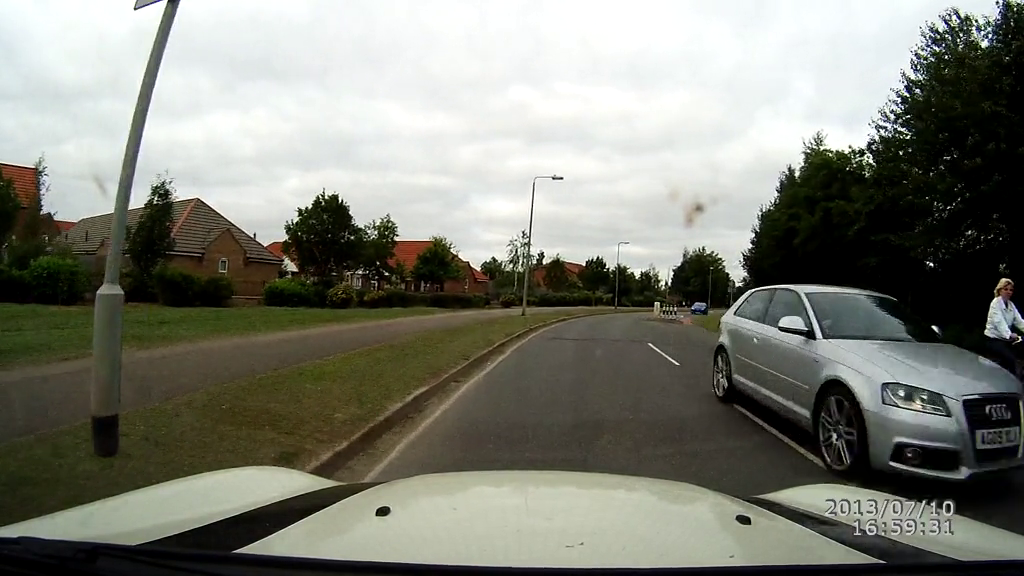
As I’m approaching build-out, a car is approaching at speed and even though they must see me if they are looking ahead, they show no inclination to slow down and speed past the build-out.  Also notice the cyclist just passing through the build-out cycle path – you’ll see why in the next shot.

Image

Having forced their way through, the car driver continues on in the same unsafe manner, dangerously overtaking the cyclist.  Clearly build-outs don’t work when people are this ignorant. 


Waste & Recycling Services in South Holland – a 60 second survey

Another false start survey from me via Twitter, for the same reasons as the last one – DOH!

These are my questions by the way and nothing to do with anything the district council is currently considering. Thank you in advance for taking the time to complete this 60 second survey.

http://www.surveymonkey.com/s/WCVNXQV

Could a town council be fit for purpose AND affordable?

Some very pertinent comments and observations on the subject of a town council for Spalding, but there is a need to always keep in mind the cost of this. Are the people of Spalding prepared to see the charge of £23, currently identified as the Spalding Special Expenses, double, just for the pleasure of saying, ‘we have a town council’?

I say double, because even though the SSE stands at £209,000 and doubling it would take it to £418,000, which seems excessive, one has to use a worse case scenario, in order not to get a very nasty shock once any town council is established. I would anticipate the need to employ at least three full time staff for a town the size of Spalding. Given that one of our towns has just employed a new parish clerk at a cost of some £27k, to which they will need to add 20% at least, to cover employment costs, it doesn’t take much to see that the numbers roll up very quickly.

I also have a suspicion that, once any town council was in place, SHDC non-Spalding members would soon start to identified items of Spalding based expenditure, that they felt should be on the town council’s books and not on South Holland District Council’s.

Don’t get me wrong, when I first joined the district council, I was amazed to find that Spalding was unparished and that the district council controlled everything via the SSE. As I was in the privileged position of being the chairman of the newly resurrected STF, I did ask for the possibility of a town council to be explored. Even back then, a figure of £40k had been spoken of previously. This on a SSE, at the time, of approximately £85k. This figure was however questioned by some members, who believed that SHDC had manufactured that number as a scare tactic, in order to kill off the process. This at a time when the council was controlled by independents – I’ll leave it at that.

Recently, I did look at this issue again and even wrote to several town councils in the area, asking if they could give me some idea of their running costs. Unsurprisingly, none of them wrote back – parish and town councils have a reputation for being less than transparent in such matters. One council I did look at more closely, in order to draw some parallels, was Sleaford. According to their master plan, Sleaford has a population of around 17000, approximately half that of Spalding – Sleaford Town Council has a staff of SIX and 17 elected members. I don’t know how much SHDC would wish to charge a town council for office space, but I do know that it would not be free.

Wimbledon is showing on the TV as I type this, so I could be tempted to claim game, set and match on this question, simply based on affordability. However, things are never that simple. One has to accept that the will of the people could well outweigh purely financial considerations, especially if the right question is asked of them.

Instead of looking for conventional solutions to this perceived democratic deficit and given the financial depression most taxpayers find themselves faced with, is there another way to achieve the desired outcome? The Localism Bill introduced a right to challenge, perhaps a group of local people should start looking at ways of using this as a cost effective way of addressing this issue, in part at least.

Councillor wanted – only professionals need apply?

Here’s an interesting little conversation I have been having with somebody (Them) who is kind enough to follow my Twitter tweets & ramblings (can you ramble in 140 characters or less?) 

The first post refers to a leaflet produced by the City andCounty of Swansea Council, as a way of giving their taxpayers a better understanding of what a councillor does.  I think the leaflet sums the role up perfectly and, despite being produced sometime ago, I also think that nothing it says is either out of date, or irrelevant to today’s modern councillor.

The exchange of views that followed come from a council employee and offers some very valuable insights from their perspective.  The council has thinned out its management considerably over the last year or so and those that remain, at the senior level, are shared with another council inNorfolk.  Furthermore, until the recent round of local council elections changed their political colour and thinking, we were on course to link up with a second council, thereby expecting those shared managers to work across three geographically dispersed councils.

When the ‘coming together’ proposals were being discussed, I was a dissenting voice, questioning the thinning out, combined with part time nature of the shared management model.  Of even more concern to me, was the potential for generic managers.  These were seen as the way forward for some of those positions currently filled by managers with specialist knowledge of the service.  Under-pinning all of this was something called, new ways of working, a concept I have yet to fully grasp in all of its implications and one that, in my opinion, has yet to have any real meaning for many members.

Part of the new ways of working philosophy, was a belief that executive members would step-up and start taking a more hands-on approach to their portfolio holder roles.  I asked for, but never got, the provision of a structured training programme for those executive members expected to take on this ‘new way of working’, which of course brings me back to the comments made below.

I expect that there are a number of executive members in councils around the country who are relishing the opportunity to be more hands-on, I certainly am.  However, in the absence of any meaningful training, am I and others, doing any good, or are we just making life more difficult for departments already struggling with a leadership deficit?- only time will tell I suppose.

Dave Mckenna@Localopolis   Final plug for my post on explaining the Six Roles of the Local Councillor to the public http://bit.ly/KGZe24

Them: Role of councillors is changing rapidly with the advent of customer services, Web interface and social media: time for reform?

Me: Yes, but that doesn’t change basic role of the councillor, helping people with ‘the system’. Some think themselves above that.

Them: With councils ‘shared management’, councillors need to assume more of an executive role and take ‘ownership ‘ of their patch.

Me: maybe so – for now. Poachers turned gamekeepers not good for the democratic process. Some relationships already too cosy.

Them: A proactive opposition is supposed to be the Democratic balance to combat political ‘cosiness’, isn’t it?

Me: Don’t agree. Having a majority trumps a robust opposition. Keeping em honest is not the same as stopping em going native

Me: members need to walk the tightrope of showing leadership, but not becoming part of the system and blind to service failings
South Holland a dangerous place for young drivers

Lincolnshire roads are some of the most dangerous for young drivers, with the roads in South Holland apparently the most dangerous of them all.

I’ve no doubt people of a certain age – mine – will be making the same comments about this story as they always do, it’s not the roads, it’s the drivers! That is of course true for the most part. I have yet to hear of a road actively injuring, or killing a driver, passively yes, but actively no, that requires the intervention of a bad, but not necessarily young, driver.

Watching a news item on Look North tonight on the subject of our dangerous roads, I saw them teaching some young people to control a car on a skid pan, with the kids involved very much enjoying the experience. I don’t wish to be a killjoy, but the purpose of the exercise was supposedly education not enjoyment. Given the basis for the news story, slipping and sliding around the relatively safe environment of a skid pan, doesn’t wasn’t even educating the kids in the right way.

I won’t be the first to point out that it isn’t the mechanics of driving the car that’s the problem for young drivers, many pass their test first time and with a minimum of professional lessons – the biggest problem with young drivers is their attitude. This could be described as over-confidence, arrogance, bravado, showing-off in fact, all of these and more. Bad attitude from young drivers is on display nearly everyday of the year and also on many summer nights, in Sainsbury’s car park, let alone out on our public roads. Until we tackle this aspect of young driver training, we will continue to see hundreds of young lives damaged and wasted on the roads of the UK.

Swan St Spalding closure – not yet it seems!

I had some disappointing news from the Lincolnshire County Council highways dept this am.  I had asked them to consider keeping Swan St in Spalding closed once the sewer repair work had been completed by Anglian Water, because the traffic flows in the town centre seem to of improved significantly since the work started.

Highways were willing to give the closure a trial period leading on from the sewer working, providing their informal consultation with local businesses showed overwhelming support for the idea.  Unfortunately, this was not the case, with a split of 60/40 in favour of closure for a trial period.  Because of this, LCC will now have to carry out a formal consultation exercise, contact any objectors and try to resolve their concerns and only then, initiate the trail!  To do anything else would leave them open to challenge and subject to official sanction for not following the rules! 

It would seem that some people have gotten hold of the wrong end of the stick on this one.  They seem to be under the misapprehension that it is the whole of Swan St that would be closed, rather than just its junction with Kings Rd, leaving the full length open for normal access from Winfrey Ave. 

Worse still, at least one individual, despite being asked for comment on behalf of the large retail outlet store he or she manages, responded by saying, “I object because it will take me longer to get to work”. 

I will try to be charitable as we approach Christmas and put this response down to a very busy manager, not really thinking about the long term implications of what they have written.  On the other hand, it could a short-sighted and self centred response from someone who cares little for his customers, the town of Spalding, or even for the increased carbon emissions caused by stop start traffic flows and tail backs that normally occur when this junction is open.

However, all is not lost and the highway authority has promised to look carefully at the responses they receive to the official consultation and to carry out a scientific analysis of the traffic flows if and when the trial period goes ahead, with a view to making the closure permanent.

Hopefully, our local press will pick up on this issue and encourage a wider group of Spaldonians to make their views known – only those in favour please ;¬)

Growing children and trees together

I went to St Bartholomew’s Primary School in West Pinchbeck today, to support Richard Knock, our grounds maintenance magician (he regularly pulls rabbits from hats) in a project he’s started. 

The idea is to give a local school a number of trees, over 25 in this case, for pupils to adopt and care for.  As the child grows so does their tree and they keep a record of it.  Just like the child, when the tree is mature enough it will be moved out of the school to takes its place in the community, where the youngster can continue to keep an eye on it.

In the ideal world, both the child and the tree will grow up together and become an intergral part of our community.  Can you imagine how much fun they will get from pointing to a 40 or 50 ft (sorry, 12 to 18 mt) tree and telling their own children they grew it!

Of course the children have to accept that their tree might not survive the rigours of life, as many of our local trees suffer from mindless vandlism – but that would also be a lesson in life for the youngster and might just help one or two to stay on the straight and narrow themselves.

I wish them all well – children and trees.  Well done Richard!  By the way, good luck with those Latin names kids!

Outsourcing – buyer beware?

Here is an interesting item on the potential pitfalls of outsourcing.  Although it refers to the information technology systems (most people think of this as ‘the computers’) it could easily be applied to all other areas where outsourcing is being looked at as option.  I found the statement about contract negotiation particularly noteworthy, as this is where every level of government, not just small local authorities, seem to be found lacking to say the least – put crudely, they all too often seem to get stitched up by the private sector!

“Outsourcing is good and delivers economies of scale however the process is a major commitment and a path filled with risks, according to a latest briefing from Scotim Insight.

The “Costs of Outsourcing – uncovering the real risks” presents a detailed analysis of the outsourcing process and the risks it brings to local authorities.

According to the document, the risks begin at the tender stage. The supplier is well versed in contract negotiations on outsourcing while a smaller local authority is rarely going to be in that position.  So, the briefing suggests that councils seek professional advice around framing and negotiating a contract.

It also urges councils not to put all their eggs in one basket. Rather than transferring all ICT operations as a bundle to one supplier, it is best to break them into components and go to market individually.

often as a result of outsourcing, in house talen is lost which leaves the organisation unempowered against a well versed supplier.  It is equivalent to the naïve householder faced with a plumber who takes a sharp intake of breath, asks ‘Who did this?’ and then presents a large bill. In these circumstances, urgent jobs may be done only at an excessive margin, as the supplier seeks to recoup profits lost through the typically hard-fought and costly competitive tender process.

Socitm Insight suggests that identifying the potential savings to be expected from an outsourcing deal by benchmarking in advance the cost and satisfaction with the existing service against the best performing ICT services and writing the difference into the specification could be a good starting point.

‘Outsourcing should not be considered an inevitable response to austerity’ says Martin Greenwood, author of Cost of outsourcing. ‘Even smaller organisations that need to gain economies of scale, and struggle to keep up to date with technological development, should consider collaboration and sharing with other local public services as a genuine alternative. If they do take the plunge into outsourcing, they should make sure they are aware of the pitfalls and know how to avoid them.’ ”

Source: eGov monitor – A Policy Dialogue Platform
Published Wednesday, 4 May, 2011 – 10:02