How to Cure Nick Bole’s Hyperactivity

I think, in this case, you might also need to use drugs!

andrew lainton's avatarDecisions, Decisions, Decisions

Given the news that DCLG Minister Steven Williams has described Nick Boles as ‘hyperactive’ and ‘hated’ by Tory Mps I fear that poor ‘Bungalow’ Bob Kerslake and Steve ’70s porn star’ Quartermain may need some advice on how to cope with hyperactive boys.  No better advice than from the Daily Mail agony aunt.

The problem is that the term ‘hyperactivity’ is often used to describe excitable, naughty, restless or over-exuberant children. Needless to say, these are usually perfectly normal boys, whose behaviour and inattention come to light when challenged by the regime of  school [government] discipline and often overcrowded classrooms [offices at Eland House] …

you and his school [department] can try the following:

1. Have realistic expectations – avoid situations which may be impossible to cope with eg long assemblies or church services [meetings], protracted meals, double sedentary lessons.

2. Try not to criticise or make negative comments…

View original post 99 more words

Editor’s swan song points up the hypocrisy of Pickles

Copied from Local Government Chronicle online

Local government must be prepared to take a stand
Council papers could turn out to be a testbed
6 March 2014 | By Emma Maier

Not long after the 2010 general election, the communities secretary set out his three priorities: localism, localism, localism.

This has not stopped him from taking a close interest in the operation of local authorities, including commenting on the frequency and type of bin collections, telling councils to share services (but to stop short of unitarisation), recommending they spend reserves on revenue spending and suggesting they should remove the chief executive role. To the untrained eye, this regular comment might seem somewhat directive. But we are assured that it is, in fact, simply “guided localism”.

The recently enacted Local Audit and Accountability Act brings more of the same. LGC understands Mr Pickles plans to use it to pursue one of his other focus issues: council newspapers.

Under the act, Mr Pickles will be able to direct one or more specified councils to comply with his publicity code, which says, among other things, that councils should not publish a newspaper more than four times a year.

Beyond issuing a direction, Mr Pickles does not have any powers of enforcement or intervention. Councils will only find themselves in court if a resident or pressure group, such as the Taxpayers’ Alliance or the Newspaper Society, takes it upon themselves to spend the £50,000-£100,000 needed to pursue legal action. In other words, it is relatively unlikely.

However, in the meantime, there is a small window between the act coming into force and the start of purdah in which political capital could be reaped from a press release headlined “councils ordered to scrap propaganda freesheets”.

There are many good reasons for councils to publish more frequently – not least that it can be the most cost-effective way to convey important information about services and local issues. With councils taking on responsibility for public health, there is more reason than ever to communicate with residents.

Attacking “expensive looking glossy publications” is seen by some to be an easy vote winner. But if councils are compelled to reduce the information they share with residents, and to spend more doing it, those who will lose out most will be residents.

This is an important issue over which councils should be prepared to take a stand – and to work together in the event that legal challenge is brought. The need of councils to communicate with residents is fundamental.

Council papers could turn out to be just a testbed. The publicity code also seemingly prevents councils from lobbying on behalf of residents on issues of government policy – something citizens living on the HS2 route or under the Heathrow flight paths expect their councils to do for them.

This edition is my last as LGC editor before moving to sister magazine Health Service Journal. I would like to thank LGC readers, contacts, columnists and partners for your valued support over the past five years, and to welcome acting editor Nick Golding. As the health integration agenda picks up I look forward to seeing how local government continues to develop.

Emma Maier, editor, LGC

Mr Localism offers yet more of his loud mouth ‘guidance’

Copied from the Local Government Chronicle online
Pickles set to move on publicity powers
6 March, 2014 | By Chris Smith

The communities secretary is preparing to step in and use new powers to try to prevent councils from publishing newspapers more than four times a year.

Five London councils are at the top of Eric Pickles’ hit list when he acquires new powers next month, LGC understands.

When the Local Audit and Accountability Act 2014 comes into force on 4 April, it will allow Mr Pickles to direct councils to comply with his 2011 publicity code, which states that councils should not publish more frequently than quarterly.

According to the most recent figures held by the LGA, 41 councils in England currently publish a newspaper more than four times a year. But Mr Pickles is understood to be focusing on five London boroughs: Tower Hamlets, Hackney, Greenwich, Newham and Waltham Forest LBCs.

Highest on the list is Tower Hamlets LBC, whose weekly publication East End Life, was named by Mr Pickles in Parliament as the worst offender in publishing frequency.

However, the legislation does not give Mr Pickles any powers of enforcement or intervention, so it is unclear what would happen if a council that had been issued with a direction chose not to follow it. It is thought that any legal challenge would need to be brought by residents or campaigners. The councils involved estimate legal costs of pursuing a case would be between £50,000 and £100,000.

The Taxpayers’ Alliance warned of potential court challenges but stopped short of committing to pursue a test case. Chief executive Jonathan Isaby said: “Those council leaders choosing to ignore the guidance are exposing themselves and their local authorities to legal action.”

The councils involved say that newspaper closures would lead to an increase in advertising charges from local paper owners. They also say increased costs would contravene the publicity code’s demand to be cost effective. They also say that the reach of their communication would be limited.

Hackney LBC said its review of costs for Hackney Today found that to produce a quarterly newsletter and place statutory advertising in a local newspaper would be more expensive than continuing fortnightly publication. The findings were supported by the council’s district auditor.

Hackney mayor Jules Pipe (Lab) said: “I have repeatedly told the secretary of state and his colleagues, both in writing and in person, that we will cease fortnightly production of Hackney Today as soon as he ends the costly and outdated requirement on councils to place statutory advertising in a local newspaper.”

A Greenwich RBC spokesman defended its publication, Greenwich Time: “The paper is published on a weekly basis to inform residents about local services and to promote social housing available through our choice-based lettings scheme. It has also reduced expenditure on advertising costs by approximately £1.5m per annum which we have passed back to our residents in the form of successive council tax freezes.”

A Department for Communities & Local Government spokesman said: “Ministers have been clear that they intend to take action to defend the independent free press from unfair municipal competition and stop any abuse of taxpayers’ money.”

The Local Audit and Accountability Act 2014

This received Royal Assent on 30 January and comes into force on 4 April. It enables the communities secretary to direct one or more councils to comply with all or part of the publicity code. He must first write to a council informing them of his proposed direction.

Councils have 14 days to make their representations about the proposed direction. After the 14 days the secretary of state may make the direction.

Labour has a double whammy in store for local government

20140301-142042.jpg

It seems that Labour is willing to throw local government in to further turmoil, should it regain power at the next general election. The Electoral Society has published a document written by a Labour lobby group, promoting proportional representation voting as the way to re-energise democracy in this country.

Labour is also revisiting the issue of two tier local government, something that will effect shire areas such as Lincolnshire. This would probably a good thing from the council taxpayers’ perspective, as it would remove some of the confusion and frustration they experience when dealing with two tier local government. However, it’s by no means clear that this is intended to make democracy more accessible and straightforward for the taxpayer, as opposed to just making it easier for Labour to gain power outside of their current urban strongholds.

Reading the document, it would appear that Labour are concerned about running out of the foot soldiers they need to get re-elected. As many of these foot soldiers come from those standing in local elections, the Party appears to have a cunning plan to create more Labour councillors (foot soldiers) across the country.

This sudden enthusiasm for PR could of course be intended as a sop to the Liberal Democrats, just in case Labour needs to go into coalition with them, to freeze out the Conservatives in 2015, if plan A, an outright majority, doesn’t come to pass.

Perhaps the Labour Party really does believe PR is the way forward and are seeking to collude with the LibDems to foist it on to the British public via the back door, or rather from the bottom up. Using local government as a guinea pig, they will impose it on to councils, already buckling under the weight of doing more than their bit to help reduce Labour’s deficit legacy. Looked at cynically, one could suggest that the extremely low turn out in local elections, makes councils an easy target for this experiment and that any outcry from existing councillors will gain little, if any, support from an apathetic public.

There are many reasons why we should be extremely wary of PR at the local government level. There are a plenty of examples of councils that are in a form of leadership limbo, due to being in no overall control, because no single group has the majority. Even when there is what might be called a controlling group there are examples of councils being controlled by single issue groups, rather then one with any particular political allegiance. Boston Borough Council had something called the Boston Bypass Party until 2011. In both cases, this effectively leaves a council with no political direction, or leadership and being run by its officers.

I would also suggest that PR will inevitably lead to the introduction of professional councillors. The PR system means that a councillor representing a particular minor group, gets allotted a seat in a division well away from where they are actually living. As such, they are likely to need a far greater level of administrative support and spend a much greater amount of time and effort dealing with issues. They will also claim a much higher level of expenses and ultimately, find themselves needing to become a ‘full time’ councillor.

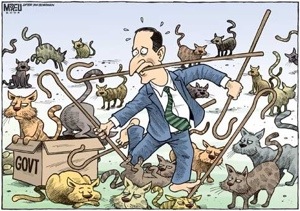
The prospect is, that should Labour gain power, either totally, or in a coalition, all councils will become single tier across England. Additionally, in many areas the council will be in the political control of what is politely called, rainbow alliances, but could soon be more accurately be described as, ‘a herd of cats’.

The Labour Party position on unitaries

A senior shadow minister has hinted that Labour would revive unitary local government reorganisation.

Shadow chief secretary to the Treasury Chris Leslie said in a speech to the Social Market Foundation thinktank that the government should work with councils that were already promoting unitary schemes, such as Leicestershire and Warwickshire.

“The previous Labour government helped local government to make efficiency savings. So we gave local authorities powers to merge and change their boundaries and in 2009 a series of local authority reorganisations brought together district and county councils and created new unitary bodies,” he said.

“Other changes in Devon, Exeter and Norfolk were in the pipeline but this government stopped those in their tracks and are continuing to resist local authorities’ proposals to unitaries.”

The earlier generation of county unitaries had delivered savings per head through efficiencies of £46 per person a year in Cornwall, £52 in Central Bedfordshire, £66 in Shropshire and £91 in Northumberland, Mr Leslie (pictured) said.

He said: “The government and Whitehall should be doing more to empower councils, that see from the bottom up the benefits of collaboration and are actively debating whether to come together. This should also include small district councils that are facing the greatest financial pressures of all.”

Mr Leslie, who was a junior local government minister under Labour and ran the New Local Government Network thinktank before he returned to Parliament in 2010, said he and shadow communities and local government secretary Hilary Benn would “continue to explore the full range of options to support councils as they share services, pool budgets, and choose to collaborate and integrate further”.

Local government minister Brandon Lewis contrasted Mr Leslie’s speech with reported remarks in which Labour policy co-ordinator Jon Cruddas appeared to rule out reorganisation.

He said: “The Labour Party are in disarray on unitary local government restructuring, ruling it out one week and calling for it the next.

“By contrast, the coalition government is very clear that restructuring would be expensive, divisive and time-consuming, diverting time from improving frontline services and locally-led co-ordination.

“Labour is motivated by partisan politics, doing what they think is best for Labour self-interest rather than what’s best for the country.”

Mr Leslie also said that English local government was “enduring eye-watering reductions in revenue support grant which are threatening basic activities in social services, housing, environmental services, libraries and local voluntary bodies”.

Labour’s Local Government Innovation Taskforce would examine how to orientate services “around users rather than necessarily sticking with the old – and expensive – bureaucratic way of working”, he said.

DCLG showing just how petty and obsessive Pickles is

Copied from Local Government Chronicle online
DCLG accused of ‘silliness’ over combined authority names
21 February, 2014 | By Kaye Wiggins

Councils forming combined authorities have accused the Department for Communities & Local Government of “silliness” and “kindergarten games” after being told they cannot use the word “region” in their names.

At least three of the four areas setting up the new authorities are embroiled in a row with the department, which has suggested changing their formal names before they are established on 1 April.

Roger Stone (Lab), leader of Rotherham MBC, said councils in the Sheffield city region had been asked to rename themselves as the Sheffield, Rotherham, Barnsley and Doncaster combined authority.

“I think it’s because Eric Pickles doesn’t like the word region, because it sounds too European,” he said.

“We’re insisting it be called the Sheffield city region because that’s what we all agreed on from the start of negotiations. And the DCLG’s alternative name would leave out North East Derbyshire, Chesterfield, Bolsover and Bassetlaw, which are all part of the combined authority.

“At the moment it’s like a tennis ball going back and forth. We’re insisting on the city region but DCLG wants it changed. It’s childish. It’s kindergarten games.”

Graham Burgess, chief executive of Wirral MBC, said the Liverpool city region was in a similar situation. DCLG officials have suggested a name change to the Halton, Knowsley, Liverpool, St Helens, Sefton and Wirral combined authority (HKLSSWCA).

“All six areas agreed on the name Liverpool City Region, but DCLG has refused to let us use the word region,” he said.

“So much for localism.”

Paul Watson (Lab), leader of Sunderland City Council, said he had been told DCLG officials wanted to prevent his area from using the name North East combined authority.

“They want to call it the Northumberland, Durham and Tyne and Wear combined authority which is a bit of a mouthful,” he said.

“It’s just silliness. I just want us to be left to get along with actually doing the work rather than having to spend time thinking about acronyms.”

A DCLG spokesman said: “A number of responses to the consultation requested a change of name, which is why we changed the legal name. If the new combined authority wants to use something snappier as shorthand, that’s a matter for them.”

READERS’ COMMENTS (1)

Roger | 24-Feb-2014 9:48 am
‘Silliness’, I think they are being far too polite when describing yet another stupid and petty diktat from Pickles and his minions.
Unsuitable or offensive?

Does anybody really believe in local government anymore?

Below is my email response to a candidate in the forthcoming Conservative Councillors’ Association (CCA) elections.   In a recent campaign email they suggested that these elections were important because ministers for the Department for Communities and Local Government (DCLG), took notice of the results and in particular the numbers that vote.
‘Thank you for your email.  I was most intrigued by your comment that (D)CLG ministers take notice of these elections.  Could you please expand on what exactly you mean by take notice?
My experience of DCLG ministers to date and I won’t even name the most obvious one, as I see them all in the same light, is that they are wholly negative, spiteful and completely divisive, when it come to local government.
Even with Conservatives in the lead at the Local Government Association(LGA),  DCLG continues it’s onslaught on local government, at every opportunity.  This universal condemnation is dressed up as an attempt to ‘out’ bad Councils, with the majority supposedly non-Conservative.  However, as far as the public is concerned, all councils are now lazy, over staffed, over paid and to be condemned in the local and national press at every opportunity.  Finally, their politicians, should be voted out of office as soon as the opportunity presents itself.
As such, one could suggest that having a seat at the table, when your own party is in government, all be it in coalition, achieves little and may even fetter those in positions at  organistations such as the CCA, ability to defend local government as robustly as many of us minions would want, or like.  Good luck with your bid for election.’
I suppose what I would really have liked to tell this particular candidate, is that I would vote for them if they promised to give Eric Pickles a bloody good kicking (verbally at least) at every opportunity they got, once they were to be elected!  Of course this is always a vain hope, given that most of those standing for such positions are likely to have the sort of aspirations that mean they will be seeking further advancement within the establishment, something that is unlikely to happen if you upset that establishment.  Oh well, come the revolution…..

Second midlands county looks to unitary route

Copied from Local Government Online
Second midlands county looks to unitary route
18 February, 2014 | By Mark Smulian

Proposals by Warwickshire CC to start a public debate on county unitary status come only a week after Leicestershire CC said a county unitary there could save £30m a year.

Conversion to county unitary status is also being considered in West Sussex despite lack of government enthusiasm for the model.

Seven counties converted under the previous government, but similar plans for Devon, Norfolk and Suffolk were halted by Eric Pickles in 2010 in one of his first acts as communities and local government secretary.

Warwickshire chief executive Jim Graham’s (pictured) report said the county needed to save £92m over four years and “unitary local government merits further exploration”.

If Warwickshire’s six councils were cut to one or two unitaries, fewer than 100 councillors would be needed, against 276 at present, and service delivery could be better integrated with less spent on administration.

Savings could reach £17m a year with a single unitary council, or £12m a year with two.

Mr Graham cited savings from councils that converted five years ago of an average of £15.6m a year.

The two-unitary option is designed to deal with different economic conditions in the county’s urban north and rural south.

Mr Graham said a change to unitary status needed government consent and while the coalition was “not actively inviting submissions within this term of Parliament, this could change beyond May 2015, and this does not preclude proposals generated locally from being put forward to government”.

The idea had a hostile reception from two district leaders. Nuneaton & Bedworth BC’s Dennis Harvey (Lab) said: “The borough council recently voted to oppose any idea of a unitary Warwickshire, which we believe is an unnecessary diversion from the savage cuts being made by the county to essential services.”

Rugby BC leader Craig Humphreys (Con) said: “I’m not sure why the county is spending time on something that can’t come to fruition, as some districts oppose it. We should not create remote monoliths.”

He said the position was complicated by Stratford-upon-Avon DC having set up shared services with Cherwell and South Northamptonshire DCs, neither of which is in Warwickshire.

West Sussex last week decided to canvass views on the unitary idea. Leader Louise Goldsmith (Con) said: “While one of the arguments for this approach is the money any such move would save – and that is potentially correct – there would be a considerable cost to making it happen in the first place. This is not a decision for the county council to arrogantly make without any reference or dialogue with our partners and residents.”

Local government minister Brandon Lewis poured cold water on the move towards unitaries.

“One of the first acts of the coalition government was to legislate to scrap the last administration’s plans for top-down unitary local government restructuring,” he said.

“Such top-down upheavals would have been expensive and disruptive, distracting from the need to promote growth and to tackle the deficit left by the last administration. This stance is, and remains, government policy. There is great potential for more locally led joint working and sharing of services in local government.”

Gloucestershire last autumn established a working group to explore the county unitary idea, but Brian Oostuysen (Lab), overview and scrutiny chair, said: “We met with all six district councils and there wasn’t unanimous support to move towards a unitary authority.”

READERS’ COMMENTS (1)

Roger | 19-Feb-2014 6:17 pm
As an administrative model, there’s probably little doubt that unitary is more cost effective than 2 tier can ever be.
Eric Pickles’s constant undermining of local government (with an occasional pause to equally and spitefully undermine the EA) is likely to see any reduction in democratic representation, go virtually un-noticed by the public until it’s too late.
Such undermining must surely come from expecting ‘volunteer scoutmasters’ to represent several thousands of taxpayers across the whole spectrum of local government.
Before any unitary councillors start sounding off, I’d like them to pause and think carefully if they really do believe that they can deal with issues in exactly the same way as district councillors do. If they can, is it because their unitary authority offers them a far greater level of admin support, than any small district council could dream of?
I actually agree that single tier authorities are better value and far less confusing and frustrating for the taxpayer. However, I don’t agree that you can simply cull every district councillor and pass on this work to the current county councillors. Nor do I believe that you can simply vacate every district council office and draw everything into county hall.
Finally, have all those councils that have gone down the unitary route, passed on their projected savings to their taxpayers, via substantial reductions in their council tax? Or, have they come up with token reductions, whilst the remained has been spent on so called service improvements?

Why 20mph speed limits, in residential streets, are a must

Driving on a local road this afternoon, on my way to deliver public meeting flyers. Suddenly, from behind a parked car appears a football, followed by a young lad, who luckily saw me and stopped chasing his ball.

If I was doing the legal speed limit and hit him, would it make me feel any better at all, that I was ‘in the right’ and he was silly enough to run out in the road without looking? Absolutely not!

The problem these days, is that far too many drivers see 30mph as a target to be aimed for, as opposed to the absolute maximum if, all road conditions are absolutely ideal – and that’s a very big if.   Parked cars, junctions, narrow roads and the strong likelihood of children out playing in a residential street at the weekend, especially if it’s not raining or very cold, all this means that 30mph on most residential roads, is unacceptable, legal or not.

Too many of us become selfish and blinkered when they get behind the wheel of the car, determined to get where we’re going, as fast as we can and with the least amount of slowing down, let alone stopping. You only have to witness the way so many drivers launch themselves at the traffic calming build outs, to see just how reluctant drivers are to have slow down if they can possibly avoid doing so.

I’m not claiming that my, ‘old-man in a flat cap’ driving technique, saved this child from serious injury or death, given that he put his breaks on when he saw the car. However, if the boy had continued to charge on, with only ball recovery on his mind and I had been doing 30 mph, the injuries sustained would have been far greater and far more likely to cause death, than if I had been doing only 20 mph or less and that is something I defy anybody to argue with.

Wygate Park traffic calming build out – a response from LRSP

Below, is the email I sent to Lincolnshire Road Safety Partnership based on residents’ concerns about the traffic calming build out on Wygate Park, between Mariette Way and the Hayfields.   Below this, is the response I have just received back from one of their highways engineersImage.   

From: Roger Gambba-Jones
Sent: 06 October 2013 16:33
To: Stayingalive
Subject: Wygate Park, Spalding – Traffic calming build out

Dear sir,

Sometime ago you were kind enough to review the safety of a traffic calming build out located on Wygate Park.  On that occasion the build out, at the Monks House Lane end of the link road known as Wygate Park, was considered to be safe – a decision I agree with.

Unfortunately, local drivers have recently raised concerns with me regarding the build out located at the other end of Wygate Park, between Mariette Way and The Hayfields.  My position on this build out and indeed all of the build outs, has always been the same; it’s not the build outs that are at fault, it’s the attitude of the drivers using the road.

Having done some research myself, using an in car safety camera, the build out referred to appears to be at the optimum position, as it requires drivers to be travelling at a slow speed that would allow them to stop safely at the give way line, should they see a vehicle approaching from the other direction.

Despite posting a number of images on my blog, these residents still see this build out as dangerous and claim that it is only a matter of time before there’s a head on collision.  To the best of my knowledge, there have been no RTCs, or injuries associated with this section of road, but their view remains the same.

Obviously, as the local district councillor, I feel duty bound to do my best to address the concerns of residents, even when I don’t agree with them.  Therefore, can you please advise me on the design philosophy behind this particular build out and its specific location on Wygate Park.

Assuming it has not been done recently, would it be possible for one of your officers to take a look at this build out, in action so to speak, to see if there is something needed in addition to the existing signage, in order to get drivers to negotiate it in a safer manner than many do currently.  Thank you for your assistance.

My best regards,

Councillor Roger Gambba-Jones, SHDC, Spalding Wygate ward 

————————————————————————————————————————————————–

Dear Cllr Gambba-Jones

Thank you for your correspondence regarding the resident’s safety concerns at the build-out on Wygate Park.

I have spoken to a colleague within Highways Division South who oversees this area and, although I have not actually managed to visit the site as yet, I have taken a look at the location on Google Maps Streetview (images from 2009). We are both of a similar opinion to yourself. The build-out seems to be more than adequately visible, with the appropriate signing and road markings. There is good forward visibility through the feature as well, so that oncoming traffic has more than enough time to adjust their speed accordingly.

I have queried our accident database which has records of personal injury accidents dated back to 1985 and is correct to 31/07/2013. Within the proximity of this feature there has not been any injury accidents recorded; with the nearest injury occurring at The Hayfields junction.

From our stance, I would suggest that there is nothing wrong with the road design at this point and in light of recent directives from the Department of Transport to reduce sign “clutter” that any additional signing or markings would not be advised. If the problem persists and is down to driver behaviour where they may not be adhering to the give way control then I would suggest that there could be a possible enforcement issue for the local Police.

I am sorry I cannot help you further, but unfortunately you have assessed the situation very similarly to myself and without drastic measures to force drivers to comply there is not a great deal we could proposed without “over engineering” which would be less desirable for all.

Please do not hesitate to contact me should you need to discuss this further.

Regards, Lincolnshire Road Safety Partnership


Wygate Park intentional(?) blind spot identified

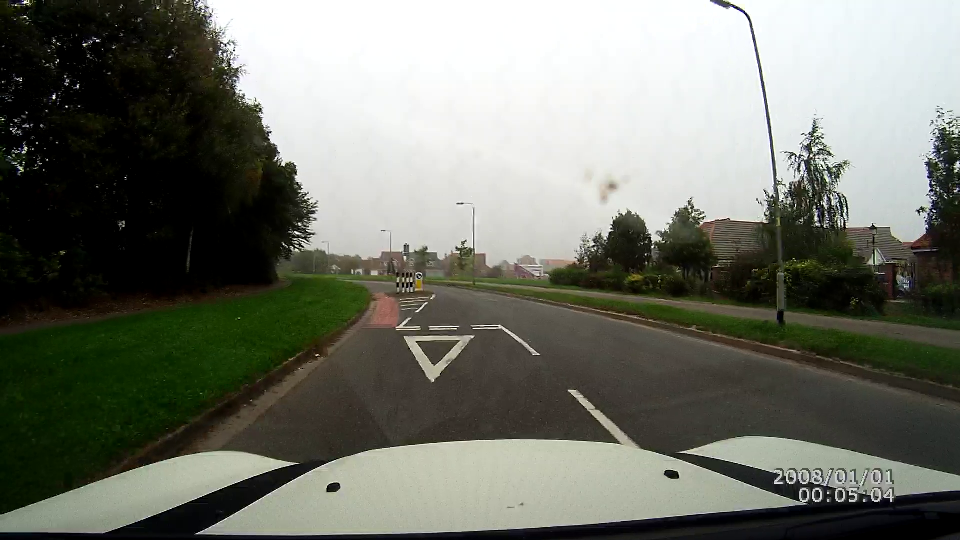
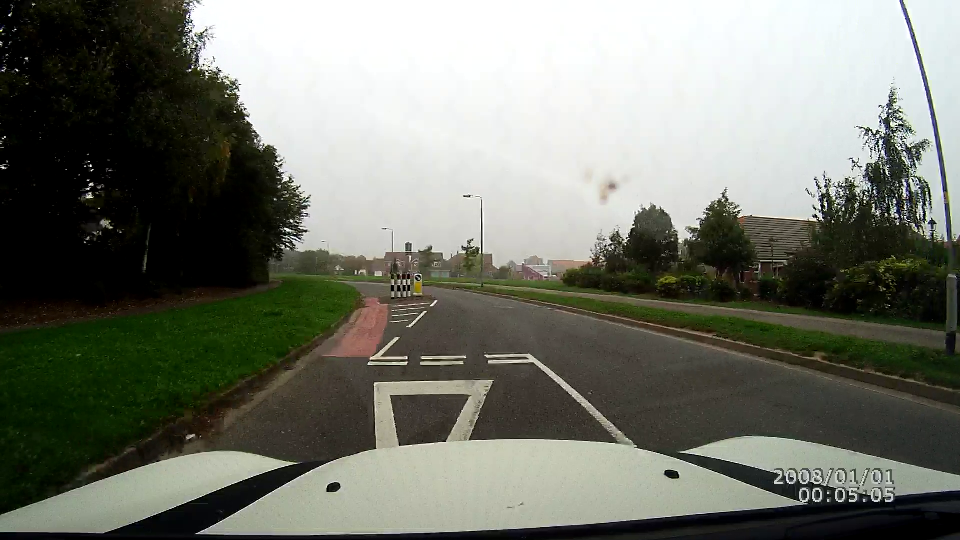
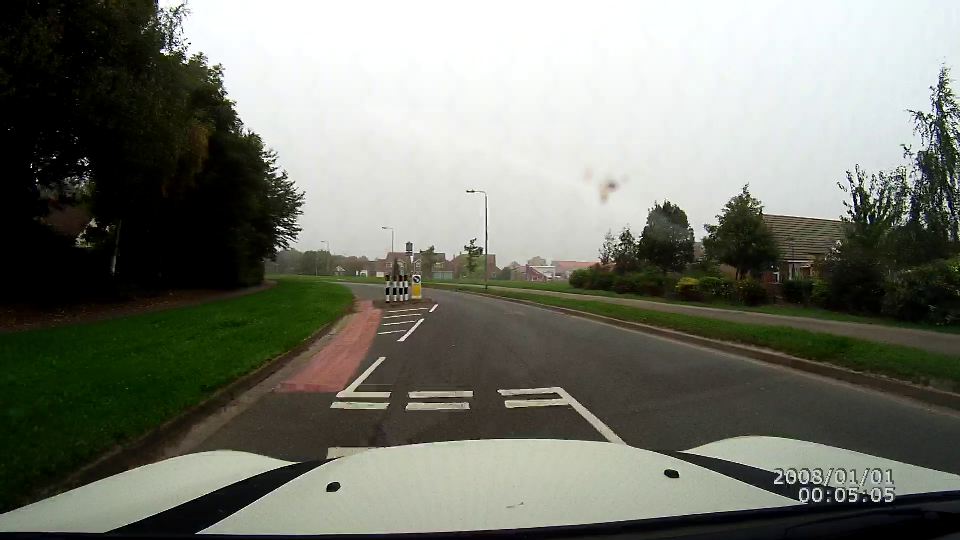
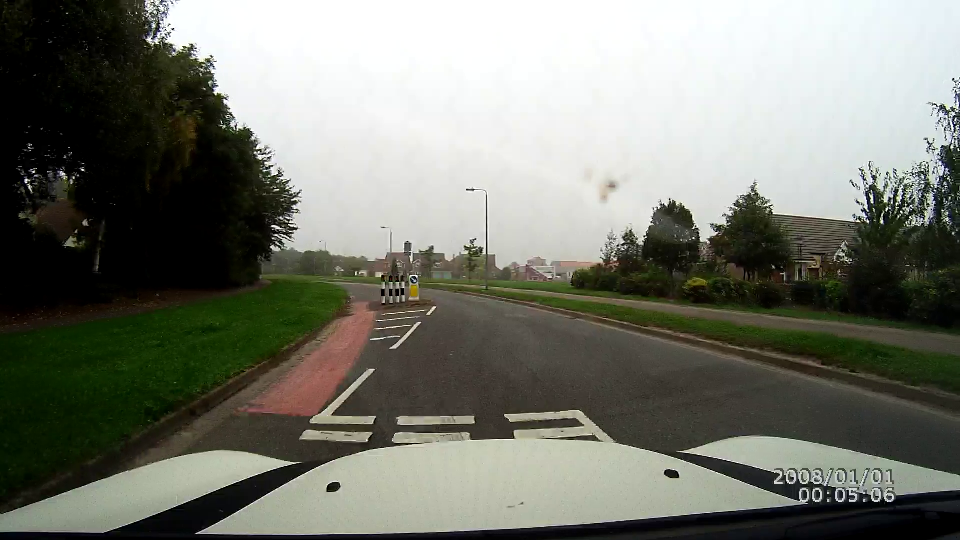
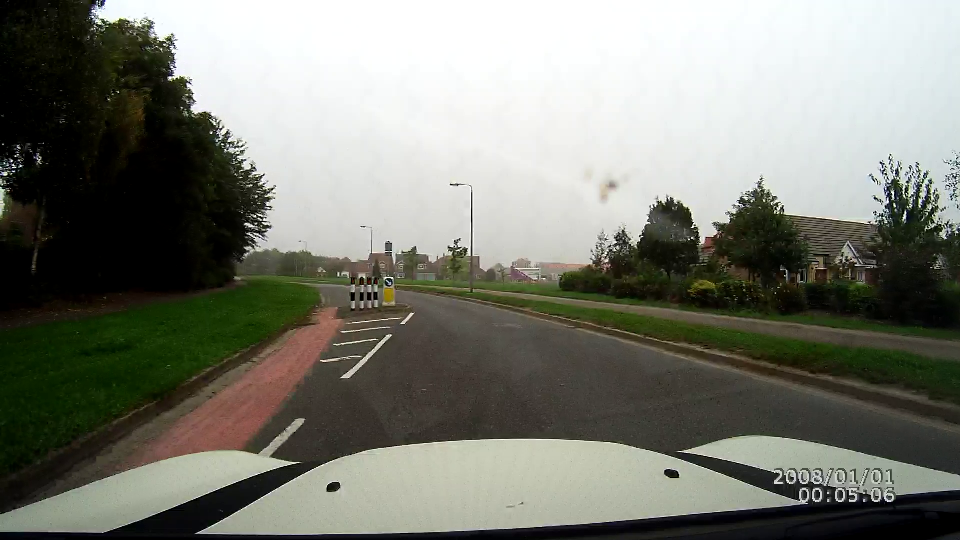
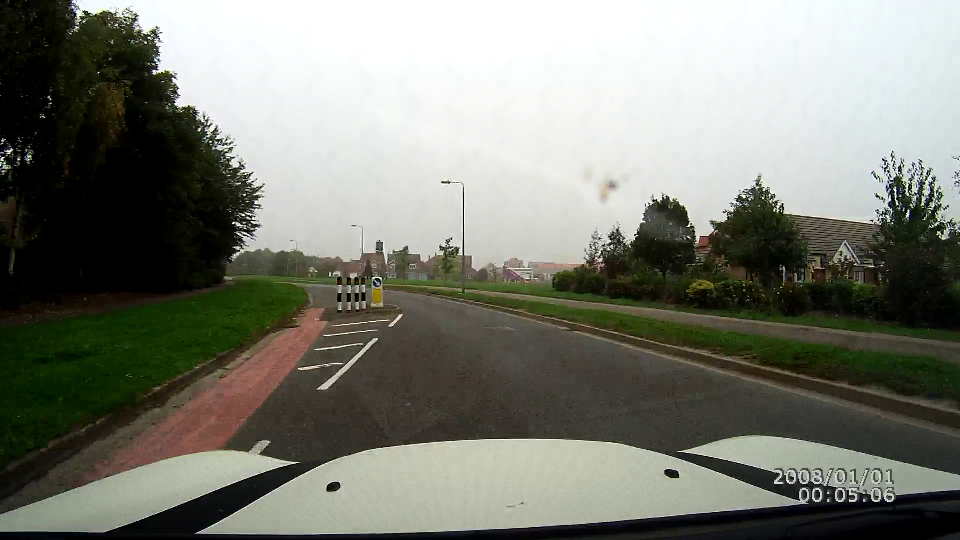
1. Approaching the build out obviously sweeps left, out of sight, requiring drivers to slow down because they are unable to see if it’s clear to drive around the build out.ImageImageImageImageImageImageImage

In these two final shots, you can see the road beginning to open up more, as I arrive at the exact location of the give way line on the road.  Clearly, if the driver is to proceed safely, they will need to be going slow enough at this point to make a decision as to whether or not to stop on the line.
Image