Any chance UKIP can deliver anything locally?

I thought it might be useful to repeat the article below, copied from a Lincolnshire Echo online article. Obviously, all those who voted UKIP last Thursday, either didn’t read this sort of information, or they simply didn’t care enough about the issues referred to, compared to the national ones being pursued by UKIP. I’m not seeking to criticise those who voted UKIP, but rather use it to emphasise the anger and frustration with David Cameron’s policies, I experienced from people, whilst out campaigning.

Knowing how unhappy people are with what’s going on nationally and adding this to the local issues that have resulted from the EU’s open door policy, it’s hardly surprising that UKIP did so well, whilst making little or no effort. Despite all the assurances that politicians offer when confronted by the public on an issue, be it letters, petitions, or even protest marches, the only time they ever seem to really act, is when they get caned at the ballot box. Is it any wonder then that, despite being asked to only vote on local issues in local elections, voters take the only course of action that seems to work, the protest vote?

Conservative candidates used the track record of the Conservative controlled county council, on LOCAL issues, as the basis for their campaigning – naively it would now seem, at least in this part of Lincolnshire. Meanwhile, nationally, UKIP were attacking David Cameron’s more unpopular policies, many of them easy targets: *An EU referendum, but only if you vote him back in 2015. *Control of immigration (but not from within the EU). *Ring fencing the overseas aid budget and even increasing it, despite almost every other budget being cut and further cuts to come. *Pushing gay marriage through, even when it wasn’t in the Party’s General Election manifesto.

This allowed local UKIP candidates to jump on the national issues bandwagon, whilst doing virtually nothing locally, apart from promise to fill every pothole in Lincolnshire, but without saying where they would get the money from. Speaking to people in the Spalding South Division after the election, it seems that only myself and the incumbent Independent candidate, bothered to communicate with the vast majority of them in any way. It would seem that the winning UKIP candidate simply sat back and relied on the national campaign to do his work for him.

More locally, people are angry and frustrated by the results of being members of the EU and the high levels of East European migrant workers in South Lincolnshire, that has resulted from this. UKIP have ruthlessly exploited these concerns, but have not made clear how they would change things – because, in reality, they can’t.

Fortunately, the Conservatives are still the largest party on the county council and will now be seeking an alliance with one of the smaller grouping, in order to form a controlling group. I’m pretty sure this will not be UKIP. I sincerely hope, for the sake of the residents they now represent, the UKIP councillors stick to addressing local issues and seeking local solutions. However, the alternative is more likely. That they will waste everybody’s time, by acting as local mouthpieces for UKIP’s national agenda.

Tough choices lie ahead for councillors – Thursday, April 25, 2013

THE Lincolnshire County Council elections are just days away – and the new intake will have to contend with a whole raft of difficult issues. From crumbling roads and care provision to the future of libraries and coping with cuts, the situation will be complex. Here, we examine the key areas…

TRANSPORT AND HIGHWAYS
There is one subject which hits the headlines time and time again – in Lincolnshire and that is roads. From calls for new ones to the need to repair old ones, Our transport network is rarely out of the news. And incoming councillors at County Hall will pick up the baton on two ongoing, key subjects: the eastern bypass and potholes. It has been suggested that work on the eagerly-anticipated eastern bypass could begin in 2014, but the multi-million pound scheme still needs the nod from central government.
A number of county councillors have raised concerns over whether the building of the much-needed relief road will ever happen. Residents will hope inevitably be hoping that the new council will forge ahead with the project as a priority.
In addition, members will inherit the on-going pothole repair project.
Our roads are among the very worst in the country and it was revealed last summer that 80 per cent of highways were in need of repair. The county council received £6 million for essential road maintenance in Lincolnshire in December 2012. The Department for Transport gave the local authority the extra funding to be spent over the next two years on renewing, repairing and extending the life of roads across the county. Our next council will need to quickly prioritise road repairs because, as welcome as the money is, it will not go that far in such a vast county as Lincolnshire.

SOCIAL SERVICES
Of all the new council’s responsibilities, its Plans for social services will inevitably evoke the most garner huge attention. When they take to their seats in the council chamber, the new members assume responsibility for thousands of the most vulnerable adults and children in our county.
Yet with that role comes the constraints of an ever-decreasing budget and an ever-increasing demand for services.
Earlier this year, the Echo reported how children’s services face significant financial challenges, despite saving more than £22 million since 2011. Further savings of £3.9 million will need to be made by 2015. This comes after central Government announced a reduction to the Early Intervention Grant and the Local Authority Central Spend Equivalent Grant following school conversions to academy status. In addition, the way in which care for vulnerable adults is organised cannot be sustained, according to a report by finance bosses.
Despite making predicted savings of £9.5 million in 2012/13, further significant savings must be made. Council cash bosses said that ‘a complete transformation is required’.
The council introduced a personal budget system for buying care in its last term. While this was generally welcomed by users of children’s services, it proved unpopular with the families of some vulnerable adults. The new members will need to make brave decisions about how they balance the need for robust support services with reductions in funding.

DAY CENTRES
The subject of day centres has been a sore point for thousands across Lincolnshire for almost two years now. Lincolnshire County Council decided to close the 31 authority-led centres in the county in 2011. But joint petitions, with more than 8,000 signatures opposing the plans, saw the council changes its mind and give the centres two years of support, starting in March, 2012. But it has been announced seven day centres are already set to close.
While the authority desperately searches for ways of saving millions of pounds from its budget, there remains a fundamental need for quality services for adults with physical and learning disabilities. The closure of some day centres has caused uproar in some places, among users and politicians. Inevitably, there will be hundreds of families across the county who wait with baited breath to see how the new council will progress on this highly controversial subject.

HEALTH
While doctors, nurses and 999 teams are at the coalface of the NHS in Lincolnshire, elected county councillors actually play a crucial behind-the-scenes role.
One major job of the new councillors will be to act as a watchdog, calling into account decisions by health bosses and scrutinising standards of care. There are currently two significant issues which the incoming council will inevitably face. Firstly is a controversial drive by our ambulance service, EMAS, to restructure where crews are based, reducing the amount of stations in Lincolnshire.
The council had grave concerns about the plans during its last term and had even muted the idea of a new Lincolnshire-only service. This issue is likely to return to the fore at some point after the election.
Secondly, the new council will have to deal with the fall-out from the public inquiry, which named and shamed Lincolnshire hospitals for its high death rates.
The elected members will have a responsibility to scrutinise the local NHS and make sure we are receiving the best possible services as since April 1 local authorities have a new statutory duty to take steps to improve the health of those in our communities.

EDUCATION
The age of austerity has seen councils make cuts across the board.
Lincolnshire County Council has already taken £25m from its financial reserves over two years to cover some of the funding cuts imposed central government. Changes to grants and funding from the Government are unlikely to improve the situation and leisure and recreation could be one area which suffers particularly badly going forward – as it is often seen less vital than social care, fire and transport where cuts could put lives at risk. In the past three years, grants to leisure and recreation facilities have been cut from scores of sites in Lincolnshire.

CUTS
The age of austerity has seen councils make cuts across the board. Lincolnshire County Council has already taken £25m from its financial reserves over two years to cover some of the funding cuts imposed central government.
Changes to grants and funding from the Government are unlikely to improve the situation and leisure and recreation could be one area which suffers particularly badly going forward – as it is often seen less vital than social care, fire and transport where cuts could put lives at risk.
In the past three years, grants to leisure and recreation facilities have been cut from scores of sites in Lincolnshire.

LIBRARIES
For many of us, libraries are a perfect venue to unwind and learn.
But as the country looks for ways to trim the national deficit, libraries become a prime target – not least because user numbers are falling. More than £2 million was cut from the library service in Lincolnshire last year and more could follow.
The future of mobile libraries are under threat and book loans to schools have been abolished.
Lincolnshire County Council has been involved in community efforts to save local libraries, such as the one on Saxilby which has moved from its previous dedicated library building to the village social club. More funding for libraries is unlikely to be made available in the next term of the council.

WASTE DISPOSAL
The future of rubbish tips was a huge talking point in 2012 and could well be on the agenda for Lincolnshire’s new county councillors.
As the council’s budget shrinks, councillors could find themselves discussing the possibility of tip closures. Following strong petitions last year, recycling centres in Whisby and Leadenham were saved from the axe. But opening hours at Lincolnshire’s 13 rubbish tips were trimmed as a result.
Meanwhile, there has been much controversy around the county’s reported £110 million “energy-from-waste” plant in North Hykeham.

FIRE SERVICE
The county council is the Fire Authority and has responsibility for the efficient provision of Lincolnshire Fire and Rescue. Perhaps the biggest challenge will be managing major cuts in Government funding. According to a report published last month, The Local Government Association estimates that by 2017/18 fire authorities across the country will have £600 million less in the coffers. It claims services will have 30 per cent less to spend in 2017/18 than now.

Time for CPE to broaden its horizons?

untitled-1Now that the county council has taken over the regulation of on street parking, law and order has been restored to our town centre, with shoppers and visitors finding it easier to stop to make a quick visit to a local shop or office.

The Civil Parking Enforcement (CPE) officers now know where the hot spots are and are able to target these to great effect. One might even suggest that few of these offences take place before 8.45, or between 2.30 and 3 pm on any given day. Given their effectiveness at restoring order to the ‘wild west’ that was Spalding town centre, I wonder if the powers that be would consider widening the remit of CPE in order to restore some order to the streets around our schools?

Typical school safety zone

Typical school safety zone

As any highway’s officer or traffic cop will tell you, Spalding isn’t unique when it comes to stories of bad behaviour by car driving parents on streets around our local schools. Until now, the police have been the only ones with the powers to deal with these miscreants. Given the lack of police resources, the likelihood of a cry of, ‘you’re nicked!’, being heard outside of any school gate, is virtually nil. However, with the advent of CPE, we now have the potential to address this problem, thereby reducing the misery suffered by residents living in the streets surrounding our schools.

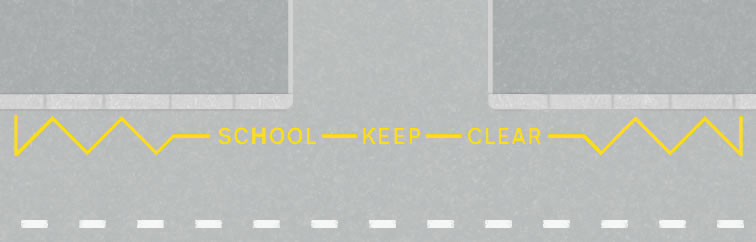
yellow-zig-zag-lines Most of our schools now have yellow zigzag lines on the road outside their front entrance. Whilst this seems to do the job of keeping these areas clear at the required times, it also has the knock on effect of pushing bad parking behaviour into surrounding streets.

images 4I’m not suggesting that we should now be scarring every side street, around every school, with double yellow lines – as well as being an eyesore, that would make life even more difficult for residents. However, I do believe that it should be possible to make effective use of CPE to enforce some of the existing rules on the parking of vehicles on the public highway. Parking across a driveway where there’s a dropped kerb is an offence, as is parking with 10mts of a junction in most instances.

Once a few tickets have been issued outside of a number of schools and over a period of time, word will soon get around that the parking enforcers have widened their horizons and that it’s time for car driving parents to start behaving themselves.

20 mph speed limit needed on our residential streets

Living Streets is a national charity that campaigns to make our streets and roads safer places for us all to use. Their strap line is, ‘putting people first’ and they have just launched a national campaign to encourage more councils to introduce a 20 mph limit in residential areas.

This is something I have been trying to get the county council to consider for sometime now and the more public support there is, the more likely it is LCC will give it some serious thought. If you would like to make the streets safer for our children, please go to the Living Streets website and take part in their ‘Show You Love 20mph’ campaign.

There would also be a further benefit to making the 20mph speed limit legally enforceable in Lincolnshire. Many of our schools have what is currently only an advisory 20mph speed limit on the street outside of them. This advisory status means that even when a driver is spotted exceeding it, the most they will currently get from the police is a ticking off and advice on being a more responsible and considerate driver.

Mischievous ramblings, or dangerous mis-information?

It’s always good to see local people getting involved and willing to do their bit to try to make our things better for their community. One of these local people has now decided to stand for the county council, having been a commentator on local issues for sometime now, both via occasional letters to the local press and an active blog site.

I say commentator, because he does not seem to of done anything that could classify him as an activist. My understanding of an activist, is somebody who feels strongly about something and then takes steps to get things changed, generally for the better. Those who do things for the worst, would of course be more akin to extremists, or maybe even terrorists.

To date, this particular individual has made plenty of comments – mostly rambling and almost always negative – but has done little, or rather nothing, to actually improve anything.

The reason that I’m suggesting that his blog site statements might be more akin to dangerous mis-information than simply mischievous ramblings, is because his comments include factual errors that could lead others to draw the wrong conclusions and possibly form completely the wrong opinions about an important issue.

He is not alone in this lazy approach to not getting the facts right before making his thoughts public, as another newly declared county council candidate, standing under a different political banner, is doing exactly the same thing. However, in this case, his comments are directed at me. This is going to be an interesting and I fear, potentially unpleasant election campaign.

Councils accused of misusing on-the-spot fines

Oh so easy for some researcher from some obscure think tank – anybody else never heard of this lot? – and suggest how things could be done better. Have they not noticed the carnage local government is suffering all in the name of deficit reduction?

That’s not to say that the public should be treated as cash cows to make up the funding gap, but how else would these sort of issues be dealt with, that didn’t demand far more resources and were likely to be less effective in the short term at least?

I would like to see some sort of public response to this criticism of councils and I don’t mean from the transgressors, but from those who have complained to their local council about these self same issues. I think I could hazard a guess that these people will take a very different view.

Copied from LocalGov.co.uk
Written by Laura Sharman

Local authorities have been accused of using on-the-spot fines as the ‘penalty of choice’, in a new report from the Manifesto Club.

Pavement Injustice argues that with 200,000 fines issued every year, there has been a shift from delivering public services to local authorities adopting a more ‘policing role’. It also argues that some local authorities are using these fines as a means of making extra revenue.

The report also states that on-the-spot fines are issued for a range of incidents, from criminal offences such as theft, to minor offences such as duck feeding or messy gardens.

Report author, Josie Appleton, said: ‘This report argues that on-the-spot fines are in general a lazy, unjust and predatory penalty, inherently disposed towards perverse effects and the arbitrary punishment of innocent people.

‘This report suggests that vast majority of these 200,000 incidents a year would be better dealt with through a different mechanism, whether it be court trial, public communication, school discipline, or – in the case of innocent duck feeders and leafleteers – not punished at all.’

Benefit schemes to be cut back next year

Copied from LGC online
14 March 2013 | By Ruth Keeling

Many people on low incomes will see big jumps in their council tax bills when the government stops funding schemes to cushion them from the removal of benefit, research seen by LGC reveals.

Almost 20% of the 195 billing authorities receiving a share of the £100m pot intend to switch to less generous support regimes in 2014-15 or review the more generous ones that transition cash helps fund, according to National Policy Institute figures.

This comes after the government announced one year of funding for schemes that aim to limit the council tax liability of claimants who previously received a 100% discount on bills to just 8.5%.

The funding, revealed in October, led many councils to change their original plans.

Sabrina Bushe, a researcher at the NPI who is compiling the figures, said they provided an early indication of what authorities would do next year.

“Many councils will simply revert back to the – sometimes quite harsh – schemes that they had initially consulted on,” she said.

The NPI figures show that 13 of the 195 councils will switch back to less generous discount schemes in 2014-15, while 23 will put this year’s regime under review.

Sevenoaks DC, one of the authorities reverting to a less generous discount regime, will expect claimants to pay a minimum of 18.5% of the total tax. Council leader Peter Fleming (Con) said that the 18.5% figure reflected the size of the funding cut applied to Sevenoaks.

The council was unable to use other budgets to plug the financial gap once transition funding ran out, he said. “We are making far more than 10% savings in all our other budgets,” he said.

Referring to the need for councils to fund support schemes, he said: “They have handed us something extra and are not fully funding it.”

Another authority reverting to a less generous scheme is Newcastle City Council, according to NPI’s research. Its proposed scheme for 2014-15 will include a minimum contribution of 20%.

City treasurer Paul Woods said the council would revert to the regime it proposed before ministers announced the transition funding for 2012-13. “As we have already fully consulted on this, further consultation is doubtful and would not be good value for money,” he said.

However, Mr Woods suggested the government could combine the £50m it underspent on the transition funding with any leftover council tax freeze grant to provide a second year of transition funding. “This would give greater certainty and stability while the new arrangements bed in,” he said.

A spokesman for the Department for Communities & Local Government said the grant was to help councils deliver long-term savings.

“The expectation is local authorities will be taking all possible steps to help families with their cost of living, keeping down pressure on council tax bills by sharing services and back-office functions, cutting wasteful expenditure, and smarter procurement,” he said.

“We will consider whether further action is required in due course.”

Full list of councils

Mixed recycling case dismissed by judge

Copied from Local Government Chronicle online
6 March, 2013 | By Neil Roberts

A judge has dismissed the claim brought by members of the Campaign for Real Recycling that sought restrictions on commingled collections, according to the Environmental Services Association.

The claimants had argued Defra and the Welsh Government had not properly transposed the European revised Waste Directive Framework in the Waste Regulations (England and Wales), in particular rules on when commingled collections are allowed.

They argued commingled collections do not produce high quality recyclate while waste firms Biffa and Veolia released statements warned that a victory would force councils to switch to sorting recycling on the kerbside wasting taxpayers money and damaging recycling rates.

ESA said the judge, Mr Justice Hickinbottom, found the governments had properly interpreted European law and that the obligation to set up separate collection of paper, metal, plastic and glass from 2015 applies only where it is necessary to ensure waste undergoes recovery operations and to facilitate and improve recovery and is also technically, environmentally and economically practicable.

ESA’s director general, Barry Dennis told LGC’s sister publication Materials Recycling World: “The ESA has always believed that both the directive and the revised Defra regulations recognise that decisions over local collection methods are complex and that local discretion over the format of recycling collections is needed to ensure that the Directive’s objectives are met. We are therefore pleased that the judge, having examined the matter in great depth, has taken the same view.

“ESA members can now get on with the challenge of working with their local authority customers to select the most appropriate collection system locally. This is vital if we are to continue to make significant increases in recycling rates, so that as much of our waste as possible is returned to productive use.”

The legal action did force the governments to revise the regulations last year to require separate collections only where technically, environmentally and economically practicable and necessary to meet the required standards of reprocessors.

But the CRR rejected that revision as an inadequate transposition of the EU law which demands: “measures to promote high quality recycling” and “separate collections of waste where technically, environmentally and economically practicable and appropriate to meet the necessary quality standards for the relevant recycling sectors.”

The judge also dismised an application by the claimants to refer the case to the Court of Justice of the European Union.

Lopsided story in Telegraph regarding gipsy and traveller sites?

Daily Telegraph Saturday 2nd March. Green belt at risk as gipsy camp rules are enforced.

If this story is a distortion, is the Telegraph becoming a broadsheet tabloid rag?

Local Government Minister Brandon Lewis said:

“This story is completely false. This Government has increased planning protection for the Green Belt and open countryside through National planning guidance and given greater weight to the protection of local amenities and the local environment.

We’ve also increased councils’ powers to tackle unauthorised sites and provided additional funding to councils to provide new authorised pitches which have community support.”

As always, only time will tell, but by then of course, it will be too late.

DCLG does a high speed u turn

Copied from LGC on line
8 February, 2013 | By Ruth Keeling

Almost thirty rural councils which were this week awarded funding to help deliver services in their sparsely populated local areas have now been told they will receive nothing after all.

Local government minister Brandon Lewis (Con) announced £8.5m funding for 113 councils as part of the final local government settlement, but data issued on Monday was reissued on Tuesday with changed allocations for every council on the list.

Twenty nine authorities informed of the grant on Monday were told on Tuesday they would get nothing, while six new authorities have been added to the list. Of those remaining on the list, some have lost 90% of the original allocation while others have seen their grant more than quadruple.

LGC understands a number of councils have contacted the department for an explanation but have not received any information.

Graham Biggs, chief executive of Sparse, part of the Rural Services Network which campaigned for extra funding for rural councils, said DCLG had not explained why the change had taken place.

“We have been inundated with queries as to what is going on,” he said. “But we are in a position of not being able to answer them.”

One finance director from an authority which had lost out in the second list described the reissue of the allocations as “yet another example of total ineptitude in DCLG”.

A DCLG spokesman admitted its allocation list for the sparsity fund had been “temporarily incorrect”. She added: “As soon as we realised this – within 24 hours – the correct version was put on the website and councils were informed.”

In total, 58 authorities gained something or were added to the list while 68 lost funding or were removed from the list altogether.

The six authorities added to the list were Ashford BC, Boston BC, Carlisle City Council, Harrogate BC, Scarborough BC and West Berkshire Council with grants ranging from £3,600 to £24,000.

Authorities who were already on the list issued by the Department for Communities & Local Government but now have bigger grants include Eden BC which saw the biggest increase of 484%, with an allocation which has gone from £12,000 to £67,000 within a day.

Authorities who have lost their allocation completely include Oxfordshire CC which had been set to receive £465,000 to the Council of the Isles of Scilly which had been allocated £4,000 – see table below.

Of those who remain on the list, significant losers include Cambridgeshire CC whose allocation was cut by 91% from £342,000 to 32,000 and Bassetlaw BC which lost 95% from £13,000 to £649.

For full details of the new and old allocations and the difference between them see LGC’s data table.

Councils losing 100% of allocation
Original allocation £m
Oxfordshire 0.465
Durham 0.224
Cheshire East 0.205
Central Bedfordshire 0.160
North Somerset 0.144
Isle of Wight Council 0.109
Cambridgeshire Fire 0.038
Tendring 0.027
South Oxfordshire 0.019
Sevenoaks 0.019
Mid Sussex 0.018
Tonbridge and Malling 0.018
Lewes 0.017
East Hampshire 0.017
Test Valley 0.017
Dover 0.016
Durham Fire 0.016
Waverley 0.016
West Lancashire 0.014
Stroud 0.014
Lichfield 0.014
East Dorset 0.014
Tandridge 0.013
Rushcliffe 0.012
High Peak 0.011
Tewkesbury 0.011
North West Leicestershire. 0.011
South Bucks 0.010
North East Derbyshire 0.010
North Warwickshire 0.008
Isles of Scilly 0.004

Note: South Holland figures are:
New Allocation £m Previous Allocation £m Difference £m % change
0.016 0.013 0.003 25%
Makes you wonder why they bothered

READERS’ COMMENTS (1)

patrick newman | 8-Feb-2013 5:20 pm

If you think DCLG is in a poor way just wait until this unprotected department is assaulted by Osborne’s next cuts while Eric Piffle holds his coat and cheers him on.
Unsuitable or offensive?

Court to rule on council tax support schemes

Copied from LGC online
4 February, 2013 | By Mark Smulian

One has to ask if this ‘Knight In Shining Dog Collar’, isn’t picking a fight with the wrong level of government? Local government is being forced in to this position by central government. Based on the principle that everybody must pay something, government has placed the onerous task of deciding how to divvy up the council tax support budget, whilst cutting that budget by 10%.

This legal action is simply going to give the council involved an even larger hole in their budgets, unless they are able to claim back their costs from the other party. One has to ask if the complainants will put the same amount of effort in to helping these councils determine where to find the money required to fill the financial shortfall that loosing this case would create.

Two local authorities will be forced to defend their council tax support schemes in the High Court this week in the first of a string of legal-aid funded challenges by law firm Irwin Mitchell.

The first case against Haringey LBC is due to heard on Tuesday with a challenge to Sheffield City Council’s scheme due to begin on Friday. Irwin Mitchell say it has cases against Birmingham City Council, Hackney LBC and Rochdale MBC in the pipeline and warned it was “investigating several further councils”.

Sheffield cabinet member for finance and resources Bryan Lodge (Lab) said: “We will defend any proceedings because we simply have no choice but to make changes to our benefits system when we have had to make a cumulative savings of £180m over three years”.

A Haringey spokesperson said: “We took on board the views of residents, which is why those households that include claimants in receipt of certain benefits recognising significant disability have been shielded from the change.”

The string of legal challenges appear to have been initiated by Haringey residents who were put in contact with Irwin Mitchell lawyers by Paul Nicolson, a vicar who chairs the Zacchaeus 2000 Trust anti-poverty charity and Taxpayers Against Poverty, a campaigning organisation he founded last year.

He said: “I remember the poll tax in the 1990s and this is going to be worse. Taken with changes in unemployment benefits and housing benefit there will be a devastating affect on many people.”

Rev Nicolson said ministers had left local authorities too little time to devise acceptable support schemes, as defining financial hardship “requires detailed thought and there was just not enough time allowed for council to do this”.

Council tax support will be localised in April, when councils can set their own rules on who receives it but with a 10% cut in the overall budget.

Many claimants face being asked to pay council tax for the first time.

Local authorities can claim transitional relief if they limit increases for those who previously paid nothing to 8.5% of the tax level, but this is only available for one year.

A Birmingham City Council spokesperson said: “The council believes that the scheme is fair and lawful and will strongly defend any legal proceedings.”

He added that Birmingham thought its schemes differed sufficiently from others that “a finding against another authority would be binding on Birmingham”.

It rejected transitional relief because it would only defer the support scheme for a year and that “may not truly promote positive work incentives or support people back into work”.