More changes to the planning system

Released under the relatively innocuous title, ‘Next steps to improve the planning system and support sustainable development’, there are some potential time bombs for those of us in rural areas. Reuse of agricultural buildings, “without the need for planning permission”. I wonder what horror stories that will produce for us to end up enforcing against?

The measures include:

Making it easier to re-use existing agricultural, retail and commercial buildings, such as offices and warehouses, without the need to submit a planning application, supporting small business growth.

A consultation is being published on changes to the Use Classes Order, which determines the flexibility with which such buildings can be re-used.

The consultation also proposes allowing so called ‘meanwhile’ or temporary uses of certain buildings to open up premises to new businesses and to bring redundant buildings back into use, in line with recommendations in the Portas Review.

An increase in the planning fees is welcome, as the service has always been subsidised by the general,fund i.e. all of the district’s taxpayers. However, will any of the increase in fees actually reach the service itself, or will it all end up in the corporate coffers?

Waste & Recycling Services in South Holland – a 60 second survey

Another false start survey from me via Twitter, for the same reasons as the last one – DOH!

These are my questions by the way and nothing to do with anything the district council is currently considering. Thank you in advance for taking the time to complete this 60 second survey.

http://www.surveymonkey.com/s/WCVNXQV

What’s concerning you? A 60 second survey

I tried this via Twitter, but of course it soon disappears down the list of tweets you’ve received, so let’s try again.  A quick survey to find out what issues are of concern to residents.  For example, are you concerend about council cuts? Thank you in adavance for taking the time to complete it.

http://www.surveymonkey.com/s/W9BPV3P

Could a town council be fit for purpose AND affordable?

Some very pertinent comments and observations on the subject of a town council for Spalding, but there is a need to always keep in mind the cost of this. Are the people of Spalding prepared to see the charge of £23, currently identified as the Spalding Special Expenses, double, just for the pleasure of saying, ‘we have a town council’?

I say double, because even though the SSE stands at £209,000 and doubling it would take it to £418,000, which seems excessive, one has to use a worse case scenario, in order not to get a very nasty shock once any town council is established. I would anticipate the need to employ at least three full time staff for a town the size of Spalding. Given that one of our towns has just employed a new parish clerk at a cost of some £27k, to which they will need to add 20% at least, to cover employment costs, it doesn’t take much to see that the numbers roll up very quickly.

I also have a suspicion that, once any town council was in place, SHDC non-Spalding members would soon start to identified items of Spalding based expenditure, that they felt should be on the town council’s books and not on South Holland District Council’s.

Don’t get me wrong, when I first joined the district council, I was amazed to find that Spalding was unparished and that the district council controlled everything via the SSE. As I was in the privileged position of being the chairman of the newly resurrected STF, I did ask for the possibility of a town council to be explored. Even back then, a figure of £40k had been spoken of previously. This on a SSE, at the time, of approximately £85k. This figure was however questioned by some members, who believed that SHDC had manufactured that number as a scare tactic, in order to kill off the process. This at a time when the council was controlled by independents – I’ll leave it at that.

Recently, I did look at this issue again and even wrote to several town councils in the area, asking if they could give me some idea of their running costs. Unsurprisingly, none of them wrote back – parish and town councils have a reputation for being less than transparent in such matters. One council I did look at more closely, in order to draw some parallels, was Sleaford. According to their master plan, Sleaford has a population of around 17000, approximately half that of Spalding – Sleaford Town Council has a staff of SIX and 17 elected members. I don’t know how much SHDC would wish to charge a town council for office space, but I do know that it would not be free.

Wimbledon is showing on the TV as I type this, so I could be tempted to claim game, set and match on this question, simply based on affordability. However, things are never that simple. One has to accept that the will of the people could well outweigh purely financial considerations, especially if the right question is asked of them.

Instead of looking for conventional solutions to this perceived democratic deficit and given the financial depression most taxpayers find themselves faced with, is there another way to achieve the desired outcome? The Localism Bill introduced a right to challenge, perhaps a group of local people should start looking at ways of using this as a cost effective way of addressing this issue, in part at least.

Cut until only the tip of the iceberg remains – surprise! it sinks

Not sure if the first paragraph of this article is ambiguous by accident or design – I can’t figure out who, or what the ‘they’ is. I hope it means the ministers who need the reality check, because I can assure you that councils don’t need any help realising how desperate things are set to become.

Acknowledgement to Ruth Keeling of Local Government Chronicle

Ministers have been warned that popular council services could be lost forever unless they take a “realistic review” of what local government does and how it is funded.

Publishing the results of the first serious attempt to model the funding outlook for councils over the next spending review period, the LGA issued a bleak forecast of a growing multi-billion pound shortfall between the demand for services over the next decade and the resources available to fund them.

The report accepts that cuts in the next spending review could be equal to the 28% reduction in funding seen in this spending period as the government continues to tackle the budget deficit.

Using “optimistic” assumptions of councils’ other income streams as well as demand for services, the association says the funding shortfall is set to reach £16.5bn a year by 2019-20.

That annual funding gap represents a 29% shortfall across all services, but is calculated to rise to 66% if social care and waste collection are fully funded.

Similar protection for capital financing and concessionary travel fares would result in a 90% funding shortfall for other services.

Polling conducted by YouGov this month suggested two such services – libraries and leisure facilities – were the most popular with the public, with 39% and 27% of adults respectively claiming to have recently used them, compared with 11% who said elderly care services.

LGA chairman Sir Merrick Cockell (Con) said: “By the end of the decade, councils may be forced to wind down some of the most popular services unless urgent action is taken to address the crisis in adult social care funding.”

At the heart of the funding crisis is the rising cost of such care, which the LGA predicts will equal almost half of all spending by the end of the decade. It warned that its estimates were “extremely conservative”, with some councils “modelling social care demand growing at twice the rate of our assumptions”.

The document, released at the LGA conference on Tuesday, represents the organisation’s opening gambit as the Treasury and the Department for Communities and Local Government begin to plan for the next spending review period.

It will also raise images of the BBC documentary, The Street That Cut Everything, where residents attempted to do without council services entirely.

As well as calling for reform for social care funding and the repealing of some of the 1,300 statutory duties to which councils are subject, the LGA has called for the joint working being tested in the Community budget pilots and the troubled families programme to be implemented more widely.

Solace’s policy and communications director Graeme McDonald said the report painted a “bleak picture” and warned the squeeze on highways, planning and economic development would make economic growth even more difficult.

He warned that the funding gap would open up more quickly in different areas of the country. “There is a diversity of crisis, but crisis it is,” he said.

Stephen Hughes, chief executive of Birmingham City Council, said ministers had to “express a view on what is more or less important”. He added: “We have got to have a proper conversation about priorities.”

The LGA report made it clear that, with central services accounting for just £3bn a year, the challenge could not be met simply through efficiency savings.

However, local government minister Bob Neill continued to call for savings. “Councils must make savings by sharing back offices, getting more for less from the £60bn a year procurement budget, using their £10bn of reserves, tackling the £2bn of local fraud, or reducing in-house management costs,” he said.

LGA assumptions
Council tax frozen until 2014-15 and then growing by 2% per year, although the LGA notes this “may be optimistic” and council tax could rise by less

Business rate income to grow at 3.5%, in line with Office for Budget Responsibility forecasts

Central share of Business Rates to be returned to local government in 2013-14 and 2014-15 and grants to be allocated in line with total funding set in 2010 spending review

Total funding beyond 2014-15 to be reduced by £17.6bn by 2020, “broadly similar” to reductions in 2010 spending review

Reserves to be drawn down through to 2013-14 but then rebuilt in case of volatility in business rate income

Efficiency savings of 2% per year tapering to 1% per year by end of period

Councillor wanted – only professionals need apply?

Here’s an interesting little conversation I have been having with somebody (Them) who is kind enough to follow my Twitter tweets & ramblings (can you ramble in 140 characters or less?) 

The first post refers to a leaflet produced by the City andCounty of Swansea Council, as a way of giving their taxpayers a better understanding of what a councillor does.  I think the leaflet sums the role up perfectly and, despite being produced sometime ago, I also think that nothing it says is either out of date, or irrelevant to today’s modern councillor.

The exchange of views that followed come from a council employee and offers some very valuable insights from their perspective.  The council has thinned out its management considerably over the last year or so and those that remain, at the senior level, are shared with another council inNorfolk.  Furthermore, until the recent round of local council elections changed their political colour and thinking, we were on course to link up with a second council, thereby expecting those shared managers to work across three geographically dispersed councils.

When the ‘coming together’ proposals were being discussed, I was a dissenting voice, questioning the thinning out, combined with part time nature of the shared management model.  Of even more concern to me, was the potential for generic managers.  These were seen as the way forward for some of those positions currently filled by managers with specialist knowledge of the service.  Under-pinning all of this was something called, new ways of working, a concept I have yet to fully grasp in all of its implications and one that, in my opinion, has yet to have any real meaning for many members.

Part of the new ways of working philosophy, was a belief that executive members would step-up and start taking a more hands-on approach to their portfolio holder roles.  I asked for, but never got, the provision of a structured training programme for those executive members expected to take on this ‘new way of working’, which of course brings me back to the comments made below.

I expect that there are a number of executive members in councils around the country who are relishing the opportunity to be more hands-on, I certainly am.  However, in the absence of any meaningful training, am I and others, doing any good, or are we just making life more difficult for departments already struggling with a leadership deficit?- only time will tell I suppose.

Dave Mckenna@Localopolis   Final plug for my post on explaining the Six Roles of the Local Councillor to the public http://bit.ly/KGZe24

Them: Role of councillors is changing rapidly with the advent of customer services, Web interface and social media: time for reform?

Me: Yes, but that doesn’t change basic role of the councillor, helping people with ‘the system’. Some think themselves above that.

Them: With councils ‘shared management’, councillors need to assume more of an executive role and take ‘ownership ‘ of their patch.

Me: maybe so – for now. Poachers turned gamekeepers not good for the democratic process. Some relationships already too cosy.

Them: A proactive opposition is supposed to be the Democratic balance to combat political ‘cosiness’, isn’t it?

Me: Don’t agree. Having a majority trumps a robust opposition. Keeping em honest is not the same as stopping em going native

Me: members need to walk the tightrope of showing leadership, but not becoming part of the system and blind to service failings

Recycling ruling could be a nightmare

One of the many elephants in the local government room at present, could rapidly grow in to a giant mammoth, should a Judicial Review go the wrong way.

My thanks to the Local Government Chronicle website and author Mark Smulian for the text below.

Fresh delay for recycling judicial review
15 June, 2012 | By Mark Smulian

A crucial judicial review that could determine the future viability of council recycling services faces a second delay.
The case concerns the way in which the Department for the Environment, Food and Rural Affairs transposed European regulations into UK law.

Defra has said it is “seeking agreement on a short extension to the stay” through discussions with the claimants. The case was due to have started on 13 June after being delayed from last December.

It turns on whether or not the regulations allow recyclable material to continue to be ‘comingled’ – collected together for later sorting – or whether different materials must be collected separately, as the industry would prefer, at considerable extra cost to councils.

Defra’s present wording of the amended regulations would see commingled collections continue only where separate collections were not “technically, environmentally and economically practicable” or were necessary to meet “appropriate quality standards”.

The judicial review has been brought by the Campaign for Real Recycling, which opposes comingling and argues that Defra’s current wording is unclear.

East Midlands chasing trust status again – why?

Somebody needs to correct me if I’m wrong, but I could swear that the East Midlands Ambulance Service were touting the idea of trust status around the bazaars sometime ago. I said it was a flawed proposal then and I’ll say the same again now. The job of an ambulance service is pretty well understood, even by me. Answer the phone, then go quickly and safely to wherever somebody needs help. Once there, give immediate medical assistance and if needed, take the sick person to a hospital. So even if the EMAS is a poorly performing service, how will becoming a trust improve things?

When the suits came and made their presentation to the district council, I was particularly concerned to read that they intended to elbow their way into the first aid training market, using ambulance service paramedics. I’ve no problem with the principle, everybody should know first aid, but currently it’s a limited market and one that gives organisations such The St John’s Ambulance Brigade a valuable source of income. Putting the East Midlands Ambulance Service (Trust?) in to direct competition with such charities, doesn’t seem like a particularly worthy goal to me and I told them so.

Also, reversing the turkeys not voting for Christmas analogy, the chief executive is bound to support this proposal, as it’s a racing certainty that trust status will bring a significant pay rise. if not immediately, almost certainly within 12 months.

The glossy brochure they handout the first time around, didn’t really give any clues as to how the award of trust status would increase the number of ambulances, or improve response times and I doubt anything has changed.

Time for Network Rail to show Spalding some respect

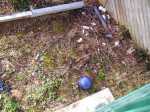
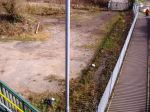
Below is the text of a letter I have recently sent to Network Rail about the disgusting state of both the Steppingstone Bridge and the areas around it.  I also included some, but not all, of the photographs shown below.

Whilst taking these photos, members of the public told me that a bottle had been smashed on the bridge steps.  I immediately asked the district council street cleaning team if they could find out who was responsible for the cleaning of this area.  Not for the first time, the team avoided any temptation to hide behind the ’not my job guv’ excuse we often hear from other agencies and just went out and cleared it up  – thank you guys!

The state of the bridge area has undoubtedly become far worse since Network Rail insisted on foisting their second hand cast-off bridge from Aylesbury upon Spalding.  The hideously ugly galvanized steel fence, Network Rail then installed to protect a stack of pallets, two overflowing skips and the scrap metal old bridge, has added further to the rundown and hostile feeling that must be experienced by anybody crossing the bridge.  Network Rail’s choice of material and style of fencing is completely inappropriate for a rural market town such as ours.  Unfortunately, this is typical of the arrogance and disdain Network Rail has displayed throughout the whole Steppingstone Bridge replacement fiasco.

To add insult to injury, during installation of these defences, Network Rail ignored the fact that the solitary lamp post serving the bridge, was responsibility of Lincolnshire County Council Highways Dept and incarcerated it behind their fence. This has prevented any maintenance by LCC and means the light has now not worked for nearly 2 years!

So, as well as the design of the bridge meaning users cannot see who else is on it as they approach it, the top deck of the bridge is a black hole during the hours of darkness.  This means that females pedestrians will not risk using it at night and will instead walk, or possibly even drive, the long way around in to the town centre.

The emerging proposals for the redevelopment of Holland Market offer, Network Rail a unique opportunity to become good neighbours to Spalding.  In the same way that National Grid are sorting out the site of the old Spalding Gas Works, Network Rail should seek to cooperate with the Holland Market developers, to regenerate the eyesore they have created.  I understand the old 5 Shed site, next to the Sainsbury roundabout, is also being considered for inclusion in any plans and this could be continued on to include the Network Rail waste land.

Even if Network show no inclination to be come involved in the project, it is completely unacceptable for them to leave their site in its current state.  In its current condition and because of the ongoing neglect of bridge and the area around it, Steppingstone Bridge is both a blight and an embarrassment for Spalding.

I therefore urge all of those who care about Spalding and wish Network to show the town and its residents some respect, to write to the address below, demanding action.

Community Relations Complaints Procedure                    9 March 2012
Network Rail HQ
Kings Place
90 York Way
London N1 9AG

Ref: Stepping Stones Bridge, Spalding – Rubbish and graffiti 

Please find attached sample photographs of the current state of the above subject bridge and its surrounding areas.  All these images were taken on the afternoon of 8 March 2012. 

1.  I request that you carry out urgent remedial work on the bridge surrounds to clear all the rubbish and on the bridge itself to remove the offensive graffiti.  I accept that this is not caused by Network Rail operations, but by the residents of the town.  Nonetheless, your company has a responsibility to maintain the area.  Also, Network Rail was warned that replacing the original bridge with one of this design would make it a prime target for graffiti.

2.  I would also request information on when Network Rail intend cleaning up the waste land surrounding the whole bridge area.  This undoubtedly increases the general impression that the area is abandoned and rubbish dumping is therefore acceptable.

Healthy residents bonus for town halls

Andrew Lansley, the Heath Secretary, will today announce the restoration of the link between councils and improving public health. Councils had historically been responsible for public health, until the NHS was reorganised in 1974. £5.2 billion for this will be ringfenced and councils will earn funding based upon how well they improve aspects such as air pollution, tooth decay and truancy. Daily Telegraph – 23/01/12.

It seems that, whatever the politics of the government, the policy of making local government beg for funding lives on. No doubt many councils will jump at the chance to grab this money, even though it is unlikely to be without both strings and a time limit on the funding offered. The strings can be coped with, but the funding time limit is the killer, as having put a service in place, especially one local taxpayers value, withdrawing a service comes with serious political fallout.

Of course county councils won’t be looking at the longer term fund issues when bidding for this cash because they will only see it as further justification for their continued existence. Their reason for ensuring that they take on as much work as possible, is to do with the increasing discussions that are taking place on the future of two tier local government. I’ve little doubt that this debate will become more and more heated as budgets shrink and the fight for survival becomes more and more desperate.