The ‘spending power’ that’s no power at all

Copied from Local Government Chronicle online
Home News Finance Comment and analysis

The DCLG’s spending claims exemplify the culture
that has eroded public trust – 21 January, 2015 | By Tony Travers

The stand-off between central and local government over the scale of budget reductions in 2015-16 is further evidence of Department for Communities & Local Government ministers’ extraordinary world view.

Faced with cuts in cash spending every year, the department has resorted to epic creativity in its attempt to show council spending rising. How is it possible to show local authority spending going up when it is going down?

First, the government makes many of its comparisons on the basis not of the ‘spending power’ definition used for annual funding settlements but of ‘net revenue expenditure’, which helpfully includes a number of items such as ‘mandatory housing benefits’ where councils are merely acting as agents for Whitehall transfer payments. Housing benefit payments, all of which are sanctioned by central government regulations, have risen by a remarkable £3.7bn since 2009-10.

Second, ministers use a definition of spending which excludes some local/central service transfers but includes others. Schools’ funding is carefully removed from comparisons because the move of institutions into academy status reduces annual council spending.

On the other hand public health, which was passed to local government in 2013, is added in because it creates a helpful £2.5bn step-up in expenditure.

Treasury-sanctioned housing benefit cost increases and public health have, together, added £6.2bn to ‘council spending’ since 2009-10. And, bingo, this juicy sum just outweighs the cuts councils have had to make to the budgets they directly control.

Latterly, it has been decided to add part of the better care fund (worth £3.8bn) into council spending power for 2015-16, even though the money is also counted as NHS expenditure. This spectacular distortion is the root of the ‘1.8% vs 6% cuts’ debate which surrounded the recent local government spending settlement.

Using this method of boosting council spending, it would be possible notionally to add all health resources into council spending without reducing the NHS budget line by a penny.

Reason is dying. But it would be naïve of national politicians to imagine the creativity and double-counting explored above will disguise the true impacts of what has happened. Treating the electorate in this way is one of the destructive roots of the decline in trust in Westminster politics.

Tony Travers, director, Greater London Group, London School of Economics

County councillor response in Voice is a fiction

Cllr Reg Shore, the Lincolnshire County Council portfolio holder for Waste & Recycling, appears to have read a completely different document to me, based on his recent letter in the Spalding Voice.
The county council have not been doing any ‘working with’ as far as South Holland is concerned. What they have done, is tell us that they will no longer be paying recycling credits to the three Lincolnshire councils that have their own recycling contracts. As if that wasn’t enough, they have also told these councils, that the county is taking over the disposal of the recycling that these councils collect.
Just to add insult to injury, the county council has put in place something they are calling transfer payments. The double whammy for the three councils affected, is that these payment will be made to all seven councils, including the four that are not actually loosing any recycling credits, or contract revenue.
Cllr Shore has kindly informed readers that I was wrong about the county council grabbing the £10 a ton South Holland currently receives. At the time of writing my previous blog entry on this issue, I was not privy to the details of the contract the county council had negotiated. Imagine my surprise, when I read a briefing note stating that Lincolnshire County Council had secured a contract that gives them NO REVENUE! Ironically, Cllr Shore emphasises this point in his letter, as though it is somehow to his and the county council’s credit – extraordinary!!
Just to be clear; Lincolnshire County Council will stop paying South Holland DC and two other councils, North and South Kesteven, £42 a ton in recycling credits from 2016. Also, with immediate effect, SHDC will be loosing the £10 a ton paid by the materials contractor and that helped to support our recycling collections.
The financial impact for South Holland will be:
– £377,830 after three years
– £895,570 after five years
Cllr Shore’s claim that every council will gain financially and that this should be viewed as ‘a real opportunity’, is technically correct, but only if you ignore completely the last 20+ years of recycling credit payments received from LCC and the last 3 years of revenue, received for our recycling, from our various contracts.
The proposal now, is that we all pretend that the last 20+ years of recycling never happened, that there were no recycling credits and that we were never able to sell our recycling. We also have to ‘pretend’ that we haven’t managed to achieve a recycling rate of 30%. This is because the county council has offered to make incentive payments for any increase in recycling rates, from this point forward. They have also offered to share some of the revenue they receive from the contractor – a contract that currently provides no revenue – how generous is that!
Had the county council been more upfront and open about these proposals and agreed to discuss openly all of the financial issues, there would have been no need for this hostility. Unfortunately, the only image in Cllr Shore’s ‘big picture’ is the one showing the county council, with every other council in Lincolnshire conveniently cropped out.

As a footnote, the government has just announced the financial settlement
For the forthcoming financial year. South Holland will be loosing a further 6.2% of its funding, equivalent to £0.755m.

Psychological test for UKIP MPs & MEPs – what about your councillors?

Apparently, UKIP are concerned about the ‘mental state’ of those wishing to become an MP, or MEP for their party.
However, there’s no suggestion that they have the same concerns about those wishing to become councillors. Does that mean that these potential candidates are somehow different, or of better ‘mental state’ than their prospective MPs and MEPS colleagues? Of course they aren’t, in fact, quite the opposite, given some of the press reports in recent months.
Indeed, the performance of UKIP councillors, elected to Lincolnshire County Council in 2013, strongly suggests that those wishing to enter local government politics, as UKIP councillors, definitely need their heads testing!

UKIP chief says half his time is spent weeding out “lunatics”…

UKIP logo“The man in charge of vetting Ukip’s election candidates has complained that ‘half my time is spent weeding out the lunatics’. David Soutter, who found himself at the heart of a party sex scandal last week, has been conducting psychological tests on prospective MPs and MEPs in order to ensure that they are ‘vaguely sane’. During a speech at Ukip’s Welsh conference last weekend, Soutter admitted that the party lacks discipline” – Sunday Times (£)

…but a UKIP candidate denounces his “pooftah” colleagues

“The UKIP activist picked last week to fight a key Parliamentary seat made homophobic, racist and obscene comments and accused Nigel Farage of corruption, it was revealed last night. In tape-recorded phone calls leaked to The Mail on Sunday, Kerry Smith, chosen to fight Ukip target seat of Basildon South in Essex, mocks ‘f***ing disgusting old pooftahs’…Makes baseless claims about party leader Farage accepting a bribe to promote a Ukip ally over another rival” – Mail on Sunday

Recycling rates under threat

Although we in South Holland are currently enjoying some success in our campaign to increase recycling, the article below highlights the challenges yet to come.
Just some of the emerging issues for us, will be the end of the external funding pot we succeeded in gaining a couple of years ago. Added to this, Lincolnshire County Council, in their wisdom and for no other reason than to save money for themselves and grab the available materials revenue, are in the process of taking control of our recycling. We will have to continue to collect the recycling, but the council will not receive any recycling credits from the county council, with the county also receiving the £10 a ton we currently get.
As is usual with everything the county council does, it hadn’t thought through the details and have now had to come up with an incentive scheme for those districts they have ‘stolen’ recycling collections from. Without such a scheme, why would we bother to continue to put any effort into increasing our recycling collection rate?
Further pressure is also being applied by the recycling industry, under the cloak of an environmental pressure group. Supposedly committed to ‘saving the planet’ by increasing recycling rates, the group is actually funded by the recycling industry, so have more of a financial imperative than an environmental one. I believe that, despite loosing a high court case, they are still trying to ‘force’ councils into collecting recycling in separate streams, as opposed to a single container, as we do in South Holland.

Copied from Local Government Chronicle online
Recycling could fall for first time this century
8 December, 2014 | By Corin Williams

Local authority budget cuts and new recycling standards could lead to a reduction in England’s recycling rates for the first time this century.

With a tiny 0.05 percentage point increase in English local authority household recycling between 2012 and 2013, to 44.16%, it is now considered highly unlikely that the UK will meet the target set by the EU that 50% of waste will be recycled by 2020.

The Chartered Institution for Wastes Management (CIWM) said there was a “real risk” that recycling rates would decline over the next 12 months.

Chief executive Steve Lee said: “We have seen a lot of welcome emphasis recently on recycling quality. Now the government must put quantity back at the top of the priority list.”

A new code of practice aims to boost the quality of waste materials sent for recycling. One consequence of this could be that waste management companies increase the quality threshold for material they receive from local authorities – thereby reducing the recycling rate.

Steve Rymill, a waste management consultant at the environment and energy firm Ricardo-AEA, told LGC’s sister title Materials Recycling World that councils’ environmental and regulatory service budgets had fallen by 16% between 2010-11 and 2013-14.

“Authorities have been evaluating what their statutory service requirements are and this has meant that a number of areas, such as communications and food waste collections, have been subject to significant cuts,” he said.

The budget just isn’t there to fund the much-needed communications campaigns required to further improve recycling performance.

“The authorities that have seen big increases in their recycling rate are where they have generally coincided with a service change – something which requires positive communications messages to residents.”

Mr Rymil said it was a particular concern that some councils had actually seen a decline in rates, which was partly blamed on street sweeping being reclassified and garden waste services being retracted.

“We’d expect this to continue next year, as more authorities are considering paring back their service, where permissible.”

Phil Conran, director at consultancy 360 environmental, told MRW some councils with high rates were seeing a significant proportion rejected with contractors complaining the material was not good enough to recycle.

High recycling rates achieved at the expense of quality are generally not sustainable,” he said.

“Some [recycling plants] might prevent local authorities from delivering [mixed]materials with glass in it, because of quality issues and because of the potential impact of the code of practice. If they revert to bottle banks to collect glass rather than as part of the mix, that would potentially depress recycling rates.

“I think there is every possibility that the rates will decline.”

Mr Conran added that many questions remained over why some English councils achieved high rates when others floundered. “The UK clearly can achieve [the EU target of] 50%. It’s just a matter of bringing everyone up to best practice,” he said.

Meanwhile, the latest statistics on waste and recycling in Wales indicate the country is on track to meet its 2015-16 statutory target, the Welsh environment ministry has said, with one council recycling more than 70% of its waste.

Between April and June, Welsh local authorities recycled, reused or composted 58% of municipal waste, an all-time high.

This is in line with a 58% target for 2015-16.

“Wales is the only UK nation to set statutory recycling targets and we are leading the way in the UK,” said natural resources minister Carl Sargeant. “Welsh local authorities are already meeting the European target of recycling a minimum of 50% by 2020.”

Most Welsh councils reported a quarter-on-quarter increase in the period and recycled over half of the waste they collected, except for Rhondda Cynon Taf, which slipped six percentage points to 47%.

The best performer was Denbighshire, which topped the table with a municipal waste reuse, recycling and composting rate of 71%, followed by Pembrokeshire at 69%, Monmouthshire at 66% and Bridgend at 64%.
Districts face loss as county waste deal ends

Copied from Local Government Chronicle online
13 August, 2014 | By Corin Williams

Districts in Lancashire are challenging the county council’s plans to change the funding system for waste collection in a way they say could cost them hundreds of thousands of pounds.

Lancashire CC has said it will no longer fund district councils for each household they supply with a kerbside recycling collection after the present agreement, which began in 2004, runs out in 2018.

Districts will instead be paid by recycling credits issued for the tonnages of recyclable materials they collect.

Wyre BC leader Peter Gibson (Con) has warned his council would face a revenue reduction of more than £980,000, equivalent to a 15% increase in council tax, as a result of this change.

He said in a report to a council meeting that recycling credits were an unreliable payment method as “districts couldn’t predict what their recycling levels would be and this made financial planning more difficult”.

Eleven districts are involved in the existing deal with Lancashire, the exception being Ribble Valley BC.

A Lancashire spokesman told LGC’s sister title Materials Recycling World: “The county council has made the waste collection authorities aware that it is considered highly unlikely that these agreements will be further extended once they expire in 2018 in order to ensure that they have sufficient time to plan their financial strategies beyond this date.”

This story could just as easily be about Lincolnshire County Council and its treatment of Lincolnshire district councils – but worse!

Each Lincolnshire district council already pays for its recycling collection service and only get recycling credits from LCC. The county are now stopping the payment of recycling credits AND taking over the disposal contract, so that they collect the revenue that is currently paid by the contractors.
Revenue from recycling is never a certainty and depends on a global market so, to be fair, the county council is at least taking on that risk. However, as the world recovers from the financial crisis, the risk becomes significantly lower.
This move by LCC, is a financial double whammy for South Holland and two other Lincolnshire district councils. Out taxpayers will still have to pay to collect recycling, but now the cost will not be offset, in part at least, by the payment of recycling credits, or revenue from the contract.

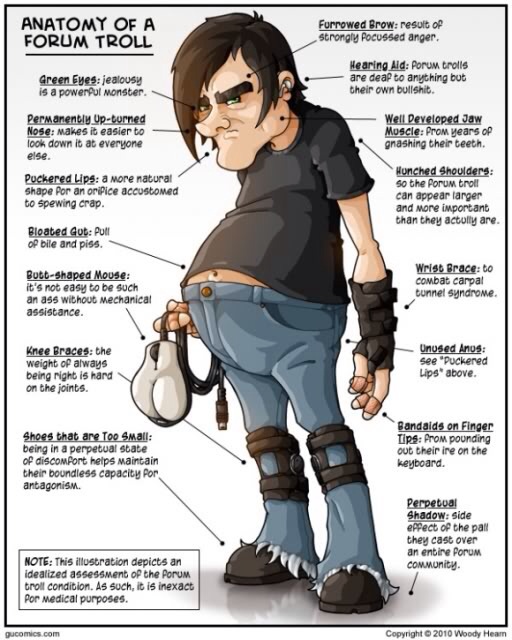
Spalding Today website infested by trolls?

internet troll – Web definitions
In Internet slang, a troll is a person who sows discord on the Internet by starting arguments or upsetting people, by posting inflammatory, extraneous, or off-topic messages in an online community, either accidentally or with the deliberate intent of provoking readers into an emotional response …
http://en.wikipedia.org/wiki/Internet_troll

It seems the last place to go, if you want to get an insight into what people in South Holland think about a a local issue, is the website run by our local newspaper.
Oh don’t get me wrong, you’ll get plenty of opinion, but only from a very small element of the population – six at the last count. However, these opinions won’t be from what one could call right minded, or informed people, hence my inclusion of the above definition.
Although the screen names are different, the tone of their comments are not. To a man and possibly woman, they all display the same uninformed, spiteful, small mindedness.
Indeed, I’ve yet to read one that doesn’t sound like it’s come from somebody holed up in a darkened room and fermenting on the conspiracy theory that, all councillors are corrupt and the district council is out to destroy South Holland, one piece at a time.
Unfortunately, these trolls display little, or no grasp of even the basic facts behind the online stories they comment on – all they know is what they read on their screens – so it would be pointless to enter into any sort of constructive online debate with them. Indeed, I don’t think they even care about the content of story, they just see it as an opportunity to snipe and sneer at others.

IMG_0321.JPG

Embarrassed? They should be bloody furious!

Copied from Local Government Chronicle online

Members ’embarrassed’ by minister’s Europe approach
13 June, 2014 | By David Paine

Ministers have been criticised for dismissing a critical European peer review of local democracy in the UK.

After two fact-finding visits last year, the Council of Europe’s Congress of Local and Regional Authorities expressed concern about the financial resources of English local authorities, as well as their limited tax-raising powers and their dependence on government grants.

Its review also highlighted concerns about the limitations placed on local authorities in managing local affairs, due to interventions from central government.

Local government minister Baroness Stowell (Con) forcefully rejected the review’s recommendations in a speech made to the congress in March.

“Our greatest disagreement with the report is the underlying theme that local government, particularly in England, has insufficient funding, with a suggestion that there should be more local revenues,” she said.

“That is saying, and let’s not be shy about this, there should be more local taxes.”

At a meeting of the LGA’s executive board yesterday, outgoing chair Sir Merrick Cockell (Con) expressed regret at the response and added he thought ministers should have “accepted there are some areas that need improvement and they are of a mind to move in that direction”.

He added: “I was bitterly disappointed by that approach.”

John Warmisham (Lab), lead member for children’s services at Salford City Council and head of the UK delegation to the congress, said: “Just to say outright ‘no’ was for me, as a UK delegate and a councillor, embarrassing.”

He added: “I find it appalling to be honest.”

Referring to Baroness Stowell’s speech, Sue Murphy (Lab), Manchester City Council’s deputy leader, said: “It was one of the worst ministerial performances I have seen in my entire career in politics. Really, I thought it was insulting.”

The executive was told that the UK was, in general, in compliance with the obligations taken under the Charter of Local Self-Government, to which the UK government is a signatory, and that compared with the last evaluation in 1998 the situation had improved, especially in relation to lifting audit and inspection burdens on councils.

However, Andreas Kiefer, secretary general of the congress, told councillors at the LGA executive meeting: “We consider the UK a model of democracy so to find the reluctance to give local democracy the status that it has in other countries was surprising.”

Our way of recycling should be safe – for now

Copied from Local Government Chronicle
Be aware of new recycling regulations
11 March, 2014 | By Andrew Bird

The Department for Environment, Food & Rural Affairs recently published the long-awaited materials recovery facility regulations and a summary of responses from last year’s consultation.

The regulations aim to drive up the quality of both materials entering such facilities and the output of materials sold on for reprocessing.

A mandatory code of practice will come into effect this autumn, requiring all facilities processing more than 1,000 tonnes of material to sample and report on inputs and the various materials streams resulting from sorting and separation.

While I think the regulations could have gone further, I welcome their introduction.

They will serve to increase confidence in the purchasing of materials from MRFs by reprocessors, supporting the move towards a more circular economy.

The regulations will be enforced by the Environment Agency and Natural Resources Wales through one pre-arranged inspection and one unannounced inspection each year.

So what will the code mean for councils?

It should enable them and waste companies to demonstrate greater transparency and provide mechanisms which help reassure residents that the efforts they put into recycling result in high-quality materials.

It will also help reassure that the commingling of recycling collections can deliver high-quality materials, and help to provide a more robust monitoring framework to assess whether commingled collections meet the requirements of the revised Waste Framework Directive, or TEEP.

So what is TEEP?

In essence it refers to it being technically, environmentally and economically practicable to collect each material separately.

Technically practicable means that separate collection may be implemented through systems developed and proven to function in practice.

Environmentally practicable means the added value of ecological benefits justifies possible negative environmental effects of separate collection.

Economically practicable refers to separate collections that do not cause excessive costs in comparison with the treatment of a non-separated waste stream, taking into account the added value of recovery and recycling and the principle of proportionality.

If you are not currently aware of the implications of the revised Waste Framework directive and its implications for your authority, you need to consider them urgently, and particularly if you are considering changes to the way you collect materials for recycling.

Here are the articles pertinent to Waste Collection Authorities:

Article 4 – Waste hierarchy

Article 10 – Recovery. Paragraph 2 – first mention of waste needing to be collected separately to facilitate or improve recovery if it is TEEP.

Article 11 – Re-use and recycling – about promoting re-use of products and high-quality recycling

Article 13 – Protection of human health and the environment

Article 15 – Responsibility for waste management

If you are unaware of the implications of the revised directive and its implications for your authority, you need to consider them urgently, particularly if you are changing the way you collect materials for recycling.

These requirements come into force in 2015, so decisions taken now and in the future need to be robust.

Andrew Bird, chair, Local Authority Recycling Advisory Committee

Could you ever get 66.6% of 4.5 million people to agree to anything?

Copied from Local Government Chronicle online
Lib Dems offer councils devolution route
10 March, 2014 | By Mark Smulian

The Liberals want to try to reintroduce regional government for some reason, despite it being a failed experiment under Labour. The danger for Lincolnshire, with a total population of less than 800,000, is that it could end up with regional government by default. The suggestion is that every local authority, would have to achieve a vote of two thirds in favour, but two thirds of what? Also, how would it work if you got a patchwork quilt of councils, where neighbouring authorities voted differently?

General elections average a turnout of over 70%. Local government elections are often lucky to get more than a 30% turnout. The elections for the Police and crime Commisioners, that took place in 2011, averaged a miserable turnout of 15%. Would you be happy to end up back in a regional government arrangement, based on a 15% turnout?

The Liberal Democrats would offer English councils a ‘devolution on demand’ mechanism, the party’s spring conference has decided.

Delegates meeting in York at the weekend voted for the idea, defeating a large minority who preferred a move to devolution throughout England based on the old regional development agency boundaries.

Under the Lib Dem plan, a council or councils comprising at least one million inhabitants would be able to apply for a range of devolved powers similar to those enjoyed by Wales.

Such a change would require a two-thirds majority vote by each local authority involved.

Supporters of the idea argued that this would allow those parts of England that wanted devolution – such Cornwall and major northern conurbations – to go ahead, while areas with little enthusiasm would not have devolution foisted on them.

But opponents argued that assembling the required two-thirds majorities would be difficult, and that even if they could, there would be an untidy patchwork of devolved areas potentially with, for example, a devolved county surrounding a city that was not without devolved status.

Policy working group chair Dinti Batstone said devolution on demand would work better than uniform regional government, citing voters’ rejection of this in the north-east referendum in 2004.

“England does not want a Prescott-style top-down devolution approach,” she said.

Calling for restoration of the old region as a tier of government, Leeds party member Mick Taylor said: “This resolution calls for devolution to a mishmash of collections of local authorities. Are we going to have the NHS devolved in some places but not others?”

He also complained that the paper did not confer automatic tax raising powers on the devolved areas.

The paper offered immediate devolution to Cornwall because of its cultural identity, and further powers to London building on its already semi-devolved status.

It also called for the use of the single transferable vote system for all English local elections, as used in Scotland.

As an interim measure the party would devolve more powers to city deal and growth deal areas.

Answering questions from party members at an earlier session, deputy prime minister Nick Clegg made clear his support for decentralising power further in England.

He said: “City deals have been a really important innovation. I want that approach extended to across the whole country to other cities, to urban and rural areas.”

Another hidden tax on the council taxpayer is set to increase

Copied from Local Government Chronicle online
LGA calls on chancellor to freeze landfill tax
7 March, 2014 | By Chris Smith

The chancellor has been urged to freeze the landfill tax as part of this month’s budget by council leaders.

Ahead of George Osbourne’s keynote speech on 19 March, the LGA claimed landfill tax had achieved its purpose and warned any increase would punish hard-pressed families.

Mr Osborne was urged to keep landfill tax at its present rate of £72 per tonne and to redistribute revenue to local taxpayers.

The tax, paid by businesses, is set to increase to £80 per tonne in April and the money raised goes into central government funding.

The LGA warned the costs would be passed by on to residents and claimed each household would pay £30 towards landfill tax in 2014-15.

Mike Jones (Con), chair of the LGA’s environment and housing board, said: “Instead of using the receipts from the tax to boost recycling technologies and reward residents for the gains made in recycling levels, the Treasury has held on to receipts. We need a clear indication from the chancellor that this tax will be frozen at its present rate, with the money raised from it returned to taxpayers and invested in growth.”