Recycling ruling could be a nightmare

One of the many elephants in the local government room at present, could rapidly grow in to a giant mammoth, should a Judicial Review go the wrong way.

My thanks to the Local Government Chronicle website and author Mark Smulian for the text below.

Fresh delay for recycling judicial review
15 June, 2012 | By Mark Smulian

A crucial judicial review that could determine the future viability of council recycling services faces a second delay.
The case concerns the way in which the Department for the Environment, Food and Rural Affairs transposed European regulations into UK law.

Defra has said it is “seeking agreement on a short extension to the stay” through discussions with the claimants. The case was due to have started on 13 June after being delayed from last December.

It turns on whether or not the regulations allow recyclable material to continue to be ‘comingled’ – collected together for later sorting – or whether different materials must be collected separately, as the industry would prefer, at considerable extra cost to councils.

Defra’s present wording of the amended regulations would see commingled collections continue only where separate collections were not “technically, environmentally and economically practicable” or were necessary to meet “appropriate quality standards”.

The judicial review has been brought by the Campaign for Real Recycling, which opposes comingling and argues that Defra’s current wording is unclear.

Supermarkets everywhere, all of the time – the future?

Following on from the previous entry about Justin King of Sainsbury and his, ‘don’t blame us’ statement, let’s not forget that he and his cohort are working tirelessly behind the scenes, lobbying government ministers, to gain even wider opening hours for all large retail outlets. Not only are they demanding the scrapping of our Sunday trading laws, they also want to see the last two non-shopping days of the year, Easter Sunday and Christmas Day, become business as usual.

Just as with all the other boundaries that have been broken down by the heavyweights in the supermarket world, the reason they give for pushing for these changes, is not because they want to screw the last penny out of the buying public, but because we, the British public, want them.

Of course we, the British public, probably don’t yet know we want them, that explanation will come when people realise what has happened and start protesting about yet another step towards a 24/7 society. The supermarkets will then leap on to their high horses, telling us that it’s what we want and that they are just responding to public demand!

Not enough parking leads to aggro

Here’s an interesting article that I lifted from an online feed. – thanks go to, LocalGov.co.uk and Nick Appleyard. It makes the point local councillors have been making ever since the days when Labour’s John Prescott and his Office (ODPM) interfered with the planning system.

The Office of the Deputy Prime Minister and Prescott (now both long gone, thankfully) decided you could reduce use of the private car simply by reducing the space people had to park them outside their homes. Playing straight into the hands of those developers who never miss a chance to squeeze more and more into less and less, we now now have whole swathes of housing development with inadequate parking provision, leading to exactly the problems highlighted in this article.

LocalGov.co.uk 09 May 2012

Parking ‘can keep neighbourhood peace’

By Nick Appleyard

Poor council parking policies can lead to an increase in crime, dangers to pedestrians and poor public health, experts claimed today.
The stark warning came in a report from the Institute of Highway Engineers (IHE) and the chartered Institute of Highways and Transportation (CIHT).

The Government removed national limits on residential parking as part of its ‘end to the war ing son the motorist’ in January 2011. But local authorities are still required to set their own parking standards and the two organisations have issued fresh guidance to ensure the right decisions are made which will benefit communities.

The guidance said allocating parking to individual homes increases the amount of space needed and suggested more flexible approaches increase overall use of space.

It also claimed car parks ‘tucked away’ behind developments are prone to vandalism and crime and are therefore underused leading to ‘serious’ on-street parking problems.

The guidance said strict enforcement of on-street parking makes garage parking more likely, but stressed garage doors need to be high and wide enough for modern vehicles.

‘Parking problems manifest themselves in pavement parking, blocked driveways, difficult access for delivery vehicles and refuse collectors, damage to verges, trees and footpaths, and cluttered, unsightly streets,’ the organisations said. ‘The Government has concluded that national constraint policies have led to ‘significant levels of on-street parking causing congestion and danger to pedestrians’. In preparing new policies, local authorities are being urged to make the right decisions for the benefit of their communities.

A no to elected mayors brings cold comfort

This paragraph, lifted from one of Andrew Leighton’s latests blog entries, should be required reading for all of us who are privileged to hold the title, ‘councillor’.

‘Councillors and Council leaders should not take this as a vote of confidence. This was a profoundly anti-politics vote with many anti-politicians sitting at home. If the referendum had been to exile all local cllrs to Siberia a resounding yes vote would have been likely.’

Will No Votes on Elected Mayors Sink Greg Clark’s Promotion as Locals Vote Against Localist Mayors?

Distraction politics

Further evidence for my conspiracy theory regarding our political leaders ongoing ambitions to become big players on the European stage, by the use of distraction. Localism would seem to be the perfect vehicle for this strategy.

As an ambitious national politician, who wants to become a player on the European stage, it’s extremely annoying to have your electorate calling for you to withdraw from that stage. In order to stop the masses from interfering in your plans to become a big wheel in Europe, you need to give them something else to get involved in. One way of doing this, is by making them think that they can make a difference at the local level. Which leads me to a recently published survey.

‘Public involvement and interest in political processes have plummeted to fresh lows, the Hansard Society’s annual ‘audit of political engagement’ has found.

However, the prospect of civic involvement at the local level has provided a ray of hope in what is otherwise a gloomy assessment of the state of democracy in the UK.

The society’s ninth audit found that the “growing sense of indifference to politics” found in last year’s report had now “hardened into something more serious”. Based on a national poll of more than 1,000 people and a series of focus groups run between November and March, the audit found evidence of a “public that is increasingly disengaged from national politics”.

The proportion of people saying they are ‘very’ or ‘fairly’ interested in politics has plummeted by 16 percentage points to just 42% – the first time the figure has dropped below 50% since the audit was first run in 2004. More people than ever – 15% – claim to know ‘nothing at all’ about politics.

But the audit also found evidence of a growing willingness to engage in local civic life.

The public’s sense of the efficacy of local involvement increased by five percentage points in a year to 56%, largely on the back of an increase in perceived local efficacy among people from Black and Minority Ethnic (BME) backgrounds. Despite this, just two-fifths of people (38%) said they were willing to get more involved in local decision making, down from 43% the year before.’

So it would seem that the strategy is working. People are loosing interest in what their politicians are getting up to, thereby allowing those politicians to ignore the things that do upset the public, such as the EU power grab, the EU budget, immigration and so on.

However, just in case the public do begin to get too interested in their activities, politicians have come up with a distraction strategy, using ‘a power to the people’ agenda. Labour started the distraction process with their idea for quality parish councils, designed to take over some of the services currently delivered by higher level councils. Localism, Community Right To Challenge, Neighbourhood Planning, Free Schools, Academies may well be this government’s way of continuing the process.

Universal benefits, but not universal access?

The following information has just been emailed to all councillors out by a national organisation and should make us all elected members pause for thought. I agree completely with the government’s wish to see the benefits system reformed and the cost of it brought under control. I also believe that it is fundamentally wrong that somebody should be able to collect more money in benefits than they get from full time employment.

However, given the figures below, introducing a system that relies so heavily on Internet access seems like it is going to come with some significant problems for those who will be relying on it for their basic needs.

“The introduction of Universal Credit is less than 18 months away.

The Government says it will be delivered over the internet but the latest statistics from the Office for National Statistics show that at Quarter 4, 2011

· 1 in 6 adults – 8.2 million adults in the UK – have never used the internet
· 4.85 million women and 3.36 million men have never used the internet
· 3.98 million disabled adults have never used the internet
· 8.1 per cent of adults earning less than £200/week have never used the internet

The absence of a local service could have major implications for your constituents. They may be unable to access their tax credits and benefits.”

Sunday opening, fool’s gold?

Sometimes I feel like a second rate Nostradamus, when something I was whinging about weeks or months previously, actually comes to pass. Having accused George Osborne of being a closet Yank, because of his willingness to see a planning free for all used to drive his growth agenda, we now see that he is proposing to relax the Sunday Trading Laws for a trial period. Don’t be surprised to see the trial continue without a break, as all George’s mates in the retailing industry, continue to shamelessly lobby him, for it to become the norm.

As well as regretting this further erosion of what supposedly makes Sunday different from every other day of the week, I would question what the rationale for this change is. Apart from transferring more money from the pockets of hard pressed working people into the bulging bank balances of shareholders, how will this change help the recovery, or offer real growth?

We, the British public are constantly being berated by our politicians for having too much personal debt and told to reduce our reliance on credit to feed our naked consumerism. Yet George Osborne is about to propose something that can only make that debt grow further, as a bored public, credit cards in hand, now spend their Sundays wandering the aisles of department stores stores full of tempting imported consumer goods.

Also, how is increasing retail spending supposed to improve the national debt situation overall? With most of the goods purchased coming from foreign imports and not from home grown manufacturers, how does that help the dire financial situation we currently find ourselves in? No doubt the increase in VAT taken, combined with the increase in tax businesses will have to pay on their takings, will make the Government’s balance sheet look slightly better. However, given that there is every chance that this will be at least equalled by an increase in personal debt, isn’t this just fool’s gold?

Time for Network Rail to show Spalding some respect

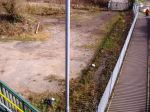
Below is the text of a letter I have recently sent to Network Rail about the disgusting state of both the Steppingstone Bridge and the areas around it.  I also included some, but not all, of the photographs shown below.

Whilst taking these photos, members of the public told me that a bottle had been smashed on the bridge steps.  I immediately asked the district council street cleaning team if they could find out who was responsible for the cleaning of this area.  Not for the first time, the team avoided any temptation to hide behind the ’not my job guv’ excuse we often hear from other agencies and just went out and cleared it up  – thank you guys!

The state of the bridge area has undoubtedly become far worse since Network Rail insisted on foisting their second hand cast-off bridge from Aylesbury upon Spalding.  The hideously ugly galvanized steel fence, Network Rail then installed to protect a stack of pallets, two overflowing skips and the scrap metal old bridge, has added further to the rundown and hostile feeling that must be experienced by anybody crossing the bridge.  Network Rail’s choice of material and style of fencing is completely inappropriate for a rural market town such as ours.  Unfortunately, this is typical of the arrogance and disdain Network Rail has displayed throughout the whole Steppingstone Bridge replacement fiasco.

To add insult to injury, during installation of these defences, Network Rail ignored the fact that the solitary lamp post serving the bridge, was responsibility of Lincolnshire County Council Highways Dept and incarcerated it behind their fence. This has prevented any maintenance by LCC and means the light has now not worked for nearly 2 years!

So, as well as the design of the bridge meaning users cannot see who else is on it as they approach it, the top deck of the bridge is a black hole during the hours of darkness.  This means that females pedestrians will not risk using it at night and will instead walk, or possibly even drive, the long way around in to the town centre.

The emerging proposals for the redevelopment of Holland Market offer, Network Rail a unique opportunity to become good neighbours to Spalding.  In the same way that National Grid are sorting out the site of the old Spalding Gas Works, Network Rail should seek to cooperate with the Holland Market developers, to regenerate the eyesore they have created.  I understand the old 5 Shed site, next to the Sainsbury roundabout, is also being considered for inclusion in any plans and this could be continued on to include the Network Rail waste land.

Even if Network show no inclination to be come involved in the project, it is completely unacceptable for them to leave their site in its current state.  In its current condition and because of the ongoing neglect of bridge and the area around it, Steppingstone Bridge is both a blight and an embarrassment for Spalding.

I therefore urge all of those who care about Spalding and wish Network to show the town and its residents some respect, to write to the address below, demanding action.

Community Relations Complaints Procedure                    9 March 2012
Network Rail HQ
Kings Place
90 York Way
London N1 9AG

Ref: Stepping Stones Bridge, Spalding – Rubbish and graffiti 

Please find attached sample photographs of the current state of the above subject bridge and its surrounding areas.  All these images were taken on the afternoon of 8 March 2012. 

1.  I request that you carry out urgent remedial work on the bridge surrounds to clear all the rubbish and on the bridge itself to remove the offensive graffiti.  I accept that this is not caused by Network Rail operations, but by the residents of the town.  Nonetheless, your company has a responsibility to maintain the area.  Also, Network Rail was warned that replacing the original bridge with one of this design would make it a prime target for graffiti.

2.  I would also request information on when Network Rail intend cleaning up the waste land surrounding the whole bridge area.  This undoubtedly increases the general impression that the area is abandoned and rubbish dumping is therefore acceptable.

Big brother moving the taxation goal posts

I don’t like the idea of the rich getting richer by avoid paying taxes. However, hearing that Barclays Bank has been fined half a billion pounds for helping people avoid tax legally, makes me feel very uneasy and see the shadow of Big Brother growing yet larger.

If you create a fiendishly complicated taxation system, with so many twist and turns that it would make most people’s head spin, then is it an wonder that clever people will find equally fiendish ways around that system? The government crying foul because they didn’t spot the loophole is not just sour grapes on their part, it also smacks of something a dictatorship would do.

If our supposedly democratically elected government can change the rules, making what was legal, illegal and retrospective, where does it stop? What if the government runs out of money to keep inflating their scandalous overseas aid budget, or to continue subsidise wind turbines, might they decide that basic rate taxpayers should of been paying 5% more tax for the last 3, 5 or even 10 years?

More ill-informed comments on planning from ministers

Daily Telegraph

The Prime Minister exhorted the Cabinet to step up efforts to increase house-building, speed up major infrastructure projects, and cut red tape for businesses…during a Cabinet meeting.

He set out areas of particular concern, including regulations for business, problems with the planning system, the tendency for EU directives to be “gold plated” when they are implemented in this country.

“It is difficult to get big infrastructure projects off the ground, whether in the public or the private sector. That is very difficult to make happen,” he said.

Mr Osborne, Oliver Letwin, the Cabinet office minister and Mr Cameron’s policy adviser, and Nick Clegg all spoke at length during the discussion.

The spokesman also confirmed that details of the government’s planning law reforms would be published “soon”.

“Reform of the planning system is a key part of what we are doing to boost growth,” he said. “We set out the principle of a presumption in favour of sustainable development. I think we will be setting out our plans on that quite soon.”

Why is it that ministers and in particular David Cameron, insist on continuing to make such I’ll-informed comments about the planning system, despite their own experience of it as MPs? Do they really believe that their constant repetition of, ‘growth at any cost, development will be our saviour, trust us we’re MPs’, will placate those who will soon be suffering from the rampant development they are promoting?