Mr Brown uses old grievance to miss the point

At first, Mr Brown’s letter, in the recent edition of the Spalding Guardian, appeared to be in support of Chris Brewis and his ‘Crowland playhouse’ comments and my rebuttal letter regarding his totally artificial outrage.

However, upon further reading, Mr Brown is actually using his letter to revisit his dis-satisfaction with a complaint he made in May. At that time and in another letter, he complained about the response he received from a council officer, when he complained about a neighbour operating a hairdressing salon from home. Allegedly, the officer told him, ‘we don’t have the resources to investigate’. He also finished his complaint by referring to civil servants, an error he claims was him being flippant. I’m afraid I missed his flippancy in a Twitter response and assumed it to be his lack of understand that local government staff were not civil servants.

On the matter of the home based hairdressing salon, I’m pretty certain that what he claims to have been told, would not have been the whole story – our planning compliance officers are far more professional than that.

What the officer would have said was, that in principle, small businesses, operating from residential addresses, but not causing any issues for other residents, are viewed as acceptable. He would also have been told that it would require a certain level of evidence of actual disturbance to neighbours, before any investigation was carried out and that we did not have the resources to spend time collecting that evidence.

Finally, his letter in the Guardian was entitled, ‘This is why so many people are disillusioned’. I think it would have been far more accurate to say, ‘This is why Mr Brown is so disillusioned’, as his letter is clearly about him not getting his way, rather than anything to do with democratic representation.

Something every planning committee already knows

Copied from Local Government Chronicle online

Homeowners prevent housebuilding, report finds
24 October, 2014 | By David Paine

House-building rates are lower in local authority areas with higher proportions of homeowners, according to analysis by the Institute for Government (IfG).

The report,‘Housing that Works for All – The Political Economy of Housing in England’, covered the period from 2001 to 2011.

It follows the publication of the Lyons housing review, which outlined how up to 200,000 new homes a year could be built by the year 2020.

The IfG said there was a risk of planning decisions being biased in favour of current homeowners.

This was in part because of a lack of city or region-wide planning co-ordination, which meant planning policy operated “exclusively at the local level and is responding to the interests of local residents”.

It said new developments often created new infrastructure costs for councils, and extra demand for public services, yet the increase in revenues from developments was “limited”.

The report also warned that the requirement for planning permission to be granted for any change of land use made decisions “slower and more uncertain”. Homeowners were among the most likely groups to oppose new homes, it said.

Miguel Coelho, IfG fellow and co-author of the paper, said: “A common accusation is that planning decisions tend to cater for the interests of current homeowners, rather than allow for a wider, more balanced set of interests. New empirical presented in this paper lend support to this hypothesis.

“Our analysis shows in particular that in the decade to 2011, housing stock grew significantly less in local authorities where there were higher proportions of owner-occupiers amongst local households.

“Credible proposals to reform the planning system should address this problem and ensure that planning decisions allow for the full breadth of interests affected by development.”

However, the paper acknowledged reforming the planning system would be difficult.

It claimed there had, so far, been a lack of public support to do so, and that the wealth of households and health of the UK financial sector had “become inextricably intertwined with the macro-economy, thus undermining the case for fast, radical reform”.

It also claimed that “successive governments have struggled to find a sensible balance between regional/national planning co-ordination and local democratic legitimacy”.

HAVE YOUR SAY

There’ll be no enlightenment from this Dark(ness)

litter chase not text

‘An officer of the district council, should follow somebody they see carrying a drinks can and when they drop it, they should give them an on the spot fine’. Cllr Graham Dark at a full council meeting.

According to this weeks edition of  Spalding Voice Graham Dark wishes to enlighten people on the subject of litter.

Using the letters page, this independent councillor and dedicated navel gazer,  has decided to get an early start to his 2015 re-election campaign.  He does this with a very brief offering of praise for the litter picking efforts of a young Conservatives group, all with Sandra and Tony White, dedicated and tenacious Spalding residents.

However, the real purpose of his politically motivated letter, is to attack the council’s Conservative group and in particular myself, as the cabinet member for waste and recycling.

Councillor Dark appears to be obsessed with use of tickets and fines, obviously a left over from his days as a police officer.  Unfortunately, his time as a cop hasn’t given him any understanding of the difference between having a robust policy and actually having sufficient resources to apply it regularly – certainly not to the extent he desires.  In fact, this desire is so compelling, he seems willing to see other council services suffer, in order to satisfy it.

Cllr Dark, having seen his previous obsession, a bandstand in Ayscoughfee Gardens gain financial support via Springfield’s s106 monies, has now turned his myopic gaze towards litter and the catching of those who drop it.  His repeated references to one thing in particular, enforcement, is becoming a little tedious.

I accept that, some years ago, an undertaking was made to empower certain council officers, to serve fixed penalty notices on littering offenders.  In practice, this was never a realistic option, given that few, if any, of our officers were ever in a position to witness, let alone act, when such offences occurred.  I am of course assuming that cllr Dark wasn’t expecting these officers to do this enforcement in their lunch breaks, but one can never be sure, when it comes to a member of the Independent group, as they seldom allow reality to get in the way of a bright idea.

I may of course be wrong on this last point because, if memory serves, at a recent full council meeting, he made the quite extraordinary suggestion, that potential litter droppers should be ‘stalked’ by suitably empowered council officers.

Graham Dark considers it acceptable for a professional Housing, Planning, or Environmental Health officers, to wander the streets of Spalding, looking out for anybody with a drinks can in hand.  The officer would then follow that person, keeping a careful watch on them and this potentially source of litter.  Should that person discard their can improperly, the officer would pounce on them, book of fixed penalty notices in hand, no doubt crying, ‘your nicked’, or something similar.  How far and for how long this stalking had to take place is unclear.  Suffice it to say, this procedure will not be written in to the council’s robust littering policy, anytime soon.

Incidentally, Graham Dark and his partner in crime Roger Perkins, are both members of a committee that has the role of scrutinising the council’s performance.  Despite this, at no time in their ‘years’ of allegedly banging on about it, have they bothered to get the issue of litter enforcement placed on the agenda of that committee, so that the council’s so called, ‘abysmal performance’ can be properly scrutinised.  I wonder if Graham Dark would care to enlighten me on the reason for this?

Littering is a serious problem and  a blight on our towns and villages. With its larger population and busier streets, Spalding suffers the most problems and presents the greatest challenges.

Finally, can I enlighten you as to what the future might hold.   There has been a major reduction in local government funding, due to the previous Labour government’s mismanagement of the economy.  As such, I cannot promise to commit any more resources to this problem, than those currently available.  We are however, doing our best to encourage and support the sort of community involvement and pride displayed by Jack McLean, young Conservatives, and Sandra and Tony White.  If you would like to offer your help, please do get in touch.

Exorbitant spending on Overseas Aid hasn’t made us any safer

One of the reasons given by David Cameron for his year on year increases in the Overseas Development budget since 2010 – well beyond that of any other European country – is that it will make our country a safer place, by helping those in foreign countries, improve their lot and become less radicalized by political extremists.  It has in fact, done nothing of the sort and will never do so, as long as we give the extremists reason, in their eyes, to see our country as their enemy and oppressor.

Some might suggest that our history as a colonial power, exploring and exploiting the world over many centuries,  had already done the damage, but I don’t believe that, given that many of our previous colonial conquests, remain members of the Commonwealth.  What has done the real damage and made us especially vulnerable, is our much cherished special relationship with the USA and our willingness to march shoulder to shoulder with them, into recent middle eastern conflicts.

Whilst successive Westminster leaders of all political persuasions, have viewed this relationship as the Holy Grail of international politics, giving the UK much great influence and kudos than it might otherwise have, I see it more as putting a target on the backs of every British citizen living and working in some of the most volatile areas of Africa and the Middle East.

Multiculturalism, a legacy of the Blair years, but again eagerly pursued by virtually all administrations, has opened our doors and left us vulnerable within our own boarders, something the Americans have bent over backwards to eliminate, post September 2001.  Live and let live, when those you are letting live in their own extremist ways – Sharia law is a very good example of this, along with female genital mutilation, is an irresponsible and ultimately dangerous political doctrine to pursue.

The upshot of this government’s single minder pursuit of international glory, often described as, ‘punching above our weight’ – a rather unfortunate term to use when you are supposedly trying to be everybody’s friend – is that an increase in spending in one area, has to be matched by a decrease elsewhere.  This applies even more so, when you are in the middle of a global financial crisis, but still determined to spend, spend, spend!  Which brings me to my point and the reason I have borrowed the article below.

Before anybody starts telling me that, despite all the cuts in local government funding, taxpayers haven’t noticed any reduction in services, I’d like to put that in some context.

Yes, most, if not all the essential services have been maintained to a good standard and residents won’t have seen their bins left un-emptied, streets knee deep in litter, or grass too long see over, let alone walk through.  Council houses are still being allocated and maintained and benefits are still being paid out on time.

However, what is suffering and will be cut even further in years to come, are those things we call discretionary – the things councils do because they believe their residents would like that service to be provided, even though the law doesn’t require it.  Leisure centres, youth clubs, play equipment, sports pitches, libraries, public toilets and maybe even usable, or at least affordable, burial grounds, could all disappear from localities, as cuts in local government funding continue for years to come.  Remember, all this is being done under the banner of deficit reduction, whilst the overseas aid budget continues to grow and grow, year on year.

Copied from Local Government Chronicle – 23 August 2014

Author – Tony Travers, director. Greater London Group, London School of Economics

The government will soon be spending twice as much on international development as councils can on highways

Under cover of mid-summer, the government has published two sets of figures about public expenditure.

The Department for Communities and Local Government revealed local authority revenue spending and income totals for 2014-15, while at the start of this month the Treasury belatedly released the annual Public Expenditure Statistical Analyses volume. Together these publications show how the years of austerity have affected individual services.

Although some parts of central government, notably the Home Office, defence and transport, have seen reductions of 100/o or more in their cash budgets, all the biggest programmes have been protected.  Council spending, by contrast, has been forced down at a remarkable pace.  The UK government will soon be spending twice as much on international development as English councils can afford to spend on highways and transport. Housing, roads, environment and planning have seen their cash expenditure fall by almost 30% in four years. In real terms, the cut is over 40%.

Council productivity increases must be among the greatest ever achieved by the public sector.  Planners appear to be processing as many applications in 2014 as in 2010 with barely half the resources. [What the planners are probably doing, is giving up the fight to maintain standards, given that the NPPF was written by developers, for developers and just passing applications to meet the targets set by Whitehall]. 

The government and opposition have no choice but to find additional money for the NHS: fear of public opinion will open the Treasury’s vaults. Pensions, as the biggest part of social security, are triple-locked into inflationary increases. Schools cannot be denied cash.

By 2020, many council spending programmes will have been halved within a decade.


CENTRAL AND LOCAL GOVERNMENT SPENDING CHANGES

  2010-11  £millions 2014-15  £millions Change %
Local government
Housing

2,733

1,945

-28.8

Highways & transport

6,661

4,814

-27.8

Environment, planning, culture

10,959

9,029

-17.6

Social care

20,851

22,090

+5.9

Central government
International development

5,930

7,870

+32.7

Social security

164,512

184,380

+12.8

NHS

97,469 109,650

+12.5

Education

50,387 54,500

+8.2

Districts face loss as county waste deal ends

Copied from Local Government Chronicle online
13 August, 2014 | By Corin Williams

Districts in Lancashire are challenging the county council’s plans to change the funding system for waste collection in a way they say could cost them hundreds of thousands of pounds.

Lancashire CC has said it will no longer fund district councils for each household they supply with a kerbside recycling collection after the present agreement, which began in 2004, runs out in 2018.

Districts will instead be paid by recycling credits issued for the tonnages of recyclable materials they collect.

Wyre BC leader Peter Gibson (Con) has warned his council would face a revenue reduction of more than £980,000, equivalent to a 15% increase in council tax, as a result of this change.

He said in a report to a council meeting that recycling credits were an unreliable payment method as “districts couldn’t predict what their recycling levels would be and this made financial planning more difficult”.

Eleven districts are involved in the existing deal with Lancashire, the exception being Ribble Valley BC.

A Lancashire spokesman told LGC’s sister title Materials Recycling World: “The county council has made the waste collection authorities aware that it is considered highly unlikely that these agreements will be further extended once they expire in 2018 in order to ensure that they have sufficient time to plan their financial strategies beyond this date.”

This story could just as easily be about Lincolnshire County Council and its treatment of Lincolnshire district councils – but worse!

Each Lincolnshire district council already pays for its recycling collection service and only get recycling credits from LCC. The county are now stopping the payment of recycling credits AND taking over the disposal contract, so that they collect the revenue that is currently paid by the contractors.
Revenue from recycling is never a certainty and depends on a global market so, to be fair, the county council is at least taking on that risk. However, as the world recovers from the financial crisis, the risk becomes significantly lower.
This move by LCC, is a financial double whammy for South Holland and two other Lincolnshire district councils. Out taxpayers will still have to pay to collect recycling, but now the cost will not be offset, in part at least, by the payment of recycling credits, or revenue from the contract.

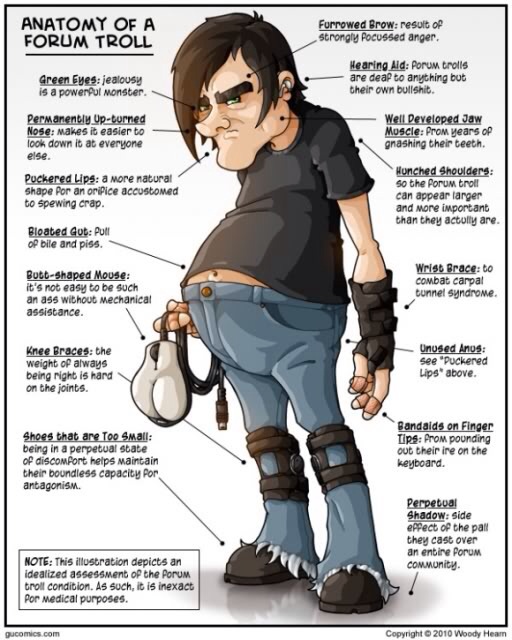
Spalding Today website infested by trolls?

internet troll – Web definitions
In Internet slang, a troll is a person who sows discord on the Internet by starting arguments or upsetting people, by posting inflammatory, extraneous, or off-topic messages in an online community, either accidentally or with the deliberate intent of provoking readers into an emotional response …
http://en.wikipedia.org/wiki/Internet_troll

It seems the last place to go, if you want to get an insight into what people in South Holland think about a a local issue, is the website run by our local newspaper.
Oh don’t get me wrong, you’ll get plenty of opinion, but only from a very small element of the population – six at the last count. However, these opinions won’t be from what one could call right minded, or informed people, hence my inclusion of the above definition.
Although the screen names are different, the tone of their comments are not. To a man and possibly woman, they all display the same uninformed, spiteful, small mindedness.
Indeed, I’ve yet to read one that doesn’t sound like it’s come from somebody holed up in a darkened room and fermenting on the conspiracy theory that, all councillors are corrupt and the district council is out to destroy South Holland, one piece at a time.
Unfortunately, these trolls display little, or no grasp of even the basic facts behind the online stories they comment on – all they know is what they read on their screens – so it would be pointless to enter into any sort of constructive online debate with them. Indeed, I don’t think they even care about the content of story, they just see it as an opportunity to snipe and sneer at others.

IMG_0321.JPG

Is localism preventing the development of new homes?

Copied from housing network website article by Hannah Fearn
Friday 1 August 2014 10.33 BST

They are both government priorities, but involving communities in planning decisions appears incompatible with housebuilding

Redbridge Council has taken planning decisions out of the hands of elected councillors.

It was the big idea of the coalition government, a cornerstone of localism, a foolproof way of getting things done without scaring off the traditionalists in the Conservative heartland. But after just three years, is neighbourhood planning already dead?

There are few signs of life left in the policy. Nick Boles sounded the first notes of funeral dirge when he admitted that the scheme, which involves local people designing and signing off new housing schemes, was too complex to function. He found that multiple objections from local people actually holds up the development process (who’d have thought it?). Instead he called on councils to who had already given up and come up with a better idea to share their it with other authorities.

The Financial Times reported this week that Kate Barker, who conducted a review of housebuilding for the Labour government in 2004, does not blame government policy for the slow rate of development in recent years. Instead, she says, it’s partly the result of nimbyism.

The turning of the tide against localism in planning goes even further: now even councillors can’t be trusted to make the right decisions. In Redbridge, the council has ruled that all future decisions on planning applications will be made by staff in the planning department because they have the skills and training to ensure they are qualified to make the right decisions; elected members simply do not. Redbridge also claims the move will save £45,000 a year.

Council leader Jas Athwal told his local newspaper that councillors added nothing to the planning process. “These planning officers have a huge amount of education and it seems egotistic that councillors can overrule them,” he said.

Meanwhile, central government is meddling again: it’s offering a slice of a £3m funding pot to councils with the largest number of planning applications for new homes in the pipeline, to speed things up and get those homes built. It’s a reward, but it’s also another opportunity to bypass the planning process that this government put in place.

This is not the first example of government finding new ways to get out of its own promises. Plans to create a new generation of garden cities mean the establishment of development corporations or sub-regional planning bodies which will be tasked with getting these new settlements built; there will be little room for debate once the decision to create a new town has been agreed upon.

In fact, writing for Planning magazine, former Whitehall advisor and planning consultant Ben Kochan says that the best way to win approval for a new garden city is to involve a whole host of organisations which are about as far removed from the neighbourhood planning process as you can get – not just urban development corporations, but also local enterprise partnerships, which give the business community funding and powers to boost economic growth.

It’s somewhat inevitable that in focusing on the end result – seeing more homes built in areas where there is an urgent need – will mean taking difficult decisions that not everyone in the community welcomes. Removing these decisions from the responsibility of local councillors (or simply by circumventing the planning process) will either be seen as a wise attempt to force progress or a cynical attempt to avoid blame for unpopular developments.

Whether you’re in favour of neighbourhood planning or not, it is being quietly removed from the pre-development process in the run-up to the 2015 election. This might be a good thing for housing in terms of numbers, but it’s also a blow to the heart of democratic localism.

Personally, I don’t agree with Redbridge, if they have indeed completely killed of their committee, as officers don’t always give the right weight to the concerns of non-planning experts. Local people are ‘experts’ when it comes to local concerns and local knowledge and you ignore this at your peril.

I do however agree that the system is becoming too vague, the government’s approach far too developer friendly and the overall process too open to abuse by vested interests, to remain as it is.
Telling councillors that they can still make the decisions, even if they’ve campaigned against it. Also suggesting that being pre-disposed to an opinion, is not the same as pre-determination, is complete nonsense and falls apart as defence, as soon as the high court gets involved.

An insider’s view on the decline in local government democracy

Copied from local Government Chronicle online

Inside out: Dull politics repels potential candidates
25 June, 2014

‘Somebody else making the case for party politics being excluded from local government.’

I look round our council meetings and see old white men in eight out of 10 seats. I walk through the town centre and see a refreshing diversity – women, and people of all ages, religions and ethnic groups. The comparison is disturbing.

Our councillors are smashing people. They put in more than 25 hours a week on council business and are deeply committed to our community and council. But the internal monoculture has the same problems as acres of barley across a landscape – it is boring and dominates at the expense of everything else. It is not the barley’s fault; the system and the farmer are responsible.

It’s the same in local government. Councillors are not to blame. It’s the system of local government and the political parties that “farm” councillors. I don’t think changing the times of council meetings will encourage young women or men to become councillors. If enough councillors had jobs and kids, it would be no time before we changed meeting times and provided a crèche. We have to think wider.

How does somebody become a councillor? First, they have to be interested in the role. At the moment we are collapsing into bins, bogs and brushes. Devolve real power back to us, including powers over raising money. Open up debate, eg through open committee decision making. Then we might have more chance of people becoming sufficiently interested to want to become a councillor.

Second, the normal route for someone to become a councillor is through being active in a political party. Community activists who become councillors are the exception rather than the rule.

So parties have to change if we are to move away from the current norm. Parties need to look at how they reach out to different types of people, develop a welcoming and flexible culture and way of operating. They need to develop their members to be equipped to be councillors and review the way they are selected to stand as candidates.

I’ve spoken to young people about getting involved in politics and meeting times have not been mentioned ever. The main turn-offs are ignorance about what we do, formal politics is seen as inaccessible and “not for them”, but mostly because we are dull.

FIND OUT MORE LGCplus.com/5022821.article or email LGCinsider@gmail.com

At least it gives us old duffers something to do

Copied from Local Government Chronicle online
Time to rethink attitudes to councillors
19 June, 2014 | By Nick Golding

The case for localism is undermined if council chambers fail to reflect the diversity of the communities they represent. It is therefore worrying that the LGA councillor census shows councillors are becoming ever older while women and minority ethnic groups are still hugely under-represented.

Life as a councillor simply doesn’t have the appeal it once had. Local government has been starved of power and, above all, status. The holders of the role have been abused as snout-in-trough allowance chompers. And they have been demeaned by ministers, who put them on a par with volunteer scout leaders (who don’t control multi-million pound budgets or have responsibility for the welfare of vulnerable people).

Little wonder then that people are shunning local candidacy. Why try to make a difference when – shorn of money due to local budgets being cut more than central ones – your role amounts to little more than a figurehead for the decline of local public services? You hardly feel like Joseph Chamberlain.

Why work hard in your job all day and then return to work in the evening, especially when you’re not being paid? You’re now losing your ability to claim a local government pension; your travel expenses have been cut back. Councillors take little or no financial award from long hours, many of them antisocial, with onerous responsibilities. Ironically, they’re often criticised for personal claiming allowances by people with far better paid roles.

For these reasons, it is often only the retired who have the time and the financial platform to devote to local politics. The LGA National Census of Local Authority Councillors 2013 shows their average age exceeds 60 for the first time. The benefits experience brings to a council chamber should not be denigrated but to have a local body politic on average more than 20 years older than the general population means youth is under-represented. Councillors, remember, are responsible for children’s services, youth provision and sexual health facilities – a decent proportion of them need recent first-hand experience of these.

There are huge barriers for mothers contemplating becoming councillors. Few can afford not to work so that leaves them attempting to balance work, motherhood and local politics. Understandably, it’s the politics that often gives. One may speculate how more generous allowances could redress this balance and, for instance, pay dividends in better use of children’s services expenditure, which would no longer largely be determined by relatively elderly men.

It’s time to launch a fightback. Either councillors get proper allowances that reflect the long hours or local democracy remains the preserve of an aged elite. There is much that can be done by councils themselves – moving meetings to evenings to ensure those with jobs can attend, for instance. Many are bringing back the committee system in the hope of revitalising debates and potentially giving more councillors important roles. However, there is an onus on the whole of society to rethink its attitude to those performing civic duty – respect, not abuse, should be the norm.

I think most councillors would seek a simple acknowledgement for making the effort , not even respect, that’s probably too much to expect today’s, ‘I have my rights’ society.
If somebody was to ask me about becoming a councillor nowadays, I’m not sure what I would tell them were the benefits of doing so and I don’t mean to the councillor. Government funding cuts and more and more centralisation of power, hidden behind the facade of Localism, means that getting elected is more likely to become a exercise in frustration and disappointment, than a fulfilling experience in serving the community.

Embarrassed? They should be bloody furious!

Copied from Local Government Chronicle online

Members ’embarrassed’ by minister’s Europe approach
13 June, 2014 | By David Paine

Ministers have been criticised for dismissing a critical European peer review of local democracy in the UK.

After two fact-finding visits last year, the Council of Europe’s Congress of Local and Regional Authorities expressed concern about the financial resources of English local authorities, as well as their limited tax-raising powers and their dependence on government grants.

Its review also highlighted concerns about the limitations placed on local authorities in managing local affairs, due to interventions from central government.

Local government minister Baroness Stowell (Con) forcefully rejected the review’s recommendations in a speech made to the congress in March.

“Our greatest disagreement with the report is the underlying theme that local government, particularly in England, has insufficient funding, with a suggestion that there should be more local revenues,” she said.

“That is saying, and let’s not be shy about this, there should be more local taxes.”

At a meeting of the LGA’s executive board yesterday, outgoing chair Sir Merrick Cockell (Con) expressed regret at the response and added he thought ministers should have “accepted there are some areas that need improvement and they are of a mind to move in that direction”.

He added: “I was bitterly disappointed by that approach.”

John Warmisham (Lab), lead member for children’s services at Salford City Council and head of the UK delegation to the congress, said: “Just to say outright ‘no’ was for me, as a UK delegate and a councillor, embarrassing.”

He added: “I find it appalling to be honest.”

Referring to Baroness Stowell’s speech, Sue Murphy (Lab), Manchester City Council’s deputy leader, said: “It was one of the worst ministerial performances I have seen in my entire career in politics. Really, I thought it was insulting.”

The executive was told that the UK was, in general, in compliance with the obligations taken under the Charter of Local Self-Government, to which the UK government is a signatory, and that compared with the last evaluation in 1998 the situation had improved, especially in relation to lifting audit and inspection burdens on councils.

However, Andreas Kiefer, secretary general of the congress, told councillors at the LGA executive meeting: “We consider the UK a model of democracy so to find the reluctance to give local democracy the status that it has in other countries was surprising.”